By Editorial Team · Last updated September 2026
Almost everyone who lands in Lombok goes straight to the surf at Kuta or the boats for the Gili Islands, and drives through the middle of the island without stopping. This eight day route does the opposite: three inland bases, no beach day, and a run through the temple where Hindus and Muslims still share a wall, the villages that weave and fire pots for a living, and the bamboo mosque at Bayan.
Almost everyone who lands in Lombok turns left or right at the airport, south to the surf beaches at Kuta or north to the boats for the Gili Islands. The middle of the island, where most Sasak people actually live, gets treated as the bit you drive through. That is the trip this plan inverts. Eight days, three inland bases, no beach day at all, and a route built around the three things Lombok has that Bali does not: a temple where Hindus and Muslims still worship together, villages that weave and fire pots as a living rather than a demonstration, and a 17th century mosque made of bamboo.
It is a slower trip than the island's reputation suggests, and it asks for more patience with roads than with anything else. If you want that balance the other way round, we have plenty of Lombok trips that start at the water. This one does not.
Who is this Lombok trip for, and who should skip it?
This suits travellers who have already done Bali or the Gilis and want the version of Lombok that is not sold as a beach. It rewards people who enjoy villages, craft and religious history, and who accept two to three hours in a car on three of the eight days. It is a poor fit for a first trip to Indonesia.
Good fit. Repeat visitors to Indonesia, couples who travel slowly, solo travellers comfortable with guesthouses instead of resorts, and anyone interested in how Islam, Hinduism and older Sasak belief sit side by side on one island.
Poor fit. First-timers to Indonesia, anyone travelling mainly to swim or dive, and families with young children, because the driving days are long and the sights are talked about, not played in. Travellers who need air conditioning everywhere will also find the inland guesthouses basic.
Trip at a glance
Length. 8 days, 7 nights, three bases.
Route. Mataram and the west, then the craft and village belt in the centre and south, then Tetebatu in the highlands, then Bayan and Senaru in the north.
Moving. Private car and driver throughout. Three transfer days of roughly two to three hours, the rest short local loops.
Best months. May to September, the dry season, when the north coast road and the waterfall trail are both easier.
Rough daily budget. As a working estimate, IDR 900,000 to 1,500,000 for two people a day outside flights, with the car and driver the single biggest line. Prices change, so treat these as a planning range and confirm locally.
How do you get to Lombok, and which way is worth it?
There are three realistic ways in: fly into Lombok International Airport at Praya in the south, take a fast boat from Bali in roughly two to two and a half hours, or take the public car ferry from Padangbai to Lembar in four to five hours. For an inland trip that starts near Mataram, flying is usually the least wasted time.
If you are coming from Bali rather than flying in from further afield, compare the Bali to Lombok crossings on 12Go before you commit, because the fast boat and ferry schedules shift with the season and the swell.
| Fly to Praya (LOP) | Fast boat from Bali | Public ferry Padangbai to Lembar | |
|---|---|---|---|
| Door to door | About 1 hour flying, then 1 hour to Mataram | About 2 to 2.5 hours at sea, plus transfers each end | About 4 to 5 hours at sea, plus transfers each end |
| Rough fare | Varies widely by route and season | Usually the most expensive of the three | The cheapest of the three by some margin |
| Lands you | In the south, near the craft villages | In the north west, near Senggigi and Bangsal | In the south west at Lembar, about 40 minutes from Mataram |
| Weather risk | Low | Real in the wet season, sailings get cancelled | Lower than the fast boat, but slow |
| Best for this route | Yes, if you reverse the order and start in the south | Yes, if you are arriving from Bali anyway | Only if the budget matters more than the hours |
However you arrive, arrange the first transfer in advance, so you are not negotiating at the terminal after a flight. A private airport transfer in Lombok costs little more than the airport taxi and saves the argument.
Why this route makes sense
The route follows Lombok's own geography rather than a tourist map. The west around Mataram holds the royal temples and water gardens, the centre and south hold the craft villages, the highlands at Tetebatu hold the rice country, and the north around Bayan holds the oldest religious sites. Driving west to centre to north keeps every transfer under three hours.
There is a second reason for the order. The west is where the Balinese influence is strongest, because Lombok was ruled from Karangasem in east Bali for much of the 18th and 19th centuries. The north around Bayan is where Sasak practice stayed furthest from that influence. Travelling in this direction, the trip gets less Balinese and more Sasak as it goes, which makes the last two days land harder than they would at the start.
Day 1: Arrive, settle near Mataram
Morning. Land at Praya. The drive north to Mataram takes about an hour, a little more to Senggigi on the coast. Nothing else is scheduled today on purpose, because arrival days in Lombok often run late.
Afternoon. Walk Cakranegara, the old market quarter of Mataram, and get the shape of the city. This is also the best place on the whole trip to buy anything practical.
Evening. Eat ayam taliwang, the grilled chili chicken Lombok is genuinely known for, at one of the Taliwang places in Cakranegara. Ask for it less spicy unless you mean it.
Base. Three nights in Mataram or Senggigi. Mataram puts you closer to the temples, Senggigi gives you the sea to look at in the evening.
Pick on price, and on whether you want water in the view: stays in Senggigi and around Mataram covers the whole west coast strip in one search.
Travel note. Inland Lombok has patchy signal in the highlands and along the north coast. Sorting data before you land makes the village navigation easier, and an Indonesia eSIM from Airalo activates before you leave home.
Day 2: Narmada, Lingsar and the Balinese centuries
Morning. Taman Narmada, about 30 minutes east of Mataram. Built in 1727 by the Karangasem king as a miniature of Mount Rinjani and its crater lake, so that he could make the pilgrimage without climbing. The spring inside is still treated as holy. Entry is a small fee, in the order of IDR 15,000 to 30,000.
Afternoon. Pura Lingsar, 20 minutes further on, and the single most interesting site on this trip. Founded in 1714, it holds a Hindu shrine and a Wetu Telu Sasak shrine inside one wall, and both communities still use it. Entry is by donation.
Evening. Back to base. If you are here around the full moon of the sixth month in the Sasak calendar, usually falling in November or December, Lingsar holds Perang Topat, where the two communities throw rice cakes at each other. Worth planning around if the dates line up.
Booking logic. This is the day to lock the car for the week. A driver who knows the village etiquette is worth more here than in Bali, where every stop is signposted. As a working estimate a car and driver runs IDR 550,000 to 650,000 a day including fuel, for roughly eight hours. You can book a full-day Lombok car and driver in advance, or arrange it through your guesthouse once you see how the first day went.
Travel note. Both sites are active places of worship. A sarong is expected, and most gates lend one. Ask before photographing anyone praying.
Day 3: The craft belt, Banyumulek, Sukarara and Sade
Morning. Banyumulek, about 25 minutes south west of Mataram, where terracotta has been thrown and fired for generations. These are working yards with kilns going, and you buy from the person who threw the pot.
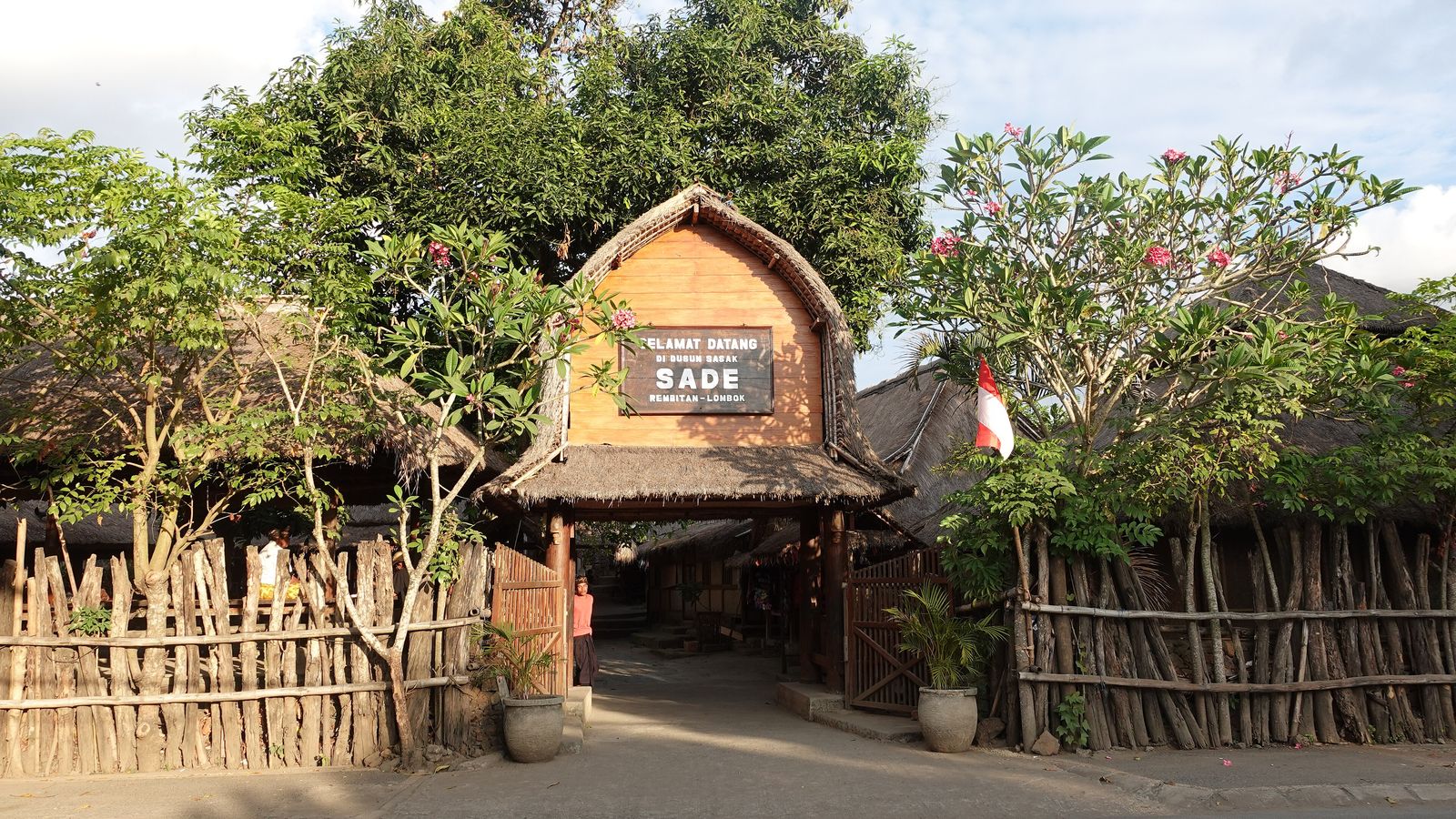
Afternoon. Sukarara, roughly 45 minutes on, for songket weaving. A full cloth can take months on a backstrap loom, which is why the prices look high until you watch one being made. Then Sade or Rembitan on the Praya to Kuta road, the two best known traditional Sasak villages, with bamboo and thatch houses on a low stone base.
Evening. Return to Mataram, about an hour. Long day in the car, short distances, slow roads.
Booking logic. Nothing to book. Sade charges no fixed ticket, only a donation at the gate, typically IDR 10,000 to 50,000, plus a village guide at roughly IDR 50,000 to 100,000 for the group. Carry small notes, because nobody will have change.
Travel note. Sade is the most visited village in Lombok and it shows. If the coach parties are in, drive five minutes on to Ende, which is quieter and run the same way. Both are lived in, so treat the lanes as somebody's front yard.
Day 4: Into the highlands at Tetebatu
Morning. Transfer east to Tetebatu, about two hours from Mataram. Break it at Loyok, where the bamboo weaving is done, or at Pringgasela, where the loom work is ikat instead of songket.
Afternoon. Arrive in Tetebatu and do nothing much. The village sits on the southern slope of Rinjani at around 400 to 600 metres, so the air changes noticeably, and the rice terraces are best walked in the late afternoon light.
Evening. Dinner at the guesthouse. Tetebatu has almost no restaurants, and that is not a complaint.
Base. Two nights in Tetebatu. Stock is small and family run, so book ahead in the dry season instead of arriving on spec: search Tetebatu guesthouses on Booking.com and expect simple rooms with a good view and not much else.
Travel note. The road east from Mataram goes through Kopang and can crawl behind trucks. Leave by nine if you want the afternoon in the terraces.
Day 5: Tetebatu on foot
Morning. Walk out through the rice terraces towards the monkey forest on the Rinjani side. Two to three hours at an easy pace, and a village guide earns their fee here, because these are field paths between somebody's plots and they are unmarked.
Afternoon. Jukut waterfall, about 40 minutes away, or a slower loop through the tobacco drying barns that stand in every second field. Tobacco is East Lombok's cash crop and the barns are unmistakable once you know them.
Evening. Second night in Tetebatu.
Booking logic. Arrange the walking guide the night before through the guesthouse, at roughly IDR 150,000 to 250,000 for a half day. There is no counter to book at.
Travel note. The rice terraces look their best in the growing season, roughly December to March, which is also the wettest time to walk them. The dry season trade is drier feet for browner fields.
Day 6: North to Bayan, and the oldest mosque on the island
Morning. The longest transfer of the trip, roughly two and a half to three hours from Tetebatu to Bayan, either around the east coast or back and up. Ask the driver which is passable, because the north road takes damage in the wet season.
Afternoon. Masjid Kuno Bayan Beleq, reported to date from the 17th century and the oldest mosque in Lombok. It is small, low walled, bamboo and thatch on a stone foundation, and nothing about it announces itself. It is the centre of Wetu Telu practice, the syncretic Sasak Islam that kept older local ritual alongside the five pillars. Admission is free, with a donation expected.
Evening. Continue 20 minutes to Senaru and settle in. The village sits at the Rinjani trailhead, so the evening crowd is trekkers coming down off the mountain, not day visitors.
Base. Two nights at Senaru. The small guesthouses at Senaru are built for trekkers, which means early breakfasts, thin walls and good information.
Travel note. Bayan is conservative. Cover shoulders and knees, and ask before entering the mosque compound instead of walking in.
Day 7: Senaru village, Sendang Gile and Tiu Kelep
Morning. Go early. The combined ticket for Sendang Gile and Tiu Kelep runs about IDR 20,000 with another IDR 10,000 for parking, as a working figure. Sendang Gile is 15 minutes down the steps from the gate. Tiu Kelep is another 30 to 45 minutes on, across the river, and it is the better of the two.
Afternoon. Senaru traditional village, a short walk from the gate, where a cluster of thatched houses is maintained in the old pattern. Then Segenter, about 45 minutes west along the north coast, which sees a fraction of Sade's visitors and is the more honest visit for it.
Evening. Last night inland.
Booking logic. You do not need a guide for the falls, whatever you are told at the gate. If you would sooner have the day arranged, the Sendang Gile and Tiu Kelep waterfalls day trip bundles the transport with it. If you do want a local guide at the gate, the going rate tops out around IDR 150,000 and is negotiable.
Travel note. The crossing to Tiu Kelep involves wading, and the river runs hard after rain. If it has poured overnight, do Sendang Gile and let the second one go.
Day 8: Out
Morning. Senaru to Praya airport is about three hours, so an afternoon flight is comfortable and a morning one is not. Alternatively Bangsal harbour is only about 75 minutes away if you are carrying on to the Gili Islands.
Booking logic. If you are heading back to Bali by sea, hold the ticket before the last night. Fast boat and ferry tickets from Lombok sell out on the popular morning departures, and the afternoon crossings are rougher.
Travel note. Build in a buffer. The north coast road is the one stretch of this trip where a landslide or roadworks genuinely costs you an hour.
Where should you base yourself on an inland Lombok trip?
Three bases carry this route, and each one exists for a different reason. Mataram or Senggigi covers the royal temples and the craft villages in short loops. Tetebatu is the only practical base for the southern Rinjani slope. Senaru is the only sensible base for Bayan, the waterfalls and the north coast villages.
| Mataram / Senggigi | Tetebatu | Senaru | |
|---|---|---|---|
| Nights here | 3 | 2 | 2 |
| What it unlocks | Narmada, Lingsar, Banyumulek, Sukarara, Sade | Rice terraces, Pringgasela, Loyok, Jukut falls | Bayan mosque, Sendang Gile, Tiu Kelep, Segenter |
| Room standard | Widest range, from budget to resort | Small family guesthouses, simple | Trekker guesthouses, simple |
| Eating out | Plenty, including the Taliwang places | Almost nothing outside the guesthouse | A handful of warungs |
| Cut it first if short on time | No, it carries the most sites | Yes, if you are not walking | No, it carries the strongest sites |
What to book early, and what to keep flexible
Book early. Flights into Praya, the first night's room, the airport transfer, and the Tetebatu guesthouse if you are travelling between June and September. Tetebatu has very few rooms and they go.
Keep flexible. Everything else. The temples, the villages and the waterfalls take walk-up donations or small entry fees, and there is no advantage to pre-booking any of them. The car is best arranged on day one or two, once you have met a driver.
Do not book at all. Packaged village tours that stack Sade, Sukarara and Banyumulek into one air-conditioned morning. You will see the same places in a worse way and pay more for it.
Mistakes travellers make on a Lombok culture trip
The most common mistake is treating the inland as a day trip from a beach base. Driving out from Kuta or the Gilis and back turns every village into two hours of car for 40 minutes of village, and it is why so many people report that Lombok's culture is thin. It is simply nowhere near the hotels.
Doing only Sade. Sade is the village every driver defaults to, and it is the most performed of them. Pair it with Ende or Segenter and the picture changes.
Underestimating the roads. Distances on a map look short. Lombok's inland roads are single lane, shared with trucks and livestock, and 60 kilometres can take two hours.
Arriving at Lingsar with no context. Without knowing what Wetu Telu is, the temple looks like a quiet walled garden. Read about it before you go, or take a guide who can explain the two shrines.
Dressing for the beach. Lombok is the most observant Muslim island in the region after Aceh. Shoulders and knees covered inland is not a formality.
Planning around Ramadan without checking. Warungs close during daylight in many inland villages, and the atmosphere at religious sites changes. It is a fascinating time to visit, but not an accidental one.
What to cut, adapt or upgrade
Cut to six days. Drop the two Tetebatu nights and go Mataram to Senaru directly on day four. You lose the rice country and keep every religious site.
Cut to five days. Two nights near Mataram, two at Senaru, and skip the highlands entirely. That is the compressed version and it still works.
Stretch to eleven days. Add two nights at Sembalun on the eastern Rinjani flank for the shallow crater rim walks, and two on the Sekotong coast in the south west to end at the water.
Upgrade. Hire a Sasak guide for the two village days, on top of the driver. The difference between being shown a loom and having the pattern language explained is the whole trip.
Adapt for the wet season. Between November and March, reverse the route and do the north first, so a washed out road at the end costs you a waterfall rather than your flight.
Before you build this trip
Visa. Most EU, US, UK and Australian travellers need a visa on arrival, currently IDR 500,000 for 30 days and extendable once. Fees and rules change, so check the current official guidance before you fly.
Money. Cash matters more here than in Bali. Village donations, guides and warungs are cash only, and ATMs thin out fast once you leave Mataram. Draw what you need for the north before you leave the city.
Language. Indonesian works everywhere. Sasak is the first language inland, and even a greeting in it changes how a village visit goes.
Friday. Friday midday prayers empty the villages and close many workshops for a couple of hours. Plan a drive or a meal into that window, not a visit.
Rinjani. This is not a trekking itinerary. If you want the summit or the crater lake, add three or four days and treat it as a separate trip, because it does not fold into these eight.
Final verdict
This is the best week in Lombok for anyone who has already had the beach version, and a frustrating one for anyone who has not. The sites are real, the craft is a working economy and not a display, and Lingsar and Bayan between them explain more about Indonesian religious history than a fortnight in Bali will. The cost is time in a car and guesthouses that are functional and little more.
If you would rather have both, do this route for five days and finish on the coast. But do not try to run it from a beach base. The inland only makes sense from the inside.
Related itineraries
If the Sasak villages appeal but you want the water as well, the seven day Lombok and Gili Islands route splits the difference. If the highlands are the draw, the Rinjani trek itinerary goes up rather than around. And if you want a quieter coast to finish on, the southwest Lombok and Sekotong route ends where almost nobody goes.
Before you go
Sort the practical side
Entry rules and a realistic budget before you book this trip.
Good to know
Frequently asked questions
Is Lombok worth visiting for culture, not just beaches?
Yes, and the inland is where that happens. Lombok has Pura Lingsar, where Balinese Hindus and Wetu Telu Sasak Muslims worship inside one wall, the 17th century bamboo mosque at Bayan, and working weaving and pottery villages at Sukarara and Banyumulek. None of it is on the coast, which is why most visitors miss it.
How many days do you need for an inland Lombok trip?
Eight days is comfortable for three bases with no rushed transfers. Six works if you drop the Tetebatu highlands and go straight from Mataram to Senaru. Five is the realistic floor: two nights near Mataram for the temples and craft villages, two at Senaru for Bayan and the waterfalls.
What is Wetu Telu, and where can you see it?
Wetu Telu is a syncretic form of Sasak Islam that kept older local and Hindu-influenced ritual alongside Islamic practice. It survives mainly in north Lombok around Bayan, and its two most visible sites are the ancient mosque at Bayan Beleq and the shared temple at Lingsar, where a Wetu Telu shrine sits beside a Hindu one.
How much does a car and driver cost in Lombok?
As a working estimate, IDR 550,000 to 650,000 a day for roughly eight hours with fuel included, for a car like an Avanza or Innova. Larger vans cost more. Rates move with fuel prices and season, so agree the figure and the hours before the first day, not after it.
Do you need a guide to visit the Sasak villages?
At Sade and Rembitan a village guide is effectively expected and costs around IDR 50,000 to 100,000 for the group, on top of a gate donation of roughly IDR 10,000 to 50,000. At Segenter and Senaru village it is optional. For Lingsar and the Bayan mosque a guide is not required but changes how much you understand.
When is the best time for this Lombok itinerary?
May to September, the dry season, when the north coast road and the Tiu Kelep river crossing are both reliable. The rice terraces at Tetebatu look best between December and March, but that is also when the roads are worst and waterfall crossings are unsafe after heavy rain.
Can you combine inland Lombok with the Gili Islands?
Easily. Bangsal harbour is about 75 minutes from Senaru, so ending the inland route there and taking a boat across adds the islands without backtracking. Reversing it also works: do the Gilis first, cross to Bangsal, and run the route north to south, finishing at Praya airport.
Is Lombok conservative, and how should you dress inland?
More so than Bali, particularly in the north around Bayan. Shoulders and knees covered is the practical standard for villages, mosques and temples, and a sarong is expected at the temple gates, where one is usually lent. Beachwear inland reads as disrespectful rather than merely casual.
Go deeper
Lombok & Gili guides
Keep exploring
Related itineraries
One week (6-8 days) · Lombok & Gili Islands
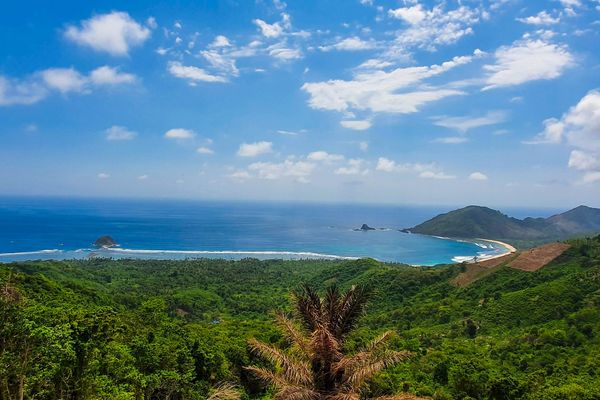
8 Days in Southwest Lombok: Sekotong, the Quiet Gilis and Tetebatu
Skip Trawangan. Eight days on Gili Gede, the Nanggu snorkelling loop, Tetebatu and Ekas, with real boat costs and honest drive times.
One week (6-8 days) · Lombok & Gili Islands
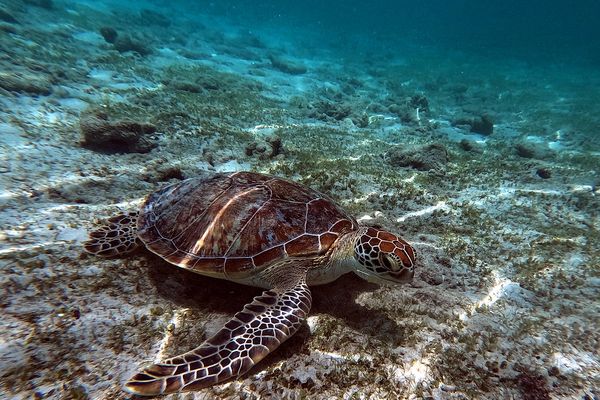
Diving the Gili Islands: A 7-Day Learn to Dive Trip
What diving in the Gili Islands is really like, what an open water course costs in 2026, and why four days is not enough. A tested 7-day plan.
Short escape (3-5 days) · Lombok & Gili Islands
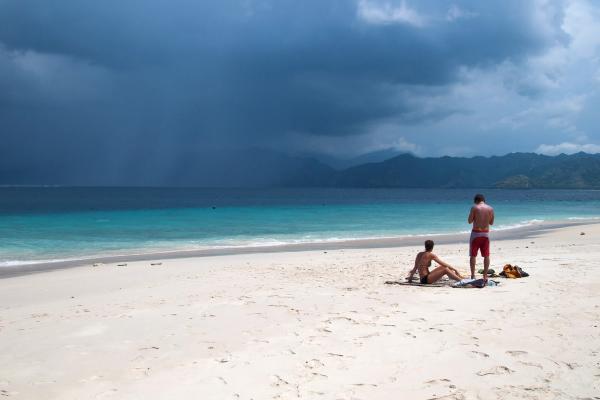
4 Days in the Gili Islands: Trawangan, Meno and Air
A 4-day Gili Islands itinerary: which island to base on, how to reach Meno and Trawangan by day boat, boat timings and what to book ahead.
Share this itinerary