The short answer
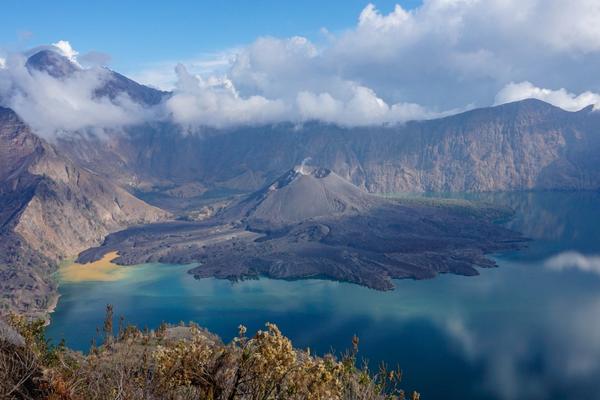
Rinjani is not a casual day hike. It is a serious multi-day trek across loose volcanic terrain, with a brutal final summit climb. Most people do one of two trips: a 2 day 1 night route to the crater rim with its view over the caldera lake, or the full 3 day 2 night route that adds the summit at 3726 metres. You must go with a licensed guide and porters, and the mountain is closed in the rainy season. With realistic fitness and the right operator, it is achievable and unforgettable.
The routes and how long they take
- 2 days 1 night (crater rim): The most popular option. You hike to the crater rim, camp overnight with sunset and sunrise views over Segara Anak, the caldera lake, and descend. It does not include the summit, which keeps it more achievable.
- 3 days 2 nights (summit): Adds the pre-dawn summit push to 3726 metres and usually a visit down to the lake and hot springs. This is the full experience and significantly harder.
- Longer and traverse routes: Some operators run 4-day traverses between the Senaru and Sembalun trailheads for the most complete loop.
Trailheads: Sembalun vs Senaru
There are two main starting points. Sembalun is the usual choice for summit attempts: it starts higher, crosses grassland and a long ascent to the crater rim, and gives the standard route to the top. Senaru is greener and more forested, often used for crater-rim-only trips or the descent on a traverse. Your operator will advise based on the route, but a common summit itinerary goes up from Sembalun and down via Senaru.
How hard is it, really
Be honest with yourself about fitness. The trek involves long days of uphill hiking at altitude, camping in cold conditions, and a summit push that begins around 2am over loose volcanic scree, where you slide back with every step. It is the single toughest stretch, taking several hours in the dark and cold to reach the top for sunrise. You do not need to be an athlete, but you should be comfortable with sustained walking, some prior hill or hiking experience, and a tolerance for discomfort and cold.
When to go
Rinjani is open only in the dry season, roughly April to December, and closed in the rainy months (usually January to March) because the terrain becomes dangerous when wet. The clearest, most stable conditions tend to fall between June and September. Always check the current status before booking, as the national park can close the trail at short notice for weather or volcanic activity. For the wider seasonal picture, see our best time to visit Lombok guide.
What to bring and how to prepare
- Layers and a warm jacket: Summit and camp temperatures can drop near freezing, even though the days are hot.
- Proper footwear: Broken-in hiking boots or trail shoes with good grip for the scree.
- Headtorch, gloves, and a hat: Essential for the pre-dawn summit push.
- Plenty of water and snacks: Your guide and porters carry meals, but stay well hydrated.
- A reputable, licensed operator: Guided treks only. Choose one with good safety, fair porter treatment, and clear inclusions.
Booking and logistics
You cannot trek Rinjani independently, so book through a licensed operator who arranges the guide, porters, park permits, food, and camping gear. Treks usually start from Senaru or Sembalun villages, a few hours' drive from the Gili crossing or Senggigi. Build a rest day either side, you will be tired, and many travellers reward themselves with beach time on the Gilis afterwards. Our 7-day Lombok Rinjani trek route pairs the climb with recovery time.