By Editorial Team · Last updated September 2026
The Banda Islands are the hardest well-known place in Indonesia to reach, and the reason is 570 kilometres of open sea between Ambon and Banda Neira. This nine day plan builds the trip backwards from that crossing: one base on Neira, the outer islands ordered by distance so a cancelled boat costs you the furthest one rather than the week, and two buffer days that look like waste until the sea takes one.
The Banda Islands were once worth a colony. Nutmeg grew nowhere else on earth, and for two centuries the Dutch fought and traded and killed for ten small islands adrift in the middle of the Banda Sea. What is left today is about twenty thousand people, a restored fort above a harbour, a live volcano you can climb before breakfast, and coral walls that most divers have never dived. The islands are not the hard part of this trip.
The hard part is the 570 kilometres between Ambon and Banda Neira. Three ways across exist, all three are unreliable in different ways, and the one that fails most often is the one that sounds most convenient. Almost every disappointing Banda trip is really a transport story: someone budgeted two days for the crossing, lost four to weather, and spent the rest of the week watching the calendar instead of the water.
So this plan is built backwards from the sea. Nine days, one base, two deliberate buffer days that look wasteful on paper and are the reason the trip works. Ambon at both ends, Banda Neira in the middle, and the outer islands taken in the order that lets you swap one for another when the boats do not run.
Who is this trip for, and who should skip it?
This trip suits travellers who have already done Bali or Lombok and want somewhere that has not been packaged yet. It rewards people who read history, snorkel or dive, and can absorb a lost day without the week collapsing. It is a poor fit for anyone on a fixed return date, anyone who needs reliable connectivity, and anyone travelling with small children.
Say yes if: you are a repeat visitor to Indonesia, a couple who travel slowly, or a solo traveller comfortable with homestay-level comfort and shared boats. The Bandas are one of the safest and friendliest places in eastern Indonesia to arrive alone.
Say no if: you have a hard international flight on day ten, you need air conditioning and hot water every night, you are diving on a tight certification schedule, or the words "the boat did not run today" would ruin your week. Nothing here is negotiable with the weather.
How do you actually get to the Banda Islands?
Every route starts at Ambon. Fly to Pattimura Airport from Jakarta or Makassar, then cross to Banda Neira by Pelni ship, by fast boat from Tulehu, or on a small propeller plane. The ship is cheapest and slowest at roughly twelve hours, the fast boat takes about five, and the flight takes about forty five minutes and is the least dependable of the three.
The Jakarta leg is the easy part. Batik Air, Garuda, Lion Air and Wings Air all run it, with direct services around three and a half hours and fares starting near fifty dollars when booked ahead. You can price and hold that leg online through 12Go's Jakarta to Ambon page, which also lists the Pelni sailings on the same corridor. The Ambon to Banda leg is a different story: it is not reliably sold online at all, so treat it as something you arrange once you are in Ambon, through your Banda guesthouse or at the harbour office.
| Pelni ship | Fast boat from Tulehu | Small plane | |
|---|---|---|---|
| Crossing time | About 12 hours, sometimes 8 to 16 | About 5 hours | About 45 minutes |
| Rough fare | IDR 140,000 to 160,000 in economy | IDR 550,000 to 1,000,000 by class | Around IDR 350,000 |
| How often | Roughly one to two sailings a week, clustered | Two sailings a week in most months | A handful of seats on a weekly service |
| Where you buy it | Pelni's own site or the Ambon harbour office | Ticket office at Tulehu harbour, or through your guesthouse | Locally, often by message, rarely online |
| What goes wrong | Runs late by hours, and the schedule is published close to the date | Cancelled outright in heavy swell, June to August especially | Ten to fifteen seats, 10 kg bags, and the operator has changed hands more than once |
| Use it when | You have time and want the certainty of a big hull | You want the crossing over in an afternoon | You are already in Ambon and a seat happens to exist |
Read that table as a ranking of risk, not of comfort. The ship is the slowest and the most likely to actually sail. The plane is the fastest and the most likely to leave you in Ambon for another three days, which is precisely why the buffer days in this plan sit on the Ambon side.
Trip at a glance
Nine days: one night in Ambon on arrival, six nights based in Banda Neira, one crossing day, and one buffer night back in Ambon before flying out. Two full days go to town and the volcano, three to the outer islands, and the rest absorbs whatever the sea decides. One unpacking, one repacking, no internal flights.
Route: Ambon, Banda Neira, Gunung Api and Banda Besar, Pulau Hatta, Pulau Ai, back to Ambon.
Base: Banda Neira for six nights. The archipelago is small enough that everything except Ai works as a day trip, and moving your bags between islands buys you nothing.
Pace: Remote and slow. Two early starts, no long overland days, and a lot of boat time.
Budget shape: Guesthouses and homestays rather than hotels, meals included at most places, and boat charters as the real variable. Budget IDR 350,000 to 600,000 per charter day and split it.
How many days do you need in the Banda Islands?
Six nights on Banda Neira is the working minimum, and nine days door to door is what that actually costs once you add the Ambon crossings at both ends. With fewer than six nights on the islands you are gambling that no boat is cancelled, and on this route roughly one trip in three loses a day to weather or a rescheduled sailing.
People routinely try to do this in five or six days total. It works perhaps half the time. The other half, the fast boat does not run on the day it was meant to, and a trip built to see Hatta and Ai never leaves Neira harbour. The two buffer days in this plan buy exactly one thing: the room to lose a day without losing the trip.
Why this route makes sense
The Bandas cluster tightly around one deep anchorage, so a single base on Banda Neira puts the volcano, the nutmeg groves and two of the three outer islands within a morning's boat ride. Ordering the days by distance rather than by interest means a cancelled boat costs you the furthest island, never the whole week.
Neira comes first because it needs no boat. Gunung Api and Banda Besar sit minutes from the jetty, so they hold up in almost any weather. Hatta is the longest run and goes in the middle of the stay, where there is still room to try again. Ai comes late and doubles as the one island worth sleeping on if you want a night somewhere quieter than town.
Day 1: Land in Ambon and stop moving
Morning. Fly into Pattimura from Jakarta or Makassar. The direct Jakarta service takes about three and a half hours, and the early departures are the ones that survive the day's delays. Book the Jakarta leg well ahead, because when it slips, everything downstream slips with it.
Afternoon. Ambon is a working port city with a hard history and very little tourism, and it is worth the half day you are giving it. See the war cemetery, eat at the night market, and change enough cash for the whole trip. ATMs exist on Banda Neira and they run dry.
Evening. Confirm your crossing. This is the single most useful hour of the trip: message your Banda guesthouse, ask what is actually sailing this week, and adjust days 2 and 8 around the answer rather than the other way round.
Base: Ambon, one night, ideally near the port side of town rather than the airport. Compare guesthouses and hotels in Ambon and pick for location over rating here, since you will be leaving before breakfast.
Booking logic: Book Ambon for one night only, and book it flexible. If the crossing moves, this is the night that changes.
Travel note: Tulehu harbour, where the fast boat leaves, is about an hour and a half by road from Ambon city. If you are on that boat, you are leaving at around six in the morning.
Day 2: Cross to Banda Neira
Morning. Whichever way you cross, you are up early. The fast boat from Tulehu leaves mid morning and lands you in about five hours. The Pelni ship usually sails overnight and puts you into Banda harbour in the morning. Take motion sickness tablets before you board, not after.
Afternoon. The approach is the best twenty minutes of the trip. The ship rounds the headland and the volcano stands straight out of the water with the town spread under it. Get on deck for it.
Evening. Walk the waterfront, eat wherever your guesthouse is cooking, and sleep early. Tomorrow starts at four.
Base: Banda Neira, six nights. The town's places to stay run from simple homestays to a couple of restored colonial houses, most of them family run and most including meals. Check what is bookable on Banda Neira before you arrive, then confirm directly, because inventory here is thin and often held offline.
Booking logic: Book all six nights before you leave home. There are perhaps a few hundred beds on the island, and dive groups take them in blocks during the calm windows.
Travel note: Bring cash. The island has ATMs and they are unreliable, card acceptance is close to nonexistent, and boat crews are paid in rupiah on the day.
Day 3: Climb Gunung Api before breakfast
Morning. Leave at four. Gunung Api is 667 metres of steep, loose, volcanic trail and takes about two hours up with a local guide, who you should hire rather than debate. You reach the rim around sunrise with the whole archipelago laid out below and nobody else on it.
Afternoon. The boat across from Banda Neira costs about IDR 10,000 each way, so the climb itself is almost free once the guide is paid. Come down, sleep, and then snorkel the lava flow on the volcano's north shore, where the coral regrew fast enough after the 1988 eruption that marine biologists came to ask why.
Evening. Nothing. Your legs are finished and the town shuts early.
Booking logic: Arrange the guide the evening before through your guesthouse. Expect to pay somewhere around IDR 150,000 to 250,000 as a working estimate, and confirm the figure when you book rather than at the trailhead.
Travel note: The descent is harder than the climb. The trail is loose scree in places, and proper shoes matter more here than on any volcano in Java.
Day 4: Banda Neira town and the nutmeg groves
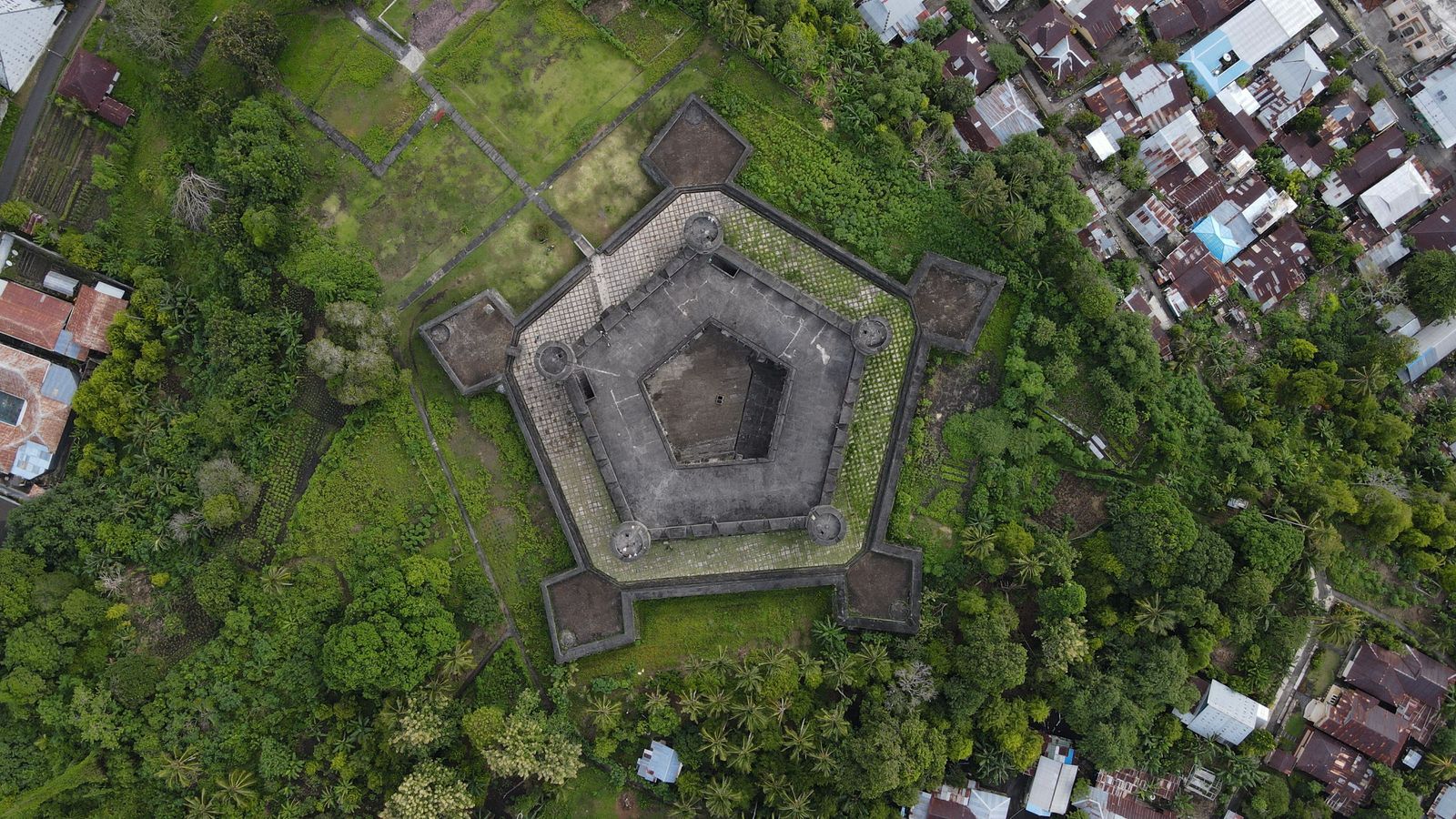
Morning. Fort Belgica, built in 1611 and fully restored, sits above the town and costs around IDR 10,000 to enter. Go early, walk the walls, and look down at the harbour that the Dutch and the English spent decades trading back and forth. The fort makes the rest of the island legible.
Afternoon. Cross to Banda Besar, the largest island, ten minutes away, and walk up through Lonthoir to the nutmeg plantations. Some of the trees are centuries old. A local walk through the groves, with someone who can explain what nutmeg and mace actually are and what happened to the people who grew them in 1621, is the most valuable two hours on this itinerary.
Evening. Back in Neira, visit the small museums and the exiles' houses. Hatta and Sjahrir were held here before independence, and the rooms are preserved.
Booking logic: The Banda Besar crossing is a public boat and needs nothing booked. A guide for the plantation walk does, and is worth it.
Travel note: Bring water for Lonthoir. The climb through the village is steep, shadeless in the middle of the day, and longer than it looks from the water.
Day 5: Pulau Hatta, the long run
Morning. Hatta is the furthest of the three outer islands and the one most often cancelled, which is why it sits here rather than on day 8. A chartered boat for the day runs around IDR 600,000 as a working figure, split between however many of you go. Leave at seven.
Afternoon. The drop-off on Hatta's east side is the reason people come: a wall that starts in two metres of water and falls away into blue, with visibility that regularly runs past thirty metres in the calm months. You can snorkel it from the beach. Bring your own mask, because rental gear here is basic.
Evening. Back to Neira by late afternoon. If the sea turned during the day, you will know about it on the return leg.
Booking logic: Ask your guesthouse to fill the boat. Charters are priced per boat rather than per person, so four people pay a quarter each, and the noticeboard economy on Neira works fast.
Travel note: If the swell kills this day, move it to day 7 and take Pulau Ai now. That flexibility is the entire reason Hatta is scheduled in the middle of the week.
Day 6: A slow day in Neira, on purpose
Morning. This is the buffer inside the buffer. If a boat was cancelled earlier in the week, today is where it goes. If nothing was cancelled, today is a genuinely slow day in a town of perhaps seven thousand people, which is a rarer thing than another island.
Afternoon. A half day to the lava stream north of Gunung Api runs around IDR 120,000, and the Pisang and Batu Kapal sites can be chartered together for roughly IDR 350,000 for the day. Batu Kapal is a submerged pinnacle and the best short boat ride on the archipelago.
Evening. Divers: this is the night for the mandarinfish. They come out at dusk on a shallow rubble site near the harbour and perform a mating ritual that lasts about twenty minutes. Any of the island's operators run it as a dusk dive.
Booking logic: Keep this day unbooked until the evening before. Its value is that it is empty.
Travel note: If you are diving rather than snorkelling, book with an operator before you arrive. There are only a few on the island and they fill in the calm windows.
Day 7: Pulau Ai, and a night off the main island
Morning. Ai is about forty minutes from Neira and holds the wall that most divers rate as the best in the group, dropping from the shallows to well past recreational depth a short swim from the beach. There is a public boat most days, and a charter otherwise.
Afternoon. Ai is smaller and quieter than Neira: one village, a ruined fort, a few homestays, no traffic. Walk it in an hour and then get back in the water.
Evening. Stay the night if a bed is free. Ai after the day boats leave is the quietest place in this itinerary, and the stars over the Banda Sea with no generator running are worth rearranging a night for.
Base: Pulau Ai for one night, or back to Banda Neira if nothing is available. Arrange the Ai bed from Neira, not from home.
Booking logic: If you stay on Ai, keep your Neira room for the night anyway unless your guesthouse agrees to hold your bags. Losing a booked bed on Neira in high season is worse than paying for an empty one.
Travel note: The public boat back to Neira leaves in the morning, not on demand. If you sleep on Ai, you are committed until then.
Day 8: Cross back to Ambon
Morning. Recross. Whichever way you came is usually the way you go back, and the same warnings apply. If the fast boat is cancelled and the ship is not sailing for three days, this is the day you are grateful you left a spare one at the end.
Afternoon. Arrive in Ambon, check in, and do nothing. A twelve hour crossing costs more than the hours it takes.
Evening. Eat properly. Ambon's food is better than Banda's, and after a week of guesthouse cooking that lands harder than it should.
Base: Ambon, one night, near the airport this time rather than the port.
Booking logic: Book this night refundable. It is the one most likely to move.
Travel note: Do not book an international departure for today. This is the day the plan is protecting.
Day 9: Fly out of Ambon
Morning. Fly to Jakarta or Makassar and connect onward. Keep at least four hours between the Ambon arrival and any international flight, and more if you can, because the Ambon corridor delays often and your bags have to make the same connection you do.
Afternoon. If your onward flight is late, Ambon's waterfront fills an afternoon without committing you to anything that needs a boat.
Travel note: If everything ran on time all week, you now have a spare day. Spend it on Ambon's north coast beaches rather than trying to squeeze another Banda island in. Adding a day at the far end of a fragile chain is how people miss flights.
What to book early, and what to keep flexible
Book three things months ahead: the Jakarta or Makassar to Ambon flight, all six nights on Banda Neira, and a dive operator if you are diving. Leave everything else loose. Boat charters, guides, the Ai night and both Ambon nights should be arranged within a day or two of needing them, because the sea decides the order.
Book early: the Ambon flight, because fares climb steeply and the direct services are limited. The Neira guesthouse, because the island has very few beds. The dive operator, because there are only a handful and they block out during the calm windows in March, April, and September to November.
Keep flexible: the crossing itself, both Ambon nights, every boat charter, and the Ai overnight. Paying a little more for refundable rooms at the two ends is the cheapest insurance on this trip.
Do not prebook at all: day tours sold as packages from outside the islands. Everything on Banda is arranged on the island, at local prices, usually by your guesthouse, and the markup for arranging it from elsewhere is large.
When is the best time to visit the Banda Islands?
March to April and September to November are the two calm windows, when the sea between the islands settles and visibility on the walls regularly passes thirty metres. June to August brings the heaviest swell and the most cancelled boats. December to February is workable but wetter, with more days lost to squalls than to serious sea.
| March to April | September to November | June to August | December to February | |
|---|---|---|---|---|
| Sea between islands | Calm, the best window for Hatta and Ai | Calm, and the most reliable of the four | Rough, outer island boats cancelled often | Mixed, squally rather than heavy |
| Underwater visibility | Often past 30 metres | Often past 30 metres | Variable and frequently stirred up | Variable |
| Crowds | Light | The busiest, and liveaboards call in | Almost nobody | Light |
| Book how far ahead | Two to three months | Three to four months, beds go first | Weeks, if you go at all | Six to eight weeks |
| Honest verdict | The quiet half of the good season | Go now if you can choose | Go somewhere else | Fine if you are flexible |
If you have a free choice, take late September or October. If you are locked into July or August, this is a trip to postpone rather than to attempt, because the days you would lose are exactly the outer island days that justify the journey.
Mistakes travellers make in the Banda Islands
The four expensive mistakes are all the same mistake in different clothes: treating a fragile transport chain as a fixed one. Booking a tight return, flying rather than sailing, arriving without cash, and scheduling the furthest island last are each a way of betting that nothing will be cancelled.
Booking an international flight the day after the crossing. This is the one that costs real money. A cancelled boat plus a missed long-haul is a four figure mistake, and it happens every season.
Choosing the plane because it is fastest. Ten to fifteen seats, a 10 kg baggage limit, a service that has changed operator more than once, and no easy way to rebook. Use it as a bonus when a seat appears, not as a plan.
Arriving without enough cash. Cards are close to useless on Banda Neira and the ATMs run dry. Draw the whole week's money in Ambon, including boat charters and guide fees, and carry a reserve.
Putting Hatta on the last day. The furthest island is the first one the weather takes away. Schedule it in the middle, where you can still have a second go.
Expecting to work from here. Mobile data on Banda Neira is slow and drops out, and guesthouse wifi is worse. An Indonesia eSIM will keep you contactable for messages and boat logistics, which is what it is for. It will not hold a video call.
What to cut, adapt or upgrade
To cut a day, drop Pulau Ai and keep the buffer, which gives you an eight day trip with the same insurance. To cut two, drop Ai and one buffer night and accept the risk. To go longer, add Pulau Run, the island the English traded to the Dutch for Manhattan, which needs a full day and settled water.
Cut to 8 days: lose the Ai overnight and take it as a day trip. You keep both Ambon buffer nights, which is the part that actually protects the trip.
Cut to 7 days: drop Ai entirely and take one buffer night instead of two. This works, and it is the shortest version worth flying this far for.
Stretch to 11 or 12 days: add Pulau Run and a second slow day. Run is small, historically the strangest of the group, and needs a calm sea and a chartered boat, so it belongs in a longer trip rather than a tighter one.
Upgrade: one of the restored colonial houses on Neira for the whole stay rather than a homestay, and a private boat for the Hatta and Ai days instead of shared. Neither is expensive by Bali standards, and the boat is the one that changes the week.
Do not upgrade: the crossing. Paying for the fast option does not make it more likely to sail.
Before you build this trip
Visa. Most visitors use the eVOA, which costs IDR 650,000 for 30 days and can be extended once to 60 days for around IDR 1,150,000 in total. Nine days is comfortably inside the first 30. Fees change, so check the current figures in our Indonesia visa guide and against the official portal before you pay.
Money. Budget the Ambon flights and the Neira beds as fixed costs, and the boats as the variable. For a sense of what the rest of a trip costs, our Indonesia travel costs breakdown sets the daily ranges. The Bandas sit at the cheap end for food and rooms and the expensive end for transport, which is the pattern across remote eastern Indonesia.
Connectivity. Buy an Indonesia eSIM before you land so you are contactable in Ambon, where you will be arranging the crossing. Coverage on Banda Neira exists and is slow, and on the outer islands it comes and goes.
Health. There is a clinic on Banda Neira and no hyperbaric chamber closer than Ambon, and Ambon is a twelve hour sail away. Dive conservatively, and carry insurance that covers evacuation from a remote island rather than the standard policy.
Language. English is limited outside the guesthouses and dive operators. A little Bahasa Indonesia goes a long way here, and people are generous about the attempt.
Final verdict
Go, and give it nine days rather than six. The Banda Islands deliver something very few places in Indonesia still can: a landscape with a real historical weight behind it, coral in genuinely good condition, and almost no other travellers looking at either. That combination survives precisely because the journey filters people out.
The catch is honest and worth repeating. This is a trip where the sea sets the schedule, where a week can lose two days to a cancelled boat, and where the difference between a good trip and a ruined one is usually the return flight you booked months earlier. Build in the slack and the Bandas are one of the best weeks in the country. Build it tight and you will spend it in Ambon.
If that trade sounds wrong, Raja Ampat gives you similar water with better logistics, and Sulawesi gives you similar remoteness with roads. If it sounds right, this is the one to do while it is still like this.
Related itineraries
If the Bandas appeal but the transport does not, these three trips sit in the same part of the country with different amounts of friction. Eight days in Raja Ampat homestays is the closest comparison: the same eastern Indonesia remoteness, better water, and a supply chain that works. Fourteen days across Sulawesi trades the boats for long road days and adds the Toraja highlands. Eight days diving Wakatobi is the one for divers who want walls of this quality with a scheduled flight at the end of them.
Before you go
Sort the practical side
Entry rules and a realistic budget before you book this trip.
Good to know
Frequently asked questions
How do you get to the Banda Islands?
Fly to Ambon first, from Jakarta in about three and a half hours or from Makassar. From Ambon there are three ways across to Banda Neira: a Pelni ship taking roughly twelve hours for around IDR 150,000, a fast boat from Tulehu harbour taking about five hours for IDR 550,000 to 1,000,000, and a small propeller plane taking about forty five minutes for around IDR 350,000. The Ambon to Banda leg is rarely sold online, so arrange it through your guesthouse or at the harbour office.
How many days do you need in the Banda Islands?
Six nights on Banda Neira is the working minimum, which comes to about nine days door to door once you add the Ambon crossings at both ends. Fewer than six nights on the islands means betting that no boat is cancelled, and on this route roughly one trip in three loses a day to weather or a rescheduled sailing.
When is the best time to visit the Banda Islands?
March to April and September to November are the calm windows, when the sea between the islands settles and visibility on the walls regularly passes thirty metres. September to November is the most reliable of the two. June to August brings heavy swell and frequent cancellations of the outer island boats, and is the window to avoid.
Is it worth flying from Ambon to Banda Neira instead of taking the boat?
Usually not as a plan. The flight takes about forty five minutes against twelve hours on the ship, but it runs ten to fifteen seats on a weekly service with a 10 kg baggage limit, the operator has changed hands more than once, and there is no easy way to rebook when it does not go. Treat a seat as a bonus if one appears once you are in Ambon.
Can you visit the Banda Islands without diving?
Yes. The best walls, including the drop-off on Pulau Hatta and the lava flow on Gunung Api, start in two to three metres of water and can be snorkelled from the beach. The volcano climb, Fort Belgica, the nutmeg groves above Lonthoir and the exiles' houses in Neira fill several days on their own.
How much does a Banda Islands trip cost?
The Ambon flights and the Neira beds are the fixed costs, and boats are the variable. A full day charter to Pulau Hatta runs around IDR 600,000 for the boat rather than per person, Pisang and Batu Kapal together about IDR 350,000, and the lava stream half day around IDR 120,000. Rooms and food sit at the cheap end for Indonesia, so the transport is what sets the budget.
Are there ATMs on Banda Neira?
There are, and they are unreliable. Card acceptance is close to nonexistent, boat crews and guides are paid in cash on the day, and the machines run dry. Draw the whole week's money in Ambon before you cross, including charters and guide fees, and carry a reserve.
Keep exploring
Related itineraries
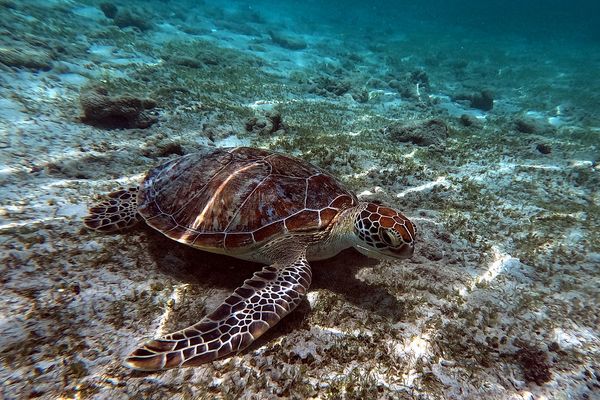
One week (6-8 days) · Wild Indonesia
8 Days in the Derawan Islands: Derawan, Sangalaki, Kakaban and Maratua
How to plan 8 days across Derawan, Sangalaki, Kakaban and Maratua: getting there from Berau, where to base, and the jellyfish lake rule that changed.
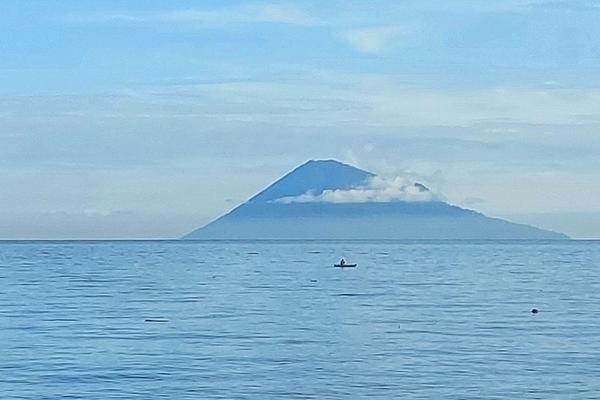
One week (6-8 days) · Wild Indonesia
8 Days in North Sulawesi for a Honeymoon: Bunaken and the Minahasa Highlands
A quiet North Sulawesi honeymoon: four nights on the Bunaken reef, three in the cool Minahasa highlands, with real transfer times and 2026 costs.
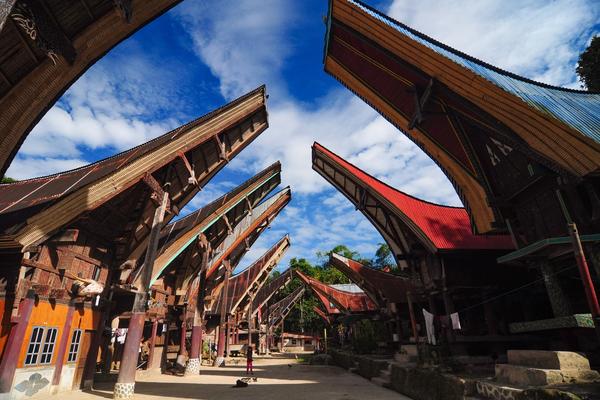
Two weeks (12-16 days) · Wild Indonesia
14 Days in Sulawesi: Tana Toraja, the Togean Islands and Bunaken
The two-week Sulawesi route that fits the Togean Islands, planned backwards from two ferries that sail on fixed days. Transfers, costs and trade-offs.
Share this itinerary