By Editorial Team · Last updated September 2026
Raja Ampat is sold at resort and liveaboard prices, but the islands are community-owned and the homestays rent directly. An eight-day trip based on one Kri Island homestay, with the real 2026 costs, permits and ferry logistics.
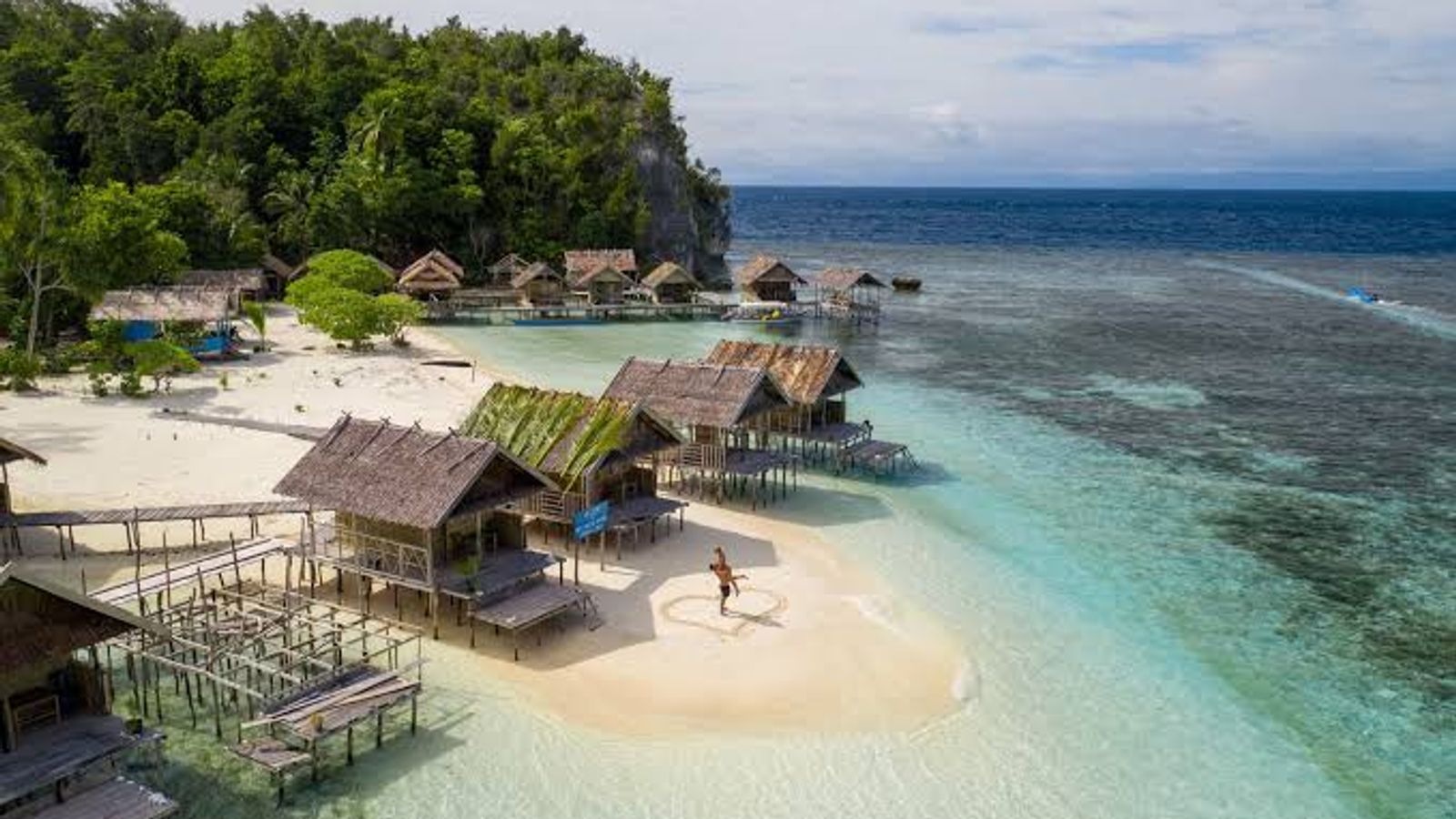
Almost everything written about Raja Ampat assumes you are paying resort or liveaboard money for it. The islands are also, quietly, one of the few world-class reef destinations where the local community owns the accommodation and rents it to you directly, at a price a working person can carry. This eight-day trip does exactly that: one Papuan homestay on Kri Island, five nights in the Dampier Strait, and the boat time spent on reefs rather than on repacking.
Who this trip is for
This suits solo travellers, friends and couples who are strong in the water, comfortable with a bucket shower and a mosquito net, and willing to give up wifi, air-conditioning and menus for six days. You need patience with boats, cash in your pocket and no fixed idea of what happens each morning.
It is a poor fit if you need reliable connectivity for work, if you want a bar in the evening, or if anyone in the group has a medical condition that needs quick access to a hospital. There is no hospital in the islands, and the ferry back to the mainland does not run at night. It is also the wrong trip if you want to see the whole archipelago, because this route deliberately sees one small part of it properly.
Trip at a glance
Duration: 8 days, 7 nights, two of them in Sorong. Start and end: Sorong (SOQ). Base: one homestay on Kri Island for five nights. Best for: confident swimmers and snorkellers, budget-conscious divers, solo travellers. Not ideal for: comfort-seekers, remote workers, anyone on a tight connection home.
Travel style: one base, daily boats, no repacking. Budget: low for accommodation, high for the flights and permits that get you there. Logistics level: hard, and entirely dependent on one ferry. Best time: October to April.
Why base yourself on Kri Island instead of moving around?
Kri sits in the middle of the Dampier Strait, the stretch of water between Waigeo, Gam, Mansuar and Kri where the famous reefs cluster. From a Kri jetty, Cape Kri, Chicken Reef, Mike's Point, Sardine Reef, Blue Magic, Friwenbonda and Sawandarek are all reachable in five to twenty minutes by boat. Nowhere else in Raja Ampat packs that much into that small a radius.
The practical consequence matters more than the geography. Every island move in Raja Ampat costs a boat charter, half a day and a fresh round of unpacking, and boat charters are the single largest variable cost of a homestay trip. Staying put converts that money into reef time. Sardine Reef sits about ten minutes away with its reef top at five metres, which means snorkellers and divers can use the same site on the same run.
Cape Kri is the reason divers know the island at all. It holds the record for the most fish species logged on a single dive, and it is close enough that a homestay boat can drop you there before breakfast has properly settled.
How much does a Raja Ampat homestay trip actually cost?
Budget roughly $27 to $30 per person per night for a Papuan homestay with three meals included, which typically prices at around IDR 850,000 to 950,000 per room per night for two people. That is a fraction of a dive lodge, but the savings are partly eaten by boat charters, which run roughly $100 to $200 per day depending on distance.
| Option | Rough nightly cost | What is included | Who it suits |
|---|---|---|---|
| Papuan homestay | $27 to $30 per person, full board | A simple room, shared or basic bathroom, mosquito net, three meals cooked by the family. Boats and gear are extra and quoted per trip | Snorkellers, budget divers, solo travellers and anyone who wants the money to stay in the village |
| Dive lodge or eco-resort | $150 to $400 per person, all-inclusive | Ensuite room, guided dives, tanks, gear, a fixed daily boat schedule and often airport handling | Divers who want a set programme and do not want to negotiate a boat every morning |
| Liveaboard | Priced per cabin per trip, usually the highest of the three | Everything, plus the range to reach Misool and Wayag, which the Dampier Strait bases cannot | Repeat visitors who have already done the Dampier Strait and want the far south or far north |
The honest arithmetic: on this route the flights to Sorong and the permits usually cost more than the seven nights of accommodation combined. That is what makes the homestay option worth understanding. The trip is expensive to reach and cheap to inhabit, and most people plan it the other way round.
Day 1: Fly to Sorong and stop there
Morning. Fly into Sorong from Jakarta, Makassar or Manado. The direct hop from Jakarta runs about four hours as a working estimate, with Garuda, Batik, Lion and Citilink among the carriers serving the route. Confirm current flight routes before you lock anything else, because Papua schedules change more often than most of Indonesia.
Afternoon. Do the mainland chores while you still can. Draw all the cash you will need for the entire trip, plus a buffer, because there are no working ATMs where you are going and homestays do not take cards.
Evening. Eat properly, buy anything you cannot get on an island, and sleep near the port. Base: a functional hotel in the port area for one night. Booking logic: you can search Sorong hotels on Booking.com for this one night; these places exist to protect your ferry, not to be memorable. Travel note: do not try to reach the islands on your arrival day. The connection almost never works, and failing it costs you a whole day at the far end.
Day 2: The ferry to Waisai, then the boat to Kri
Morning. Get to the port early and understand the schedule before you plan your day around it. The crossing to Waisai takes about two hours. On most days there is a single afternoon departure at around 14:00, with a second morning crossing at around 09:00 on some days of the week. The operator sets the rotation by demand and announces changes at short notice, sometimes only days ahead, so confirm the day before rather than trusting any timetable you read at home, including this one.
Midday. Check the Sorong to Waisai ferry to see what is currently running, then buy at the port. As a working estimate economy runs around IDR 137,000 and the VIP cabin around IDR 262,000, with a small boarding tax on top, roughly IDR 12,000 at Sorong and IDR 5,000 at Waisai. The VIP cabin buys air-conditioning and a private toilet, which on a rough crossing is money well spent.
Afternoon. Pay the permits at Waisai, then take your homestay's boat across to Kri, around forty-five minutes. Transfer prices are quoted per boat rather than per person and are published on each homestay's page, so a pair or a small group splits the cost. Base: one homestay on Kri Island for five nights. Booking logic: arrange the transfer with the homestay in advance and confirm which ferry you are on, because nobody meets a boat they did not know was coming.
Evening. Swim off the jetty before dark and eat whatever the family cooked. Travel note: if the ferry is cancelled you lose a day here, not at the end. That is the argument for the Sorong buffer night on Day 1.
Day 3: The house reef, then Cape Kri
Morning. Start in the water directly off the jetty. Kri house reefs routinely produce turtles, reef sharks, wobbegongs and walls of fish within a few fin-kicks of the steps, which is why so many people never bother with a boat on their first full day.
Afternoon. A short run to Cape Kri, the site that holds the single-dive fish species record. Divers should ask the guide to sequence it with the tide; snorkellers should accept being dropped and picked up rather than swimming against the current.
Evening. Negotiate the week's boats with your host now, not the night before each trip. Booking logic: if other guests are going the same way, ask to share. Sharing a charter is the single biggest lever on the cost of this trip. Travel note: currents here are real. If you are not a confident open-water swimmer, wear a float vest and stay with the boat.
Day 4: Arborek village and Manta Sandy
Morning. Run east to Arborek, a small village island with a jetty that is itself one of the better snorkels in the strait. The village earns directly from visitors, so buy something and stay off private ground.
Afternoon. Manta Sandy sits just off Arborek and is the most reliable place in Raja Ampat to see mantas from the surface. Mantas come in to be cleaned roughly October to April, often in groups of five to thirty. The site is ranger-managed with a marked waiting line, and everyone is expected to hold position rather than swim at the animals.
Evening. Back on Kri for sunset. Travel note: Manta Sandy is busy and can run strong currents, and it is the one site where beginners most often get into trouble. Go with the boat crew's timing, not your own.
Day 5: Sardine Reef and the rest of the Dampier Strait
Morning. Sardine Reef, about ten minutes out, with a reef top at five metres. The biomass is among the highest in Raja Ampat, and because it is shallow it works for snorkellers and divers on the same trip.
Afternoon. Pick a second site from the near cluster: Chicken Reef, Mike's Point, Friwenbonda or Sawandarek. Blue Magic, the seamount between Kri and Waigeo, is the one to save for divers and a slack tide.
Evening. Booking logic: confirm tomorrow's long westward run tonight, including the departure time, the fuel share and whether lunch is on the boat. Travel note: this is a good day to do nothing in the afternoon if the sea is up. Nobody regrets a rest day here; people regret pushing through a rough crossing.
Day 6: The long run west to the Fam Islands and Piaynemo
Pre-dawn. Leave early. The Fam Islands sit about ninety minutes by boat from Kri, and the sea is calmest at first light. This is the longest and most weather-exposed day of the trip.
Morning. Melissa's Garden, the coral garden that justifies the crossing, then the wooden staircase up to the Piaynemo viewpoint over the lagoons. Go up before the day boats arrive from Waisai.
Afternoon. Run back east, stopping at whatever reef the crew rates on the day. Travel note: this is the day to cancel if the forecast is bad. It is a long open-water run in a small boat, and the reefs near Kri are genuinely as good. Treat Piaynemo as the optional part of the week, because it is.
Day 7: Back to Waisai, then the ferry to Sorong
Morning. A last swim off the jetty, then settle up in cash and take the boat to Waisai. Leave far more margin than feels necessary.
Afternoon. Cross to Sorong. Base: a Sorong hotel for one night. Travel note: the ferry sets this schedule, not you. On a day with only the afternoon departure, you are arriving in Sorong in the evening, which is precisely why the next day exists.
Evening. A real shower, air-conditioning and food that is not rice and fish. After six days off-grid this feels disproportionately good.
Day 8: Fly out
Morning. Fly out of Sorong and connect onward. Travel note: never book a same-day international connection against a domestic Papua flight. Regional schedules move, and a missed connection at the end of this trip is expensive to fix.
Can you see birds of paradise in Raja Ampat?
Yes, and it is the one land experience worth building a morning around. Red birds of paradise are common on Waigeo and Gam, and the display site behind Sawinggrai village on Gam is the most accessible of them. From the village it is an easy walk of about twenty minutes to the display trees.
Most operators sell this as a pre-dawn expedition, with a boat around 04:30 and the walk starting at first light, and that is the version with the best odds. It is worth knowing it is not the only version. The professional birding report published in the local homestay association's guide records five or six males displaying at the same site in the afternoon, around half past three. If a 04:30 start would wreck the rest of your week, ask your host about the afternoon window before you write the birds off entirely.
Budget a guide fee of roughly $50 to $100 per group as a working estimate, paid directly to the Papuan guide community rather than to an agency, plus the boat. Sawinggrai sits a short run from Kri, well inside an hour, so this is a half day rather than the full-day commitment Piaynemo demands. Confirm the crossing time with your host, wear something you can walk in, and expect the forest floor to be wet.
What permits do you need for Raja Ampat, and what do they cost?
Two separate payments, both mandatory. The marine park entry permit is quoted at IDR 1,000,000 for international passport holders and is valid for twelve months from purchase, according to the guide maintained by the local homestay association. The visitor entry ticket is IDR 300,000 and is registered through the official SIPARI portal. Budget around IDR 1,300,000 per person, roughly $80.
| Payment | Cost | Where it is handled | Notes |
|---|---|---|---|
| Marine park entry permit | IDR 1,000,000 for international passport holders | In person at the permit booth at Sorong harbour or the authority's office in Waisai | Valid twelve months from purchase. Online registration has been unavailable while the authority migrates its website, so plan to pay in person and in cash |
| Visitor entry ticket | IDR 300,000 | Registered online through the official SIPARI portal, or paid on arrival at the tourism office in Waisai | Valid for a single visit. Leave the regency and come back and you buy another |
| Dive tag | Around IDR 400,000 per diver | Arranged through your dive operator or homestay | Divers only. Snorkellers do not need it |
Two things follow from that table. Carry the whole amount in cash, drawn in Sorong, because the online route has not been dependable. And if you are coming back inside twelve months, keep the permit receipt, because the expensive half of the bill is already paid.
What to book early, and what to keep flexible
Book early and firmly: your Sorong flights, and your homestay. Good homestays on Kri have a handful of rooms and fill months ahead in the October to April window. Book directly with the family or through the association's own listing platform rather than a large booking site, because that is how the money reaches the island.
Keep flexible: every boat. Do not prepay a fixed daily programme from home. Boats are negotiated on the ground, shared with other guests when the timing lines up, and cancelled when the sea says so. A trip planned to the hour here is a trip that will disappoint you on the first bad-weather morning.
Mistakes travellers make on a Raja Ampat homestay trip
The expensive one is arriving with too little cash. There is no way to fix it once you are on the island, and people end up cutting boats they flew across the world for. Draw more than you think, in Sorong, and carry it in small notes.
The others repeat every season: booking a homestay a fortnight out and finding nothing; skipping the Sorong buffer night and losing a day to a missed ferry; treating Piaynemo as compulsory and burning a fifth of the budget on one boat; expecting a homestay to behave like a hotel; and booking a tight onward flight against a ferry that answers to the weather.
What to cut, adapt or upgrade
Cut Piaynemo first. It is the longest run, the most weather-dependent and the most expensive single day, and the reefs twenty minutes from your jetty are better underwater. Cutting it turns this into a calmer, cheaper trip without weakening it. Put the Sawinggrai birds in its place. You get a half day instead of a full one, a short crossing instead of an exposed ninety-minute run, and the only thing on this trip you cannot see with a mask on.
Adapt for divers by adding two nights and spending them on Blue Magic and Cape Kri at slack tide rather than on new geography. Adapt for weaker swimmers by dropping Manta Sandy and staying on the sheltered jetty reefs at Arborek, Sawandarek and Kri itself.
Upgrade by moving from a homestay to a dive lodge for the last two nights if you want guided diving, tanks and a fixed boat schedule at the end. That gives you the village experience and a soft landing, and it costs less than doing the whole week at lodge prices.
Before you build this trip
Getting there. Fly to Sorong via Jakarta, Makassar or Manado, then the ferry to Waisai, then a homestay boat to Kri. Every leg depends on the one before it, which is why this route spends two of its eight days on the mainland on purpose.
Entry and fees. Most nationalities use the Indonesia e-VoA. On top of that, budget around IDR 1,300,000 per person for the marine park permit and the visitor ticket combined, as a working estimate. Fees and rules change, so check the latest official guidance before you travel.
Money and connectivity. Cash for the entire trip, drawn in Sorong. Assume no signal and no wifi from the moment you leave Waisai. Set up an Indonesia eSIM with Airalo before you fly, but treat it as cover for Sorong and the journey rather than for the islands, where there is often nothing to connect to.
Health. Malaria is present in Raja Ampat. Reported risk at the island homestays around Kri, Mansuar and Gam is low and it is higher in populated Sorong, but low is not zero, and prophylaxis is a decision to take with a travel clinic rather than with a blog. There is no hospital in the islands; Waisai has a small clinic and anything serious means the ferry back.
Best time. October to April, which is both the calmer window in the Dampier Strait and the manta season at Manta Sandy. June to September brings more wind and choppier crossings, and the long westward runs are the first thing to become unpleasant.
Final verdict
Do this trip if you want the Dampier Strait properly and are willing to trade comfort for five nights to get it. Basing on Kri, keeping the boats short and sleeping in a village room is the cheapest honest way to see the most biodiverse reefs on the planet, and the money stays with the people who own them.
Do not do it if your holiday depends on things running to time. One ferry, one boat and one weather forecast decide this week, and none of them care about your plan. If that reads as a problem rather than as part of the appeal, book a dive lodge or a liveaboard and enjoy the same reefs with a schedule attached.
If that trade does appeal, the Banda Islands ask for more of it. The nine-day Banda route runs on a twelve hour ferry from Ambon rather than a two hour one from Sorong, and swaps the biodiversity of the Dampier Strait for nutmeg groves, a volcano you climb before breakfast and a colonial history that is still standing.
Related itineraries
If you want the same water without the tank, read 7 Days in Raja Ampat: Snorkelling, Islands and Karst. If you are a certified diver with two weeks, 14 Days in Raja Ampat for Divers goes deeper into the site list. Travelling as a family, 9 Days in Raja Ampat with Kids rebuilds the same base-and-explore logic around children.
Before you go
Sort the practical side
Entry rules and a realistic budget before you book this trip.
Good to know
Frequently asked questions
Can you visit Raja Ampat on a budget?
Yes, if you sleep in a Papuan homestay. Full board typically runs around IDR 850,000 to 950,000 per room per night for two, roughly $27 to $30 per person, as a working estimate. The flights to Sorong and the mandatory permits, not the accommodation, are what make Raja Ampat expensive.
What is a Raja Ampat homestay actually like?
A simple room built by a local family, usually with a mosquito net, a shared or basic bathroom, no air-conditioning and no wifi. Three meals a day are included and cooked when the family cooks, generally rice, fresh fish and vegetables. You eat with the household, and that is most of the evening.
Why stay on Kri Island rather than elsewhere in Raja Ampat?
Kri sits in the middle of the Dampier Strait, so Cape Kri, Chicken Reef, Mike's Point, Sardine Reef, Blue Magic, Friwenbonda and Sawandarek are all five to twenty minutes away by boat. Short boat runs mean lower charter costs and more time in the water, which is the whole economics of a homestay trip.
How do you get from Sorong to Kri Island?
Fly into Sorong, take the ferry to Waisai, which runs about two hours, then a homestay boat to Kri, about forty-five minutes. On most days there is only one afternoon ferry, at around 14:00, with a second morning crossing on some days. The rotation changes at short notice, so confirm locally.
How much cash should you bring to Raja Ampat?
Enough for the entire trip plus a buffer, drawn in Sorong. There are no dependable ATMs in the islands and homestays do not take cards. Budget for accommodation, permits of roughly IDR 1,300,000 per person, every boat charter, fuel shares and tips, then add more, because a shortfall cannot be fixed on the island.
Do you need to book Raja Ampat homestays in advance?
Yes, and by months rather than weeks in the October to April window. Homestays have a handful of rooms each and the well-run ones fill early. Book directly with the family or through the local homestay association's listing platform, which is also how the payment reaches the island rather than a platform.
When is the best time to visit Raja Ampat?
October to April. That window brings calmer seas in the Dampier Strait and it is also manta season at Manta Sandy, where the rays come in to be cleaned in groups of roughly five to thirty. June to September is windier, and the long boat runs west to the Fam Islands are the first thing to become unpleasant.
Is a Raja Ampat homestay trip good for solo travellers?
It works well, with one caveat about cost. Boat charters are quoted per boat rather than per person, so a solo traveller pays the same as a pair unless the trip is shared. Ask your host each evening which other guests are going where, and plan the week around sharing rather than around a fixed personal schedule.
Go deeper
Raja Ampat guides
Keep exploring
Related itineraries

10 days (9-11 days) · Raja Ampat
9 Days in Raja Ampat with Kids: One Base, Calm Reefs and Honest Logistics
A 9-day Raja Ampat family itinerary from one island base: calm jetty snorkels, Arborek, Piaynemo if the sea allows, plus fees, malaria and cash advice.
10 days (9-11 days) · Raja Ampat
10 Days in Raja Ampat: A Honeymoon Itinerary
A decision-led 10-day Raja Ampat honeymoon: Dampier Strait reefs, mantas, Piaynemo, a dawn bird of paradise and slow days, from one comfortable base.

One week (6-8 days) · Raja Ampat
7 Days in Raja Ampat: Snorkelling, Islands and Karst
A decision-led 7-day Raja Ampat itinerary for snorkellers, no diving needed: Cape Kri, Manta Sandy, Arborek and Piaynemo. What to book, what to skip.
Share this itinerary