
By Editorial Team · Last updated September 2026
Most Raja Ampat itineraries are written for divers. A honeymoon is a different trip. This decision-led 10-day route is built for couples: the best of the Dampier Strait at an unhurried pace, mantas and Piaynemo, a dawn bird of paradise, and slow private days, from one comfortable base with the logistics handled.
Raja Ampat is the most talked-about water in Indonesia, and almost every itinerary you find is written for divers logging tanks. A honeymoon is a different trip. You are not here to tick off dive sites, you are here to be somewhere genuinely remote and beautiful together, with slow mornings, private boat days and enough comfort that the remoteness feels like a gift rather than a test. This ten-day route is built around that: the best of the Dampier Strait at an unhurried pace, from one comfortable base, with the logistics handled so the two of you can switch off.
Who this trip is for
This is for couples and honeymooners who want their remoteness with a soft edge: a resort with air-con, a private bathroom and proper meals rather than a bare homestay, and days shaped around snorkelling, sunsets and each other rather than a packed schedule. You should both be comfortable in the water and happy off-grid for a stretch, trading wifi and nightlife for reef sharks off the jetty and a sky full of stars. If a slow, private, screen-free ten days sounds like the point of a honeymoon, Raja Ampat delivers it like almost nowhere else.
It is not for couples who need constant connectivity, shopping, a buzzy scene or predictable transport, and it is not the cheapest honeymoon in Indonesia once the flights to Sorong and the marine park fee are counted. If one of you is a nervous swimmer or uneasy on small boats in open water, read the adapt notes below before committing. And if you want beaches and comfort with far easier logistics, a Lombok and Gili honeymoon is the gentler choice.
Trip at a glance
Duration: 10 days, 9 nights. Start and end: Sorong (SOQ). Best for: couples and honeymooners who love the water. Not ideal for: non-swimmers, comfort-only travellers, tight budgets.
Travel style: remote and slow, one comfortable base. Budget: high, driven by the Sorong flights, a resort rather than a homestay, and the marine park fee. Logistics level: hard, flight, ferry and boat dependent. Best time: October to April. Booking difficulty: high, the resort, permit and Sorong flights all want booking early.
Why this route makes sense
The images that made you want Raja Ampat almost all come from the Dampier Strait, the run of water between Waisai, Gam, Mansuar and Kri where the famous reefs, the mantas and the closest karst all cluster. For a honeymoon the temptation is to chase everything, the far north at Wayag and the south at Misool included, but each of those is a long, weather-exposed, expensive journey that would eat your days in transit and your calm with them. The stronger move is to base once in the Dampier Strait, keep boat times short, and let the extra days over a standard week buy you rest and private time rather than more mileage. You fly into Sorong, cross to Waisai, settle into one resort, and let the tides set the pace. The one longer run, out to the Piaynemo lagoons, earns its early start, and there is room to add a single splurge day if the sea is kind.
Before you fly: data and cash
Set up an Indonesia eSIM with Airalo before you leave home, but treat it as insurance for Sorong and the journey, not for the islands, where signal is patchy to absent and many resorts have little or none. That disconnection is part of what you are paying for. More practically, draw out enough cash on the mainland to cover the whole trip. There are no ATMs in the islands, and the resort extras, boat fuel, tips and the park fee are cash first. Bring more than you think you need, in good condition notes.
Day 1: Arrive in Sorong
Afternoon. Fly into Sorong, the mainland gateway, usually via Jakarta, Makassar or Manado. Long-haul timings mean you almost never reach the islands the day you land, so treat this as a positioning night rather than a wasted one. Evening. Eat a proper meal, draw your cash while the ATMs are reliable, and sleep near the ferry port. Base: a comfortable Sorong hotel for one night. Travel note: confirm tomorrow's ferry time locally, since the schedule shifts by day of the week and is not something to guess at.
Day 2: Cross to Waisai and settle into your resort
Morning. Take the fast ferry from Sorong to Waisai, around two hours in calm seas. Tickets are sold in person at the port on the day, with no advance online booking, so check current Sorong to Waisai ferry times before you travel and choose the VIP cabin if it is running, since it adds air-con and a private toilet for very little. On arrival at Waisai. Pay the marine park fees, currently a roughly Rp 700,000 conservation permit valid for a year plus a Rp 300,000 visitor ticket, about Rp 1,000,000 or $65 per person all in as a working estimate. Fees can change, so check the latest official guidance, and keep the physical card since guides check it.
Afternoon. A resort boat runs you out to your base around Gam, Mansuar or Kri. Unpack once, swim off the jetty, and let the pace drop. Base: one comfortable dive resort or eco-resort for eight nights. Booking logic: book directly and months ahead. The comfortable rooms in the Dampier Strait are few, and the good ones sell out a season in advance. Travel note: there is no anonymous transfer desk here, your resort arranges the Waisai pickup, so confirm the boat and the timing before you leave the mainland.
Day 3: House reef and Cape Kri, ease in
Morning. Start slow on the home reef, which in Raja Ampat often means turtles, reef sharks and clouds of fish a few strokes from the jetty. Sleep in, snorkel when you feel like it. Afternoon. A short boat to Cape Kri, one of the richest snorkels anywhere, timed to the tide so the current carries the fish to you. Evening. A sunset off the deck and a quiet dinner. Booking logic: the resort arranges each day's boat, so agree the plan and the fuel cost the night before. Travel note: currents build quickly here, so snorkel with the tide and follow your boatman's timing rather than your own.
Day 4: Manta Sandy and Arborek
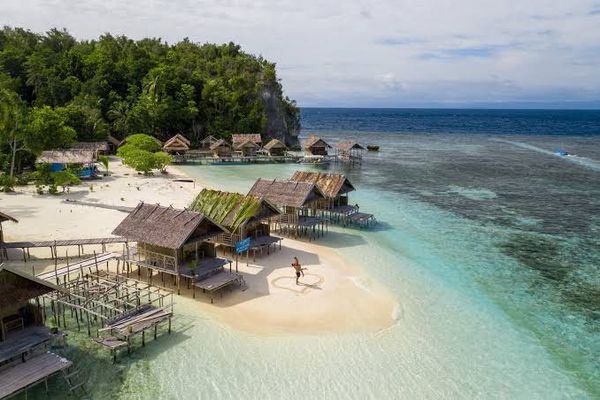
Morning. Manta Sandy, a shallow cleaning station where reef mantas circle, is one of the few places you can watch mantas from the surface. They pass year-round and peak December to February. Afternoon. Arborek village, where the snorkelling under the wooden jetty, giant clams, schooling jackfish and soft coral, is some of the easiest and loveliest water time in the region, and buying a meal or a woven hat supports the community directly. Travel note: Manta Sandy has a rope line you stay behind so the mantas keep coming, and your guide will show you where.
Day 5: Piaynemo lagoons and the Fam islands
Morning. The longer run of the trip, roughly 90 minutes out to Piaynemo, where a wooden staircase climbs to the viewpoint over the maze of jade lagoons and mushroom karst. Go early to beat the day boats and the heat, and it is worth every minute of the alarm. Afternoon. On the way back, snorkel Melissa's Garden in the nearby Fam islands, a shallow coral garden in clear water. Evening. A full day on the water, so eat early and rest. Booking logic: this is the day most worth confirming in advance, since it needs more fuel and an early start. Travel note: there is no shade on the boat, so bring sun cover, water and a dry bag, and reschedule without hesitation if the sea is rough.
Day 6: A deliberate slow day
All day. Build in one day that goes nowhere. This is the honeymoon dividend of ten days over seven: a morning that starts with coffee on the jetty instead of an engine, a paddle through the mangroves at high tide, an easy snorkel on the house reef, and an afternoon in a hammock over the water. Ask the resort to set up a private dinner on the beach or the deck if they can. Base: your resort, unhurried. Booking logic: nothing to book, which is the point. Travel note: if you are the kind of couple who cannot sit still, keep this as the day you shift the weather-dependent trips to, so the rest of the plan stays flexible.
Day 7: One private splurge, sea permitting
Morning. Spend on one standout day. The reliable choice is a private-charter run to a quiet sandbar or a lagoon in the Fam or Piaynemo group, with a packed lunch and no other boats, which turns the classic sights into something that feels like your own. The bigger option. If the seas are calm, your budget is generous and you are both strong on the water, the far-north Wayag lagoons are the iconic Raja Ampat picture, though they are a long, expensive charter, usually an overnight rather than a day trip, and easily cancelled by weather. Treat it as a maybe, not a plan. Travel note: decide this one on the ground with your resort a day or two ahead, reading the forecast, rather than locking it from home.
Day 8: Red bird of paradise at dawn
Pre-dawn. Raja Ampat's great land experience: a short trek before sunrise on Gam to a hide where male red birds of paradise display in the treetops from roughly 6:00 to 7:30am. It takes patience and a little luck, and it is the kind of morning you will both remember. Afternoon. Keep it gentle, a snorkel on Friwen Wall close to Gam or a swim off the jetty, then rest. Evening. Another slow dinner as the trip winds down. Travel note: the bird trek is arranged through your resort, so confirm it on arrival, since the guide and start time vary by island.
Day 9: Last full day, and your buffer
All day. Hold this day loosely. If everything has run to plan, spend it on the reefs you loved most or a final sandbar picnic. If weather pushed a trip earlier in the week, this is where it lands, which is exactly why a honeymoon here should never be squeezed into fewer nights. Evening. A last island sunset, and an early night before the crossing. Travel note: reconfirm tomorrow's resort boat and the ferry time tonight, and repack while there is still light and power.
Day 10: Return to Sorong and departure
Morning. Resort boat back to Waisai and the ferry to Sorong. Afternoon. Connect to your onward flight. Travel note: the weather and the ferry set this day, not you, so never book an onward flight tight against the return crossing. Leave a real buffer, and an overnight back in Sorong is the safe move if your flight out is early.
What to book early, and what to keep flexible
Book early and firm: your flights in and out of Sorong, your resort (months ahead, since the comfortable rooms are scarce), and the marine park permit, which you can buy online in advance or on arrival in Waisai. Left late, any of these can cost you the trip. Keep flexible: the daily snorkel plan, the slow day, the private splurge and the bird trek. These are arranged on the ground and are better shaped around the weather and the tide than a fixed calendar.
Food, comfort and local rhythm
A resort rather than a homestay is the honest honeymoon call here. You get air-con, a real bathroom, filtered water and meals served to something closer to a schedule, and on a remote island those comforts matter more than they would in Bali. Meals lean on rice, fresh fish and vegetables, simple and good, and eating together with the other guests is most of the evening social life. Bring your own snacks and a refillable bottle for the long boat days, since shops are scarce the moment you leave Waisai, and pack reef-safe sun cream, which is both hard to buy locally and the right thing to use over these reefs.
Mistakes couples make in Raja Ampat
The recurring ones: not carrying enough cash for the whole trip; booking the good resorts too late; trying to add Wayag or Misool onto a Dampier Strait base and losing days to transit; underestimating boat times and fuel costs; expecting the wifi and comfort of a Bali villa; and booking a tight onward flight against a ferry that weather can delay. The honeymoon-specific one is over-scheduling, filling every day with a trip and leaving no room to simply be somewhere remote together. Bring cash, book early, base once, and protect at least one empty day.
What to cut, adapt or upgrade
Cut the Piaynemo day if the seas are rough, it is the most weather-exposed run of the week, and closer reefs will not disappoint. Adapt for a weaker swimmer by sticking to the calm, shallow jetty snorkels at Arborek, Sawandarek and Yenbuba, which are sheltered and forgiving. Upgrade with a private-boat day or two rather than shared trips, which for a honeymoon buys quiet and timing far more valuable than the money saved. Do not try to add the far north of Wayag or the south at Misool as a casual side trip. Each deserves its own dedicated journey, and forcing one in is the fastest way to turn a restful trip into a tiring one.
Before you build this trip
Best time. October to April brings the calmest seas and clearest water, with manta numbers peaking December to February. June to August can be windy and rough, and the longer runs become harder, so the shoulder months are the safe honeymoon window.
Entry and fees. Most nationalities use the Indonesia e-VoA, and everyone pays the Raja Ampat marine park permit and visitor ticket, roughly Rp 1,000,000 or $65 per person all in as a working estimate. Fees and rules can change, so check the latest official guidance before you travel.
Getting there. Fly to Sorong via Jakarta, Makassar or Manado, then the ferry to Waisai, then a resort boat. Flights are limited and routes change, so confirm current flight routes before locking hotels and build a buffer day at each end.
Money and connectivity. Carry cash for the whole trip, since there are no ATMs in the islands and most spending is cash first. Signal is patchy to absent, so set expectations with family at home before you go off-grid, and enjoy it.
What to book early. Sorong flights, your resort and the marine park permit. What to keep flexible. the daily plan, the splurge day and the bird trek, all arranged on the ground.
Final verdict
Raja Ampat is not the easiest or cheapest honeymoon in Indonesia, and it asks you to give up connectivity and convenience for a stretch. In return it gives you a place that still feels genuinely remote, water that is more alive than almost anywhere on the planet, and the rare gift of ten days with nothing to do but share it. Choose this trip if being somewhere wild and quiet together is the whole point, and you both love the water; choose a Lombok and Gili honeymoon instead if you want beaches and comfort with far simpler logistics.
Related itineraries
Not diving and want the water without the tank? See the 7-day Raja Ampat snorkelling itinerary. Want beaches and comfort with easier logistics instead? Compare the 9-day Lombok and Gili honeymoon. Or start from the Raja Ampat destination hub.
Serious about diving the deeper sites? See the 14-day Raja Ampat itinerary for divers. Getting around: Bali to Raja Ampat.
Before you go
Sort the practical side
Entry rules and a realistic budget before you book this trip.
Good to know
Frequently asked questions
Is Raja Ampat good for a honeymoon?
Yes, for couples who love the water and want somewhere genuinely remote and quiet together. You trade wifi, nightlife and easy logistics for reef sharks off the jetty, private snorkel days and dark starry skies. Base at a comfortable resort rather than a bare homestay and it feels like a true escape rather than roughing it.
How many days do you need in Raja Ampat for a honeymoon?
Ten days, nine nights works well. It covers the Dampier Strait highlights, Piaynemo and the dawn bird of paradise without rushing, and crucially leaves room for a slow day and a weather buffer. Seven days is enough to see the best, but a honeymoon benefits from the extra unhurried time.
How much is the Raja Ampat permit?
As a working estimate the marine park conservation permit is around Rp 700,000 and the visitor entry ticket around Rp 300,000, roughly Rp 1,000,000 or about $65 per person all in. The permit is valid for a year. Fees can change, so check the latest official guidance, and bring cash since you usually pay on arrival in Waisai.
Homestay or resort in Raja Ampat for a honeymoon?
For a honeymoon a comfortable dive resort or eco-resort is usually worth it, adding air-con, a private bathroom and reliable meals that matter more on a remote island. Homestays are cheaper and support local families, roughly $35 to $65 per person a night with meals as a working estimate, but comfort is part of the point on a honeymoon.
How do you get to Raja Ampat?
Fly to Sorong via Jakarta, Makassar or Manado, take the fast ferry to Waisai (around two hours), then a resort boat to your island. Ferry tickets are bought in person at the port on the day, and flights are limited, so confirm current flight routes before locking hotels and build a buffer day at each end.
When is the best time for a Raja Ampat honeymoon?
October to April brings the calmest seas and clearest water, with manta sightings peaking December to February. June to August can be windy and rough, which makes the longer boat runs harder, so the shoulder months are the safe honeymoon window. Confirm conditions locally, as seasons shift year to year.
Do I need to bring cash to Raja Ampat?
Yes, and plenty of it. There are no ATMs in the islands, and boats, tips, the park fee and most resort extras are cash first. Draw out everything you will need for the whole trip while you are still in Sorong on the mainland, in good condition notes.
Go deeper
Raja Ampat guides
Keep exploring
Related itineraries
One week (6-8 days) · Raja Ampat
8 Days in Raja Ampat: A Homestay Trip Based on Kri Island
What a Raja Ampat homestay trip really costs in 2026, why Kri Island is the right base, and the ferry catch that decides your first two days.

10 days (9-11 days) · Raja Ampat
9 Days in Raja Ampat with Kids: One Base, Calm Reefs and Honest Logistics
A 9-day Raja Ampat family itinerary from one island base: calm jetty snorkels, Arborek, Piaynemo if the sea allows, plus fees, malaria and cash advice.

One week (6-8 days) · Raja Ampat
7 Days in Raja Ampat: Snorkelling, Islands and Karst
A decision-led 7-day Raja Ampat itinerary for snorkellers, no diving needed: Cape Kri, Manta Sandy, Arborek and Piaynemo. What to book, what to skip.
Share this itinerary