By Editorial Team · Last updated September 2026
Every Java honeymoon itinerary you will find sends you up two volcanoes in three days, Bromo at one in the morning and Ijen at midnight. Both are extraordinary, and neither belongs on a honeymoon. This route keeps one pre-dawn start and hands the other mornings back to the Magelang countryside below Borobudur, where the rice terraces are, where two volcanoes stand on the horizon, and where almost nobody stays. Eight days, three bases, one train and one alarm.
Who is this Java honeymoon for, and who should skip it?
It suits couples who want temples, rice terraces and one great volcano morning without a chain of pre-dawn alarms. Eight days covers Yogyakarta, four slow nights in the Borobudur countryside and a single Bromo sunrise. It works best as a first trip to Indonesia where culture matters more to you both than a beach.
It also suits couples with very different energy levels. Almost everything here is optional except two mornings, so one of you can walk the Selogriyo rice terraces at seven while the other reads until ten, and the day still works. Java is cheap enough that a private driver for the week costs less than a few nights of the taxis you would otherwise take.
Skip it if you want to swim. Java's south coast has heavy surf and rip currents, the north coast is working ports, and there is no honeymoon beach on this route at all. If a reef and a lie-in are what a honeymoon means to you, nine days across Lombok and the Gili Islands or six days on the Nusa islands do that properly, and Java works better as the week before one of those than as the whole holiday.
Skip it too if neither of you will get into a car at two in the morning cheerfully. The Bromo start is the one non-negotiable in this trip and there is no gentler version of it.
Trip at a glance
Route: Yogyakarta, Prambanan, the Magelang countryside below Borobudur, then the train east to Malang and a single night near Mount Bromo.
Nights: two in Yogyakarta, three in the Magelang countryside, two in or around Malang, with the Bromo morning run from there.
Getting in: Yogyakarta International Airport (YIA), which sits about an hour west of the city and is the part of day one nobody warns you about.
Getting out: Malang (MLG) for domestic hops, or Surabaya (SUB) about three hours north if you need an international connection.
Pace: one early start, one long train day, and five mornings with nothing scheduled in them.
Best season: May to October, when the Bromo caldera is most likely to be clear at dawn and the countryside is dry underfoot.
How many days do you need for a Java honeymoon?
Eight days is the honest floor if you want both Borobudur and Bromo without rushing either. Two days go to arriving and leaving, three to Yogyakarta and the countryside, one to the train east, and two to Bromo and the way home. Under a week, drop Bromo and keep the temples.
| Days | What fits | Starts before dawn | Best for |
|---|---|---|---|
| 5 days | Yogyakarta, Prambanan and Borobudur, city base throughout | 0 or 1 | A short cultural add-on before Bali |
| 6 days | The same, with two nights moved out to the countryside | 0 or 1 | Couples who want the slow half and not the volcano |
| 8 days | The trip on this page: temples, countryside and one Bromo sunrise | 1 | A honeymoon that wants one big morning |
| 10 days | The above plus Ijen, or plus Karimunjawa for a beach ending | 2 or 3 | Couples who genuinely like early alarms |
Why does this route leave out Ijen?
Because Ijen costs a honeymoon its best night for a view you can get elsewhere. The blue-fire hike leaves around one in the morning, climbs for roughly ninety minutes, and returns you to the room mid-morning too tired to enjoy the rest of the day. It is a superb thing to do on an active trip.
The standard East Java loop puts Bromo and Ijen within about seventy-two hours of each other, which means two broken nights in three. That is the right trade on a volcano trip and the wrong one here. If the volcanoes are the point of your Indonesia and the honeymoon framing is not, take the four-day Bromo to Ijen crossing or seven days from Yogyakarta across East Java instead. Both are built for exactly that and this page would only slow you down.
The other reason is geography. Ijen sits on Java's far eastern tip beside the Bali ferry, so adding it turns a there-and-back trip into a one-way crossing and moves your flight home three hundred kilometres. That is fine when Bali is next. It is waste when it is not.
Day 1: Landing at YIA and settling into Yogyakarta
Morning. Land at Yogyakarta International Airport and accept that the transfer is part of the day. YIA is in Kulon Progo, roughly an hour west of the city by road, or about forty minutes on the airport rail link to Tugu station. The train is cheaper, faster and, on arrival day with luggage and jet lag, usually the wrong choice.
Afternoon. Do nothing structured. Yogyakarta rewards a first afternoon spent walking Prawirotaman or Kotagede, the old silver quarter, where the workshops still hammer by hand and the lanes are quiet enough to talk in.
Evening. Eat gudeg, the slow-cooked jackfruit dish the city is known for, and go to bed early. Tomorrow is the only full day you get in the city.
Base: Yogyakarta, in Prawirotaman or the Kraton side rather than out by the malls. Compare places to stay in Yogyakarta and choose for the courtyard, because most of the good ones are converted houses and the difference between them is outdoor space.
Booking logic: arrange the airport transfer with your hotel before you fly. Ride-hailing works from YIA but the pickup points move and it is not the argument you want at midnight.
Travel note: sort your data before you leave home. An Indonesia eSIM from Airalo activated on the plane means maps, your driver's WhatsApp and the Bromo booking portal all work from the moment you land.
Day 2: Prambanan, and the Ratu Boko sunset
Morning. Prambanan opens at six and the first hour is the only cool one. The Shiva temple is the tallest Hindu structure in Indonesia and the reliefs on the inner balustrade run the Ramayana the whole way round, which is worth a slow circuit rather than a photograph.
Afternoon. Back into the city for the Kraton, the Sultan's palace, and Taman Sari, the ruined water castle behind it. Both are small. Neither takes as long as the guidebooks suggest, which is the point of putting them here.
Evening. Ratu Boko, on the hill above Prambanan, is the best sunset within reach of Yogyakarta and the reason to keep this evening free. As a working estimate, foreign adult entry to Prambanan is around Rp 400,000, with a combined ticket including Ratu Boko sitting near Rp 675,000, and fees change, so confirm current prices when you book.
Base: Yogyakarta, second and last night.
Booking logic: a car and driver for the day costs little and saves two awkward transfers. If you would rather have it arranged, a guided Borobudur and Prambanan day from Yogyakarta bundles the driving, the tickets and a guide, though on this itinerary you are seeing Borobudur separately and slowly, so a driver alone may suit you better.
Travel note: the combined Borobudur and Prambanan ticket was discontinued, so buy each separately and do not plan around a saving that no longer exists.
Day 3: Out to the Magelang countryside
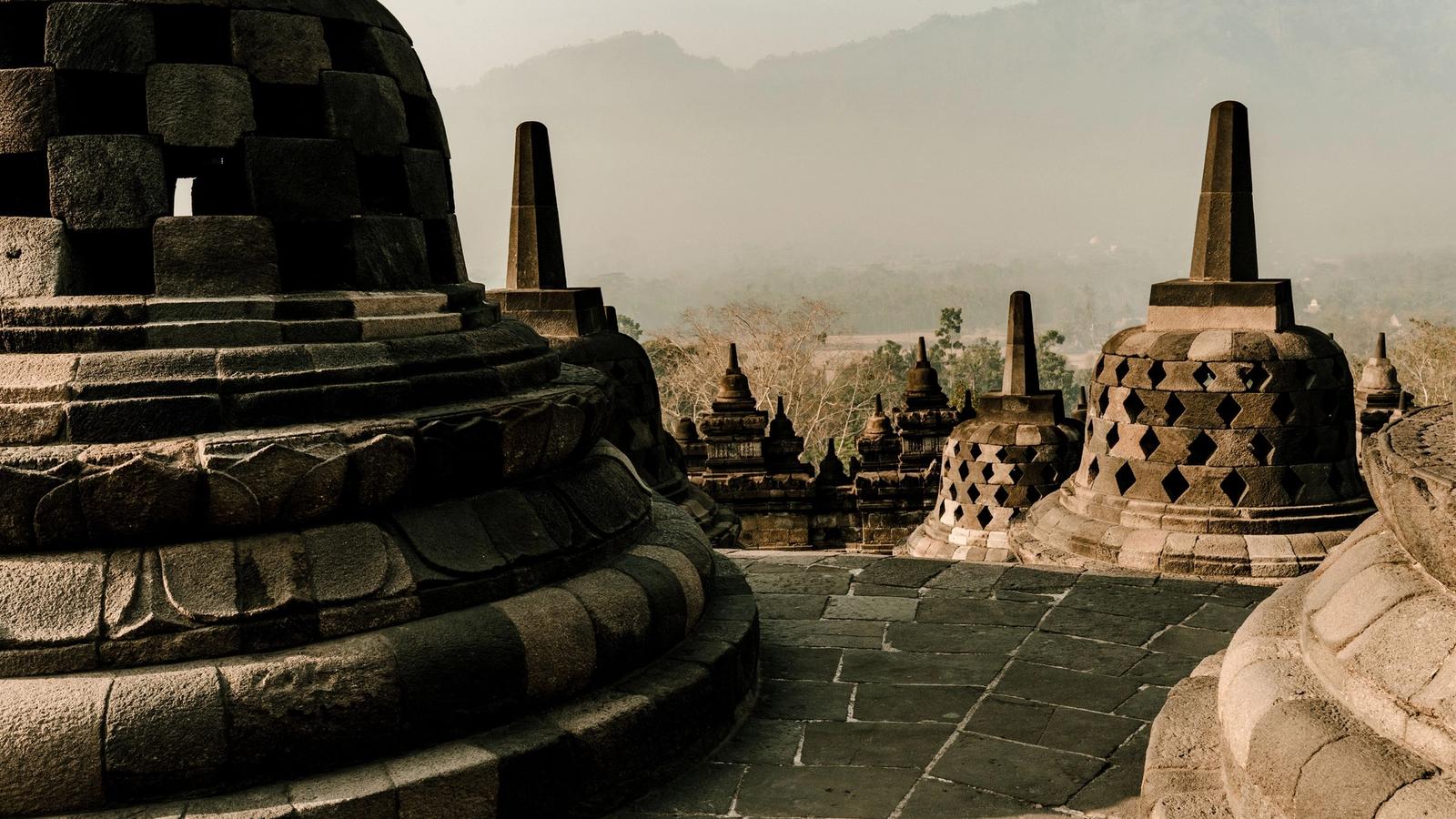
Morning. Leave the city. The drive northwest to the Borobudur plain takes about ninety minutes and the landscape changes completely, from grid streets to rice terraces with two volcanoes, Merapi and Sumbing, standing over them.
Afternoon. Check in and stay put. This is the half of the trip that makes it a honeymoon rather than a tour, and the mistake is to fill it. Most places out here have a pool, a view of the fields and nothing else within walking distance, which is the whole idea.
Evening. Mendut and Pawon, the two small temples that line up with Borobudur on the same axis, are a fifteen-minute drive and almost empty at dusk. Mendut's three-metre seated Buddha is the single most impressive carving in the valley and hardly anyone stops.
Base: the Magelang and Borobudur countryside for three nights. Look at stays around Magelang and Borobudur rather than in Magelang town itself, which is a market centre and not where you want to be.
Booking logic: book this stretch first. The countryside has far fewer rooms than Yogyakarta, the good ones are small, and they fill months out in the dry season.
Travel note: have your driver drop you and go. You will not need a car again until day six, and paying one to wait for three days is the commonest way to waste money on this route.
Day 4: Borobudur before the heat
Morning. This is the day the trip is built around, and there are three ways to do it, covered in full below. Whichever you pick, be inside or on the hill before half past five and be finished by nine, because Borobudur has no shade and the volcanic stone holds heat like an oven.
Afternoon. Back to the room, out of the sun, and nothing else. If you have energy at four, the Progo river valley below the temple is good flat cycling and most stays lend bicycles.
Evening. Dinner where you are staying. Restaurants out here close early and the drive back from the village in the dark is not worth it.
Base: the countryside, second night.
Booking logic: if you want the dawn done properly without arranging it yourself, a private Punthuk Setumbu sunrise and Borobudur tour handles the three-thirty pickup, the hill entry and the temple after it, and being private matters here because the shared version runs to a group's pace.
Travel note: personal photography rules at Borobudur have tightened and the climb to the upper terraces is capped and ticketed separately from the grounds. Check the latest official guidance before you go, because this has changed more than once.
Day 5: A day with nothing in it
Morning. Selogriyo, a small ninth-century temple on the flank of Mount Sumbing, sits at the top of a twenty-minute walk through terraced fields about an hour north. Go early, go slowly, and treat the walk as the point rather than the temple at the end of it.
Afternoon. Nothing. This is the day that stops the trip feeling like a school trip, and deleting it is the single change most couples regret.
Evening. Many of the countryside stays do a set dinner on request with a day's notice. Ask when you check in rather than on the night.
Base: the countryside, third and last night.
Booking logic: book any spa treatment the day before. Out here the therapist may be coming from the village and is not sitting waiting.
Travel note: draw cash in Yogyakarta before you come out. ATMs exist in Muntilan and Magelang but the small warungs, the temple gates and the bicycle hire all want notes.
Day 6: The train east to Malang
Morning. Back to Yogyakarta for the train. This is the long day and it is the price of the two bases, so start it early, eat properly first and take a book.
Afternoon. The Yogyakarta to Malang run takes from about four hours ten minutes on the fastest services, with executive-class trains and buses both on the route and, at the time of writing, a lot of daily departures. Compare Yogyakarta to Malang trains and buses and book the executive carriage, which is the version with reclining seats and power sockets. Bring a layer, because the air conditioning on Indonesian executive carriages is famously arctic.
Evening. Arrive in Malang, a cool colonial-era university town at around 450 metres, and eat around Jalan Pulosari or in the old town. You are here for the logistics rather than the sights, but Malang is a pleasant place to be stuck.
Base: Malang for two nights, or move straight up to Tosari or Cemoro Lawang on the crater rim if you would rather cut tomorrow's drive. Compare rooms in Malang and pick for proximity to the station.
Booking logic: book the train the moment your dates are fixed. Executive class on the popular East Java services sells out well ahead in July, August and around Indonesian public holidays.
Travel note: book your Bromo park entry tonight at the latest. Entry to Bromo Tengger Semeru National Park is now sold through the park's own online portal ahead of arrival rather than at the gate, and operators generally quote a lead time of around forty-eight hours. Confirm the current rule on the official park site, because this changed recently and the gate will not rescue you.
Day 7: Bromo before sunrise
Morning. The alarm goes at about half past midnight and the jeep leaves around one. You climb to a viewpoint on Penanjakan or one of the King Kong hills, stand in genuine cold at roughly 2,700 metres, and watch the sun come up behind Semeru with the Tengger caldera filling with light below you. It is the best hour of the trip and it is over by seven.
Afternoon. Sleep. Whatever you had planned for this afternoon, do not.
Evening. An early dinner in Malang and a proper night's sleep, which is why the trip has this day here rather than on the last one.
Base: Malang, second night.
Booking logic: go private for this one morning. A private Mount Bromo sunrise trip from Malang runs about twelve hours door to door and includes the jeep, which matters because the shared jeeps carry six and leave when the last person appears. On a honeymoon the private version is the difference between a memory and an ordeal.
Travel note: as a working estimate, park entry for foreign visitors has been published at around Rp 220,000 on weekdays and Rp 320,000 at weekends and public holidays, though some operators now quote a single flat rate, and the jeep is a separate charge of roughly Rp 400,000 to Rp 650,000 for the vehicle rather than per person. Fees change, so confirm both when you book. Take gloves, a hat and a real jacket, and do not trust a forecast: the caldera makes its own weather and a clouded-out sunrise is common enough that you should not build the day around a guarantee.
Day 8: Malang, and the way home
Morning. A slow last morning. Malang's Kampung Warna-Warni, the painted riverside village, and the Toko Oen colonial cafe are both twenty minutes and neither needs planning.
Afternoon. Fly out of Malang (MLG) if a domestic connection works, or allow roughly three hours by road to Surabaya (SUB) for anything international. Confirm current routes before locking hotels, because Malang's schedule is thin and changes.
Travel note: do not book an international flight out of Surabaya before mid-afternoon on this day. The road from Malang is the one leg of this trip with no alternative if it goes wrong.
Should you pay for the Borobudur sunrise slot?
Only if standing on the stupas as the light arrives matters more than the money. The official sunrise ticket has been quoted at around Rp 1,000,000 a person, capped near a hundred places a day. Punthuk Setumbu hill costs a small fraction of that and gives you the view of the temple rising out of mist.
| How you do it | Working estimate per person | What you actually get | Book ahead |
|---|---|---|---|
| Official sunrise slot, from about 04:00 | Around Rp 1,000,000 | On the monument itself before opening, capped numbers, quiet | Yes, it sells out and numbers are limited |
| Punthuk Setumbu hill, then the temple at 06:00 | Around Rp 40,000 for the hill plus around Rp 455,000 for grounds entry | The postcard view of Borobudur in mist, then the temple in the cool hour | No for the hill, worth it for a driver |
| Standard 06:00 opening, no sunrise | Around Rp 455,000 for grounds, upper-terrace climb charged on top | The temple without the 3am start, busier from about 08:00 | Only the upper-terrace climb slot |
The honest answer for most couples is the middle row. The mist on the Borobudur plain is what makes the photographs everyone recognises, and you cannot see it from inside the temple, because you are standing in it. Treat all three figures as working estimates and check the latest official guidance, since Borobudur's ticket structure has been revised repeatedly.
What to book early, and what to keep flexible
Book early: the countryside stay, which has the least stock on the route; the executive train seats to Malang; the Bromo park entry through the official portal, which now needs lead time; and the Borobudur upper-terrace or sunrise slot if you want one.
Keep flexible: the Yogyakarta restaurants, the Selogriyo walk, the spa, and your last morning in Malang. None of them reward a plan and all of them depend on how the Bromo night treated you.
Do not book at all: a car sitting idle for the three countryside nights, and anything on the afternoon of day seven.
Mistakes couples make on a Java honeymoon
Adding Ijen because it is on the map. It is a five to six hour drive east of Bromo and a one in the morning start, and it turns a rested trip into a tired one. If you want it, do a volcano trip instead of a honeymoon and do it properly.
Staying in Yogyakarta the whole week. Borobudur is roughly ninety minutes from the city, so a city base means two long round trips and no dawn. The countryside is the reason this itinerary works.
Booking Bromo at the gate. Park entry moved to advance online sale through the national park's own portal and turning up without it is now a wasted night. Check the current requirement rather than assuming.
Underestimating YIA. The airport is about an hour from the city, which regularly costs people the afternoon they thought they had on day one.
Flying home the same day as Bromo. You will have been awake since half past midnight. The extra night in Malang is the cheapest thing you will buy on this trip.
What to cut, adapt or upgrade
Cut Bromo if two of you would rather sleep. You lose the trip's one spectacular hour and gain three unhurried days, and a five-day Yogyakarta and Borobudur version is a perfectly good short honeymoon. Prambanan and Ratu Boko still give you a sunrise and a sunset.
Cut the countryside only if the dates force it. Two nights out there beats three in the city, even on a short trip.
Adapt the ending by carrying on to Bali rather than flying home. From Malang you can continue east and cross by ferry, which is the shape of the four-day Bromo to Ijen crossing, and pick up a beach week on the other side.
Upgrade the driver, not the hotel. A good English-speaking driver for the Yogyakarta days costs a fraction of a room upgrade and changes more about how the trip feels, because almost everything here is thirty to ninety minutes apart.
Upgrade Bromo to private if you upgrade one thing. Sharing a jeep at two in the morning with four strangers is the one part of this trip where the cheap option is felt.
Before you build this trip
Most nationalities enter on the Indonesian visa on arrival or its electronic version, currently around Rp 500,000, roughly 35 US dollars, for a thirty-day stay that can be extended once. Rules change often, so check the latest official guidance for your passport before you fly.
Java is Muslim-majority and rather more conservative than Bali. Cover shoulders and knees at the temples and in the villages, which is expected rather than merely polite, and note that a sarong is usually provided at temple gates.
The dry season, roughly May to October, is when the Bromo caldera is most likely to be clear at dawn and when the countryside walks are pleasant rather than muddy. January and February bring real rain to central Java and a clouded-out Bromo is far more likely.
Budget-wise, Java is one of the cheaper parts of Indonesia to travel once you are off the Bali price list, though the temple entry fees are among the country's highest. Our Indonesia travel costs breakdown has the daily figures, and the three big-ticket items on this route are Borobudur, Prambanan and the Bromo jeep.
Final verdict
Java is a real honeymoon destination and almost nobody sells it as one, because the standard itineraries treat it as a volcano assault course between two flights. Take the volcanoes down from two to one, move out of Yogyakarta to the fields below Borobudur, and what is left is a genuinely romantic week: two of the great monuments of Asia, three days of rice terraces with nothing in them, and one morning at 2,700 metres you will both still be describing to people in ten years.
Book it if you would rather come home with a story than a tan. Book something else if either of you needs to end the day in the sea, and pair this with Lombok and the Gili Islands if you want both.
Related itineraries
7 Days from Yogyakarta across East Java runs the full volcano corridor including Ijen, for couples who want the hard version of this week.
9 Days in Lombok and the Gili Islands for a honeymoon is the beach half, and the natural second week after this one.
8 Days in Yogyakarta and Central Java with kids covers the same temples at a family pace, for when you come back with more people.
Before you go
Sort the practical side
Entry rules and a realistic budget before you book this trip.
Good to know
Frequently asked questions
Is Java a good honeymoon destination?
Yes, if your idea of a honeymoon is culture and scenery rather than a beach. Java gives you Borobudur and Prambanan, rice-terrace countryside almost nobody stays in, and the Bromo sunrise, at a fraction of Bali's prices. It has no honeymoon beaches, so most couples pair a week in Java with a week in Bali, Lombok or the Gilis.
How many days do you need in Java for a honeymoon?
Eight days is the practical minimum to see Borobudur and Bromo without rushing: two nights in Yogyakarta, three in the Magelang countryside and two around Malang for the volcano. Five or six days works if you drop Bromo and keep the temples. Ten days lets you add Ijen or a beach ending, at the cost of more pre-dawn starts.
Should you stay in Yogyakarta or near Borobudur?
Both, in that order. Two nights in Yogyakarta covers Prambanan, the Kraton and the food, then move out to the Magelang countryside for three. Borobudur is roughly ninety minutes from the city, so a city base means two long round trips and no realistic dawn visit. The countryside stays are also quieter and better value.
Is the Borobudur sunrise ticket worth the money?
For most couples, no. The official sunrise slot has been quoted at around Rp 1,000,000 per person with numbers capped near a hundred a day. Punthuk Setumbu hill costs a small fraction of that and gives you the classic view of the temple in mist, which you cannot see from the monument itself because you are standing in it.
Do you have to book Mount Bromo tickets in advance?
Yes. Entry to Bromo Tengger Semeru National Park is now sold through the park's own online portal before arrival rather than at the gate, and operators generally quote a lead time of around forty-eight hours. Book it at the latest on the day you reach Malang, and confirm the current requirement on the official park site.
Can you skip Ijen and still see a volcano?
Yes, and on a honeymoon you probably should. Bromo alone gives you the caldera, the sand sea and the sunrise behind Semeru for one broken night instead of two. Ijen's blue fire needs a one in the morning start and a long drive east, and it makes far more sense on a trip that continues to Bali by ferry.
What is the best time of year for a Java honeymoon?
May to October, the dry season. That is when the Bromo caldera is most likely to be clear at dawn and when the countryside walks are dry rather than muddy. Avoid January and February, when central Java gets real rain and a clouded-out Bromo sunrise becomes likely. July and August are driest but busiest, so book trains and countryside rooms well ahead.
Go deeper
Java guides
Keep exploring
Related itineraries
Short escape (3-5 days) · Java
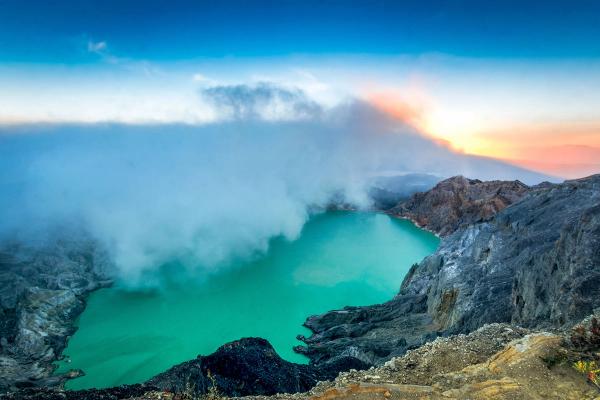
2 Days at Kawah Ijen: Blue Fire, Sunrise and the Crater Lake
A focused 2-day, 1-night Kawah Ijen plan from Banyuwangi: the midnight blue fire trek, sunrise over the acid lake, costs, safety and how to add it to Bali.
One week (6-8 days) · Java
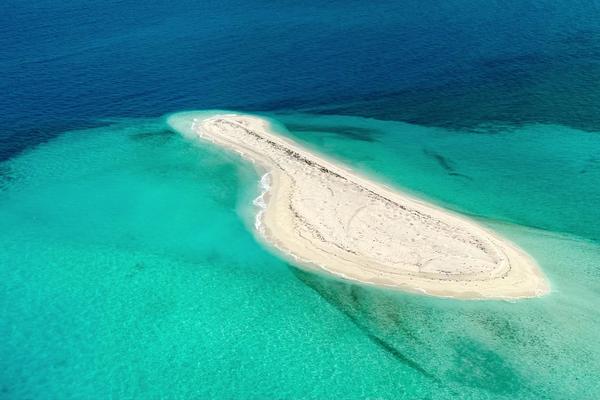
6 Days in Karimunjawa: Java's Island Week, Built Around the Ferry
Six days in Karimunjawa, planned around the ferry that really runs it: which boat to take, where to base, and what the snorkelling is like.
10 days (9-11 days) · Java
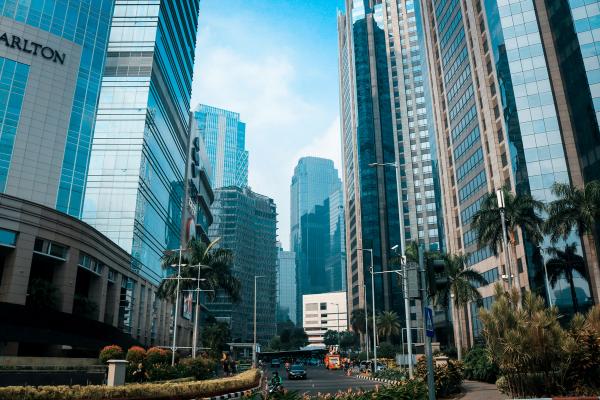
10 Days in Java: Jakarta, Bandung, Yogyakarta and Mount Bromo by Train
A decision-led 10-day Java itinerary by train: Jakarta, Bandung and Kawah Putih, Borobudur and Prambanan, then Mount Bromo at sunrise.
Share this itinerary