The short answer
Most travellers come to Yogyakarta for the two UNESCO temples nearby, Borobudur and Prambanan, which sit roughly an hour from the city in opposite directions. But the city itself rewards a day on foot: a royal palace still in use, a ruined water castle, Java's living batik tradition, and one of Indonesia's best street-food scenes. Give it three days to do both the temples and the city without rushing.
Borobudur and Prambanan
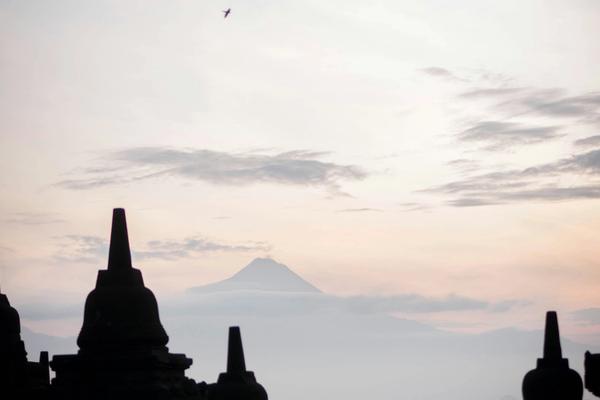
Borobudur is the world's largest Buddhist temple, a 9th-century pyramid of stacked terraces, relief panels, and bell-shaped stupas, most famous at sunrise. Prambanan is the grand Hindu complex of tall, pointed spires, about an hour away on the other side of the city. You can pair them across a single long day with a driver, though many prefer one temple per day. Note that access onto Borobudur itself is now regulated, with limited numbers, timed slots, and a guide, so check the current rules before you go. We compare the two in detail in our Borobudur vs Prambanan guide.
The kraton and Taman Sari
The Kraton, the sultan's palace, is the living heart of the old city and still the residence of Yogyakarta's royal family. Inside you will find courtyards, gamelan performances on certain mornings, and a small museum of court life. A short walk away, Taman Sari, the old royal water castle, is a maze of bathing pools, tunnels, and an underground mosque that is wonderfully photogenic. Visit both in a single morning while it is cool.
Batik, silver, and crafts
- Batik: Yogyakarta is a centre of Javanese batik. Watch artisans apply hot wax by hand at a workshop, or try a short class and take home your own piece.
- Silver: The Kotagede district is famous for fine silversmithing, with workshops you can tour and shops for buying direct.
- Wayang and gamelan: Look out for shadow-puppet (wayang kulit) and gamelan performances, a distinctly Javanese art form.
Malioboro and street food
Malioboro is the city's main artery, a busy strip of shops, street vendors, and buskers that comes alive in the evening. This is the place to try gudeg, Yogyakarta's signature dish of young jackfruit slow-cooked in palm sugar and coconut milk, usually served with rice, egg, and chicken. Eat at a lesehan, the mat-seated street stalls that set up after dark, for the full local experience.
Day trips and the wider region
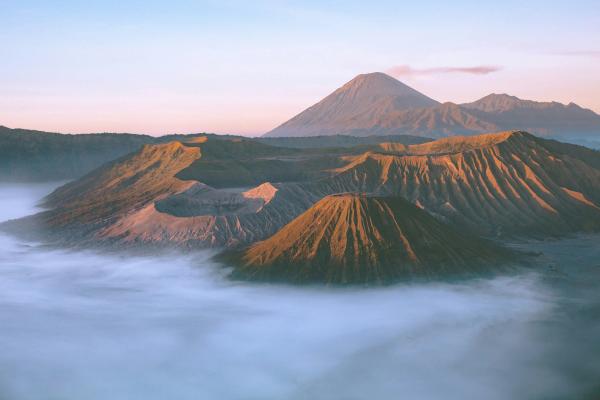
Beyond the temples, the area around Yogyakarta has more to offer. Mount Merapi, an active volcano on the city's northern horizon, can be explored on a jeep tour across its lava fields. The south coast has wild black-sand beaches and limestone cliffs. If you have longer, Yogyakarta is the western anchor of a classic Java route that runs east to the volcanoes, as in our 7-day Yogyakarta and East Java trip. Browse more Java itineraries to see how it fits a bigger loop.