By Editorial Team · Last updated October 2026
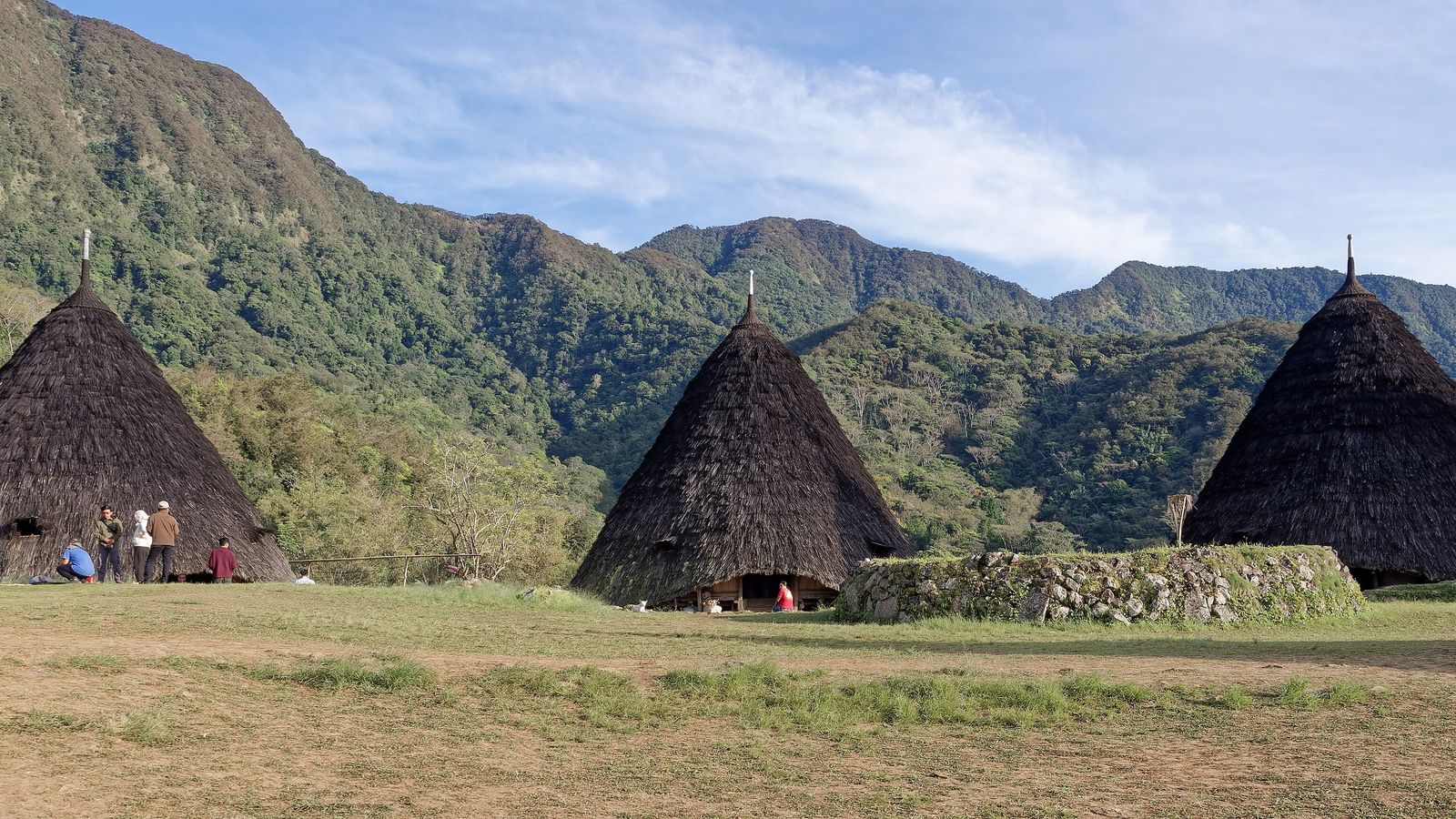
A seven-day loop from Labuan Bajo into the Manggarai highlands of Flores: the Cancar spider-web rice fields, the Liang Bua cave, two nights in Ruteng and a night in a traditional house in Wae Rebo, returning to the best-connected airport in western Flores.
Most people fly into Labuan Bajo for the dragons and leave without ever driving inland, which means they see Flores as a harbour town with a national park attached. The Manggarai highlands behind it are a different island: cool, wet, Catholic, built around coffee and rice, and home to Wae Rebo, a village of seven cone-shaped houses that you can only reach on foot. This route spends a week there instead of at sea. It loops back to Labuan Bajo, the best-connected airport in western Flores, so there is no one-way overland marathon and no fragile domestic flight out of a small airstrip at the end.
Who is this Wae Rebo trip for, and who should skip it?
This trip suits travellers who want their Flores week to be about people and highlands rather than boats. It works for couples, solo travellers and repeat visitors who are comfortable with mountain roads, one uphill hike of two to three hours, and a night on a mat in a shared traditional house with no phone signal.
Skip it if you want comfort every night, if a long drive on bends makes you ill, or if your knees will not take a steep forest path down. It is also the wrong week if Komodo is the only reason you came to Flores. In that case, a dedicated park trip gives you two boat days instead of one optional add-on.
Trip at a glance
Duration: 7 days, 6 nights. Start and end: Labuan Bajo, Komodo Airport.
Route: Labuan Bajo, the Cancar spider-web rice fields, Ruteng, Liang Bua cave, Todo and Denge, Wae Rebo, then back through Ruteng to Labuan Bajo.
Bases: Labuan Bajo (1 night), Ruteng (2 nights), Wae Rebo (1 night), Ruteng (1 night), Labuan Bajo (1 night).
Best for: culture-led travellers, repeat visitors to Indonesia, couples and solo travellers who like walking.
Not ideal for: anyone who wants a beach week, travellers prone to car sickness, families with small children who cannot manage the hike.
Logistics level: medium. The roads are sealed but slow and winding, and the whole week depends on one hired driver.
Best time: April to October, the dry season, when the Wae Rebo trail is firmer and the highland roads are less exposed to landslides.
Why does this route loop back to Labuan Bajo?
The loop exists because Labuan Bajo is the airport you can rely on, with direct flights from Bali and Jakarta, while the airstrips further east have fewer connections. Driving out to Ruteng and back costs two road days, but the last day of the trip never hangs on one small flight that may not run.
Ruteng is the hinge. It sits at roughly 1,200 metres, is the main town of Manggarai, and is close to both Liang Bua and the road south to Denge. Sleeping there on both sides of the Wae Rebo night means you can leave your main bag at the hotel and walk up to the village with only a day pack.
If you want to continue east instead, toward Bajawa, the Ngada villages and the Kelimutu crater lakes, that is a longer overland line ending in Ende. Our 10-day Komodo and Flores itinerary covers that version.
How do you visit Wae Rebo: day trip, overnight stay or a packaged tour?
Most travellers should stay the night. A day visit means a two to three hour climb, a short stop and the same path down before dark. The overnight stay costs a little more in village fees, includes dinner and breakfast with a host family, and gives you the early morning, when Wae Rebo is at its best.
| Day visit from Denge | Overnight in the village | Packaged 2D1N tour from Labuan Bajo | |
|---|---|---|---|
| Time in the village | Two to three hours | An afternoon, a night and the morning | Usually one night, as on the overnight stay |
| Village fees, per person | Welcome ritual around IDR 50,000 plus a day contribution of roughly IDR 200,000 to 225,000 | Welcome ritual plus around IDR 325,000 to 350,000 for the night, meals and bedding included | Included in the tour price |
| What it costs you in time | A very long day if you start from Ruteng | Two days from Ruteng, with a night either side in town | Two days from Labuan Bajo, with long drives at both ends |
| What you miss | Dusk, dinner with a family and the morning | Nothing important | Ruteng, Liang Bua and the slower pace |
| Best for | Fit walkers with no time at all | Almost everyone | Travellers with only two days to spare |
This itinerary does the overnight version independently with a hired driver. If you only have two days, a 2D1N Wae Rebo tour from Labuan Bajo compresses the same night into a round trip, with a stop at the spider-web rice fields on the way.
Day 1: Arrive in Labuan Bajo and set up the week
Morning. Fly in. Labuan Bajo has direct flights from Bali and Jakarta, and the Bali hop is short. If you are still deciding how to get here, compare Bali to Labuan Bajo connections before you fix any dates. Confirm current flight routes before you lock hotels, as schedules on this airport shift between seasons.
Afternoon. Settle in and sort your connectivity. Wae Rebo has no phone signal and parts of the road south of Ruteng are patchy, so download offline maps tonight and set up an Indonesia eSIM from Airalo if you have not already.
Evening. Sunset over the harbour and dinner at the fish stalls by the waterfront. Base: Labuan Bajo for 1 night. Look at rooms in Labuan Bajo close to the main street, since you leave early tomorrow.
Booking logic: confirm your driver for days 2 to 6 now, as one booking. A single driver who knows the Denge road is worth more than any hotel upgrade on this trip, and your accommodation in Labuan Bajo can usually recommend one.
Day 2: Labuan Bajo to Ruteng, via the spider-web rice fields
Morning. Leave by 8am. The drive to Ruteng is around four hours on a sealed road that climbs through constant bends, so take something for motion sickness if you need it.
Afternoon. Stop at the Cancar lingko fields, about 17km west of Ruteng, where rice terraces are divided into wedge-shaped plots radiating from a centre point, the Manggarai way of sharing communal land between clans. The best view is from the hill at Cara village, a short uphill walk from the road. Guidebooks report a small entrance fee of roughly IDR 20,000 to 30,000.
Evening. Arrive in Ruteng. It is cool at this altitude, often damp, and evenings call for a fleece. Base: Ruteng for 2 nights. Choose from places to stay in Ruteng and ask whether they will hold a bag while you are in Wae Rebo.
Travel note: the rice fields look best in the green months after planting and in afternoon light. Midday in the dry season can flatten the pattern, so do not plan the whole day around one photograph.
Day 3: Liang Bua cave and Ruteng town
Morning. Drive about 14km north to Liang Bua, the limestone cave where the remains of Homo floresiensis, the small human species nicknamed the hobbit, were found in 2003. The cave still shows the excavation pits, and a small museum next to it holds casts and photographs. According to Lonely Planet, entry is around IDR 30,000 and includes a local guide, though fees can change.
Afternoon. Back in Ruteng, walk the market and the cathedral area, and try the Manggarai coffee that grows on these hills. This is a deliberately light afternoon.
Evening. Pack a day bag for the village: headlamp, warm layer, rain jacket, a change of clothes, cash in small notes and anything you need for the night. Leave the rest at the hotel.
Travel note: the museum labels are mostly in Indonesian. The guide at the entrance makes the visit, so ask questions rather than reading the panels.
Day 4: Ruteng to Denge, then the walk up to Wae Rebo
Morning. Leave Ruteng early. Denge, the last village reachable by road, is roughly 60 to 70km south and takes around two and a half to three hours on a narrower mountain road. The route passes Todo, the old seat of a Manggarai ruling family, where a restored traditional house stands; ask your driver to stop if there is time.
Afternoon. From Denge a motorbike taxi takes you to the trailhead in about 10 to 15 minutes, which saves the dullest stretch of the climb. From there it is a two to three hour walk uphill through forest. When you arrive, you go first to the main house for the welcome ritual with the elders. Wait until after it before you take photographs.
Evening. Dinner with your host family in a mbaru niang, then sleep on mats in a shared house. Electricity is limited and the night is cold at this height. Base: Wae Rebo for 1 night.
Booking logic: you do not need to book the village in advance as an independent traveller, but you do need a driver who will wait in Denge or come back tomorrow. If you would rather hand over all of it, a Wae Rebo overnight with private transfers covers the road, the guide and the night.
Day 5: Morning in Wae Rebo, then back to Ruteng
Morning. Get up for first light, when cloud sits in the valley and the houses are still quiet. Have coffee with your hosts and, if the women are weaving, ask before you watch. Start down by mid-morning. The descent takes about two hours and is harder on the knees than the climb was on the lungs.
Afternoon. Drive back to Ruteng, roughly two and a half to three hours. Pick up your bag and do nothing else.
Evening. A hot shower and an early night. Base: Ruteng for 1 night.
Travel note: if the trail is very wet, allow extra time on the way down and do not push to reach Labuan Bajo the same day. That combination is how people end up driving the highland bends in the dark.
Day 6: Ruteng back to Labuan Bajo
Morning. Leave Ruteng after breakfast for the four-hour drive west. If you skipped the rice fields on day 2 because of the light, this is your second chance.
Afternoon. Arrive, check in and rest. After four days in the highlands, an afternoon by a pool is a fair use of time.
Evening. A last dinner by the harbour. Base: Labuan Bajo for 1 night.
Travel note: this day is your buffer. If a landslide or a slow road cost you time earlier in the week, the route still holds, because nothing on day 6 is booked.
Day 7: Fly out, or add a day at sea
Morning. If your flight is in the afternoon, keep the morning simple and go to the airport with time to spare. It is only a few minutes from town.
Afternoon. If you can extend by a day, the natural addition is the national park. A private fast-boat day in Komodo National Park covers the dragons, Padar and a snorkel stop and still returns you to town by evening.
Travel note: do not plan a Komodo boat day on the same morning as an international connection out of Bali. Boat days run late and flights out of Labuan Bajo can be retimed.
What to book early, and what to keep flexible
Book early: your flights into Labuan Bajo, which fill in the dry season, your driver for days 2 to 6, and your first night in Ruteng.
Keep flexible: the Ruteng return night, the order of Liang Bua and the rice fields, and whether you add a Komodo day at the end. These are the parts that absorb rain and road delays.
Booking logic: the only fixed point in the middle of the week is the Wae Rebo night. Everything else can move by half a day without breaking the trip.
Mistakes travellers make on a Wae Rebo trip
Treating Wae Rebo as a day trip from Labuan Bajo. It is technically possible with a very early start, but you spend most of the day in a car and arrive at the village tired and short of time.
Arriving after dark. The forest path has roots and loose stones, and walking it with a phone torch is how ankles get turned. Aim to leave the trailhead by early afternoon.
Skipping the welcome ritual or photographing people before it. The ritual is how the village receives guests, and it comes before anything else.
Bringing no cash. There are no card machines in the village, and the fees, the motorbike taxi and any coffee or weaving you buy are paid in rupiah.
Packing for the coast. Ruteng and Wae Rebo are cold at night, and a single cotton layer will not be enough.
What to cut, adapt or upgrade
Cut for time: drop Liang Bua and do Ruteng to Wae Rebo directly on day 3. You save a night but lose the most interesting single site in Manggarai after the village itself.
Adapt for pace: spend the night before the climb in a homestay in Denge rather than Ruteng. The walk then starts in the cool of the morning, which suits travellers who dislike hiking in the afternoon heat.
Upgrade for comfort: hire a private driver and car for the whole loop rather than using shared travel cars between towns. On roads like these, being able to stop when you need to is the real upgrade.
Trade-off to accept: this route gives up a second Komodo day for the highlands. You cannot have both in one week without adding days.
Before you build this trip
Best time: April to October is the safer window. The wet season makes the Wae Rebo trail slippery and brings landslide closures on the highland roads.
Visa and entry: check the latest official guidance for your nationality before you travel, as entry rules and fees can change.
Getting around: a hired car and driver for days 2 to 6 is the practical choice. Public travel cars connect Labuan Bajo and Ruteng, but nothing reliable runs to Denge on your schedule.
Money: carry enough rupiah in small notes for the village fees, the motorbike taxi and the cave entry. Ruteng has ATMs; Denge and Wae Rebo do not.
Connectivity: expect no signal in Wae Rebo and patchy coverage on the Denge road. Tell someone your plan and download maps before you leave Ruteng.
Respect: dress modestly in the village, ask before photographing people, and follow your host's lead on where to sit and sleep in the house.
Final verdict
Do this trip if you want to see the side of Flores that the boat trips skip, and you are happy to trade a second day at sea for a night in the clouds. The Wae Rebo night is the reason the week exists, and the loop through Ruteng makes it relaxed instead of rushed.
Skip it if you only have a week and have never seen Komodo, or if long winding drives are a real problem for you. In that case, do the park properly and come back for the highlands on a second trip.
Related itineraries
To keep going east to Bajawa, the Ngada villages and Kelimutu, follow the 10-day Komodo and Flores itinerary.
If the national park is your priority, see the 5-day Labuan Bajo and Komodo trip.
For another island where village life sets the pace, look at the 8-day Sumba overland route.
Before you go
Sort the practical side
Entry rules and a realistic budget before you book this trip.
Good to know
Frequently asked questions
Can you stay overnight in Wae Rebo?
Yes. Visitors sleep on mats inside one of the village's traditional mbaru niang houses, with dinner, breakfast and bedding provided by the community. For 2026 the overnight stay is reported at around IDR 325,000 to 350,000 per person, plus a welcome ritual of about IDR 50,000. Fees change, so confirm before you go.
How long is the hike to Wae Rebo?
From the trailhead above Denge it is a two to three hour walk uphill through forest, and about two hours back down. A motorbike taxi from Denge to the trailhead takes around 10 to 15 minutes and saves the least interesting stretch.
How do you get from Labuan Bajo to Wae Rebo?
Drive about four hours east to Ruteng, then around two and a half to three hours south to Denge, the last village on the road, and walk up from there. Most independent travellers hire a car and driver and break the journey with a night in Ruteng.
How much does it cost to visit Wae Rebo in 2026?
As a working estimate, a day visit costs a welcome ritual of about IDR 50,000 plus a contribution of roughly IDR 200,000 to 225,000, and an overnight stay around IDR 325,000 to 350,000 including meals. Add the motorbike taxi from Denge and your driver. Pay in cash, as there are no card machines.
Is Wae Rebo worth it if you only have a week in Flores?
It is worth it if you have already seen Komodo or care more about people and highlands than boats. If this is your first time in Flores and you have only a week, most travellers are better off spending it on the national park and saving Wae Rebo for a return trip.
What is the best time to visit Wae Rebo?
April to October, the dry season, is the safer window. The trail is firmer, the views across the valley are clearer, and landslides on the highland roads are less common. The wet season is possible but slower and muddier.
Can you combine Wae Rebo with Komodo National Park?
Yes. Both start from Labuan Bajo, so the simplest plan is a Komodo boat day at the start or end of the week and the Ruteng and Wae Rebo loop in between. Allow at least eight days if you want both without rushing.
Go deeper
Komodo & Flores guides
Keep exploring
Related itineraries
One week (6-8 days) · Komodo & Flores
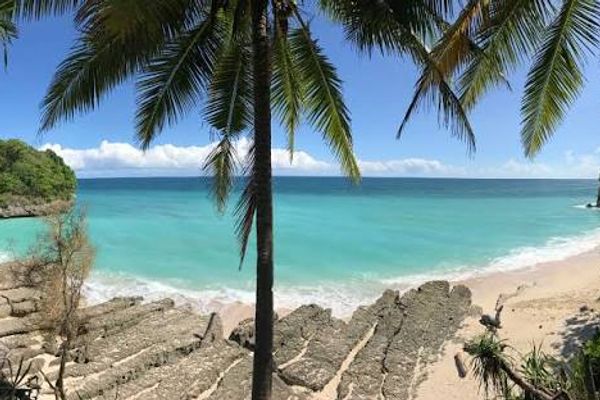
8 Days in Sumba: Overland from Waingapu to the West Coast
Fly into Waingapu, out of Tambolaka, and drive the island in between. An 8-day Sumba itinerary with real driving times, site fees and village etiquette.
One week (6-8 days) · Komodo & Flores
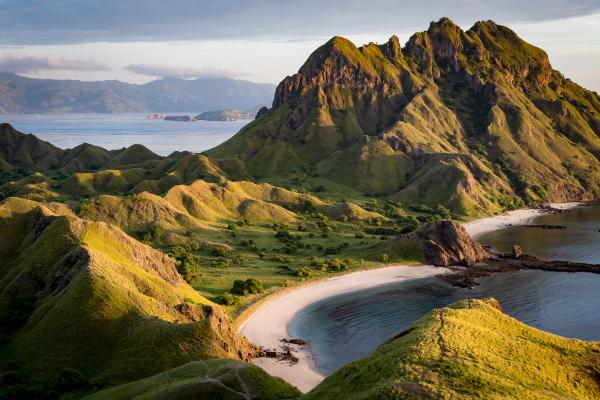
7 Days in Komodo for a Honeymoon: Padar, Pink Beach and a Private Boat
A 7-day Komodo honeymoon: why to charter rather than join a shared boat, what park fees cost in 2026, and where to land softly afterwards.
One week (6-8 days) · Komodo & Flores
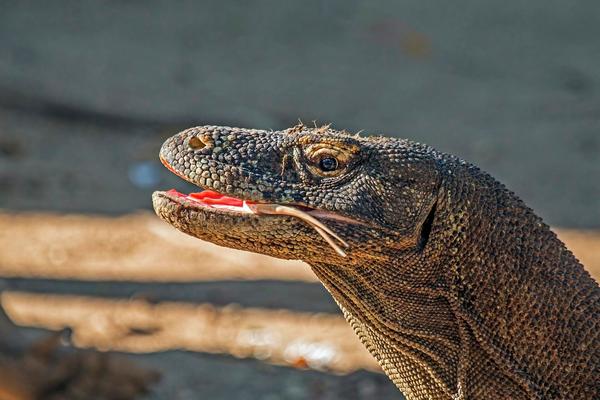
8 Days in Komodo and Flores With Kids
A relaxed, Labuan Bajo based family plan for Komodo dragons, easy snorkeling and one gentle Flores day, with honest notes on boat days and young kids.
Share this itinerary