The short answer
Komodo National Park and the wider Flores region work best in the dry season, from about April to October. That is when boats run dependably out of Labuan Bajo, the water is clear for diving and snorkelling, and the islands are easy to reach. The wet season, roughly November to March, brings rougher seas and more cancelled trips, though the landscape turns lush green. For most travellers, May, June, and September give the best balance of conditions and quiet.
The two seasons
This part of eastern Indonesia is markedly drier than Bali and sits in a different climate band, closer to the savannah landscapes of the Lesser Sunda islands than to lush, tropical Java. Temperatures stay warm all year, around 28 to 33 degrees Celsius, so the decision is really about sea state and rain rather than heat. What dictates a good trip here is whether the boats can run, and that comes down to the seas. In the dry months the crossings between Labuan Bajo and the park islands are smooth and predictable; in the wet months they can turn choppy enough to cancel a day on the water.
- Dry season (April to October): Calm seas, sunny skies, and the best underwater visibility. This is when liveaboards and day boats operate most reliably. July and August are the busiest months.
- Wet season (November to March): Hotter, more humid, with heavier seas and occasional storms that can cancel boats. The hills go green and prices soften, but it is a gamble for water-based plans.
Which month is the best time to visit Komodo?
May, June, September and October are the best months. You get the dry season's calm seas and clear water without the July and August peak in boats and prices. July and August have the most reliable weather but the busiest anchorages. January and February are the wettest and roughest, when crossings get cancelled.
| Months | Sea and weather | Crowds and price | Verdict |
|---|---|---|---|
| April, May | Early dry season. Seas settling, hills still green. | Few boats, strong value. | The best-value window. |
| June, July, August | Peak dry season, the most reliable weather. | Busiest boats and highest prices. Book liveaboards and popular tours well ahead. | Best conditions, worst crowds. |
| September, October | Warm, dry, calmer seas. | Thinning out after the August peak. | The other sweet spot. |
| November, December | Wet season begins. Trips still run on the calmer days. | Quiet. | Workable if you keep the plan flexible. |
| January, February | The wettest and roughest months. Open crossings can be uncomfortable. | Quietest, and some operators scale back. | Only if your dates are fixed. |
| March | The rains ease and conditions improve towards the dry season. | Quiet. | A shoulder gamble that often pays off. |
- April, May: The early dry season. Seas settling down, green hills still lingering, and few crowds. Strong value.
- June, July, August: Peak conditions and peak demand. Reliable weather, busiest boats, and the highest prices. Book liveaboards and popular tours well ahead.
- September, October: Another excellent window. Warm, dry, calmer seas, and thinning crowds after the August peak.
- November, December: The wet season begins. Trips still run on calmer days, but plan flexibly.
- January, February: The wettest, roughest months. Some operators scale back, and the open crossings can be uncomfortable.
- March: The rains ease and conditions begin to improve towards the new dry season.
When is the best time to dive Komodo and see manta rays?
Diving is best in the dry season, when visibility is highest and the open crossings are comfortable. Manta rays gather at Manta Point year-round, but sightings and water conditions are more dependable in the dry months, when the seas are flat and the boats can reach the manta cleaning stations on schedule. Visibility on the better sites is often excellent through the middle of the dry season, dropping a little as plankton blooms feed the mantas. Water temperatures vary widely across the park because of strong currents and cold upwellings from the south, so a thicker wetsuit is sensible even when the air is hot. If diving is the priority, our diving in Komodo guide covers the sites and currents in detail.
Komodo dragons and the islands
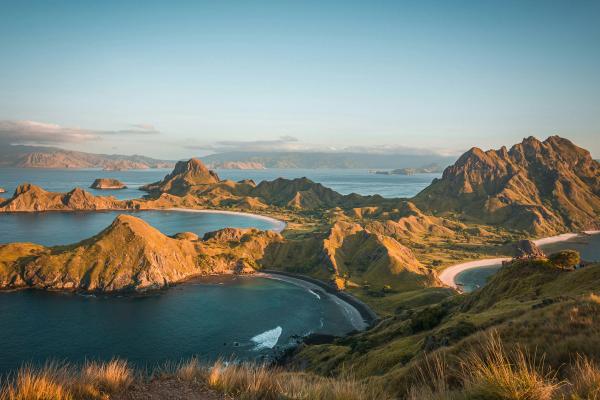
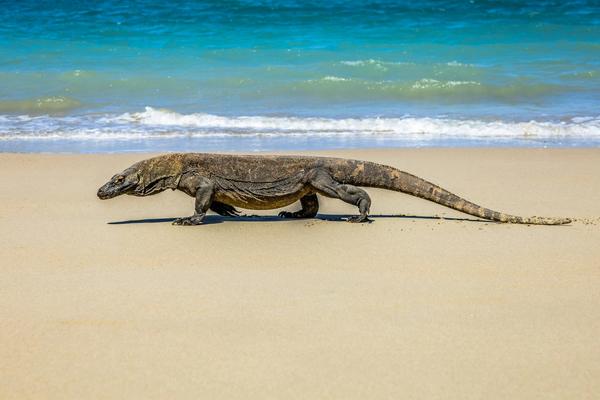
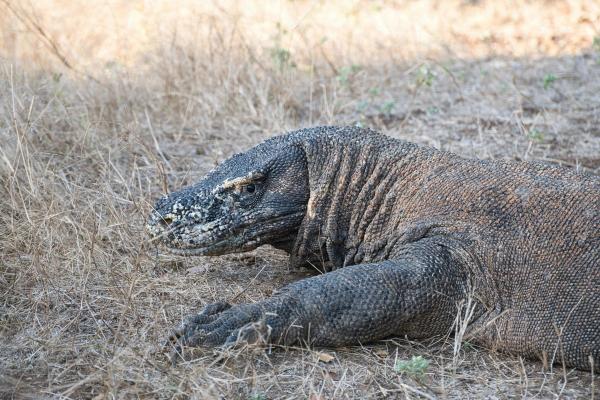
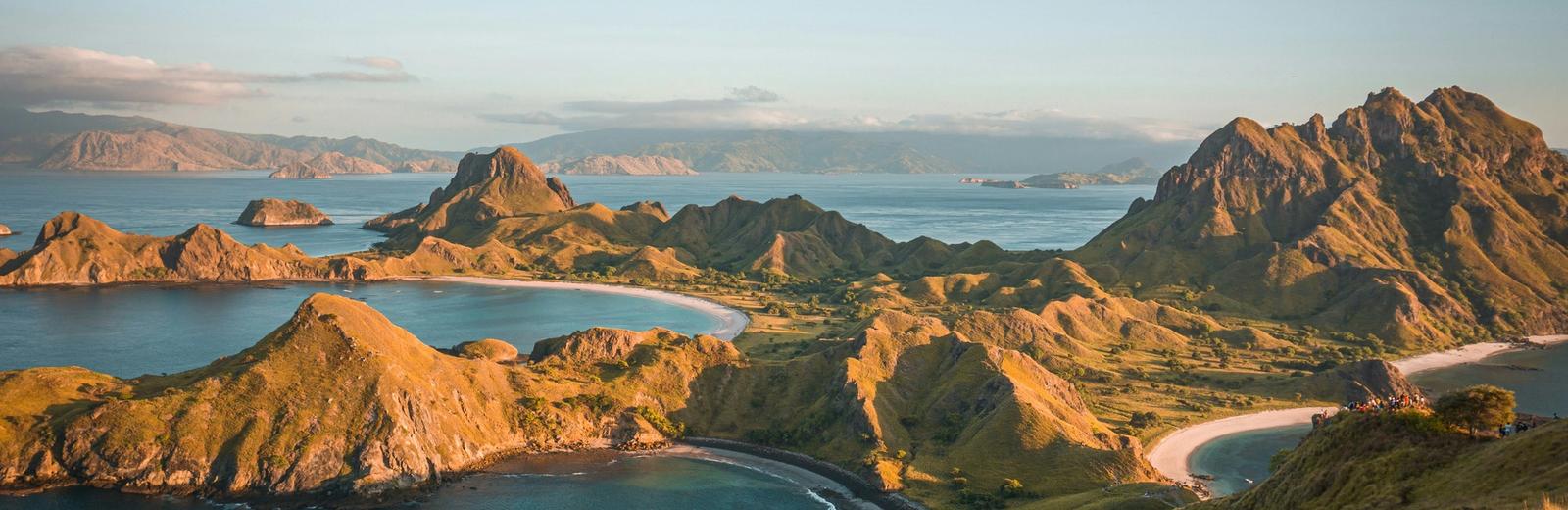
Komodo dragons live on Komodo and Rinca islands and can be seen year-round on guided ranger walks, so the season does not change whether you will spot them. What changes is the comfort of getting there. The dragons are arguably easier to see in the dry season, when they are more active around the remaining water sources and tend to gather in predictable spots, and the boat journeys are smoother. Day-trip highlights like the Padar Island viewpoint and Pink Beach are also at their best under dry-season skies, when the famous panorama of three curving bays is clear rather than hazed by cloud. In the wet season the hills around the park turn a vivid green that photographs beautifully, a genuine upside if you can work around the weather.
Beyond the park: central and east Flores
If your trip runs overland across Flores towards Kelimutu and the eastern highlands, the same dry-season logic applies, with one extra note: the mountain roads are easier and safer when dry, and the colour-changing crater lakes show best under clear dawn skies. The wet season can bring landslides and slow, muddy driving on the Trans-Flores route, so an overland Flores journey is far more comfortable between April and October. Our Kelimutu crater lakes guide explains how the timing affects that leg.
When is Komodo least crowded?
If quiet matters, skip mid-July to late August and aim for the shoulder weeks in May, June, and September. You still get the calm seas and clear water, with noticeably fewer boats at the popular anchorages, shorter queues at the Padar steps, and lower prices on liveaboards. The Indonesian and regional school holidays in late June through August add to the crowds, so the days either side of that window are quieter again. Whichever month you choose, our Komodo and Flores itineraries are built day by day so you can match the route to the season.