By Editorial Team · Last updated September 2026
Almost everyone who crosses to Banyuwangi comes for Ijen, climbs it in the dark and leaves on the afternoon ferry. That skips the three national parks sitting within three hours of the same port, which between them hold Java's largest wild cattle herds and a beach where green turtles nest most nights of the year. This seven-day plan is built around their clocks, not around the map.
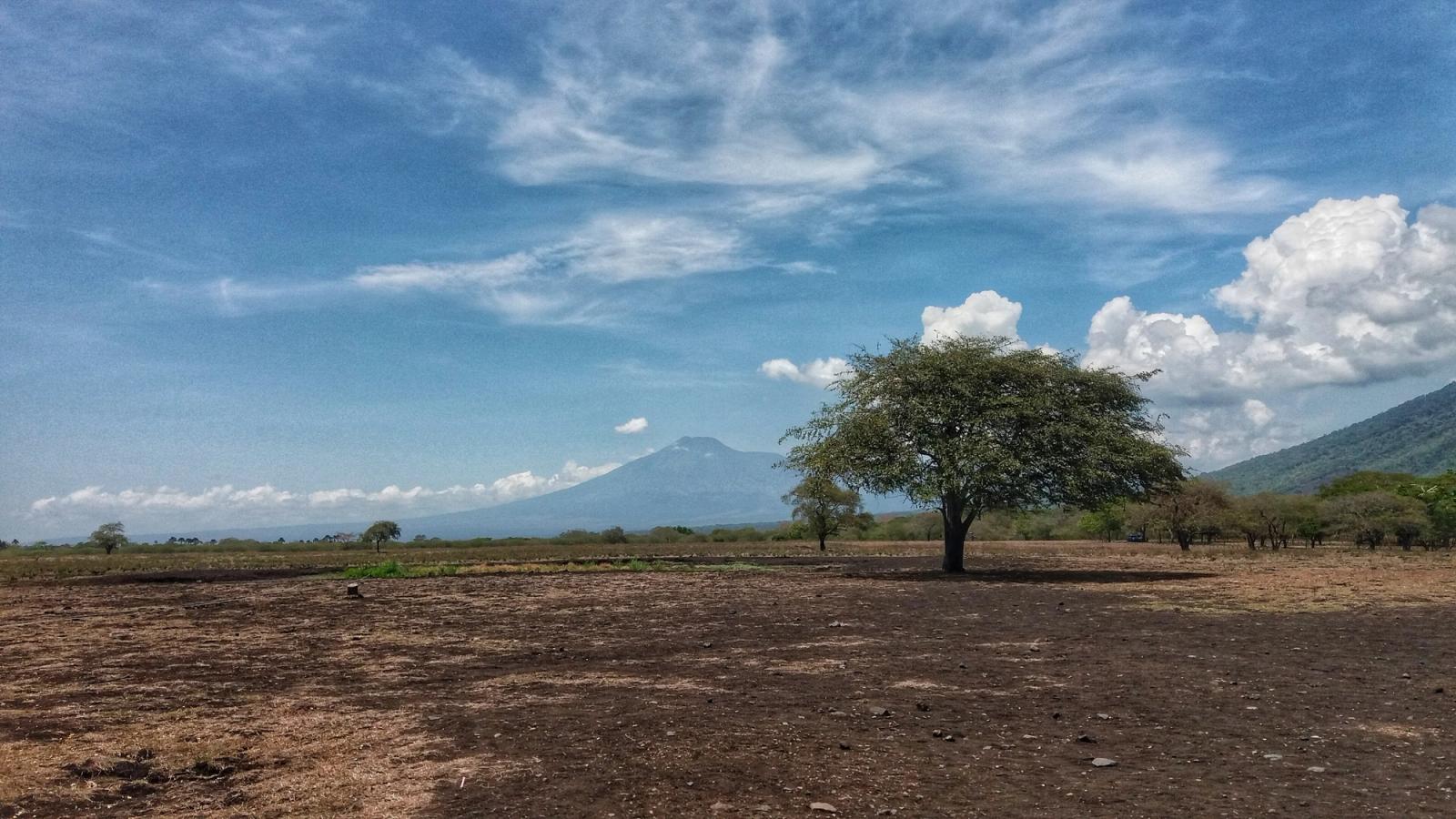
Most people cross to Banyuwangi for one reason, climb Ijen in the dark, and leave on the afternoon ferry. That is a fair trade for two days. It also means the three national parks sitting within three hours of that same port get skipped by almost everyone who passes through, which is why East Java is the one part of Java where you can still watch wild cattle graze at dawn with nobody else on the viewing tower.
The tension on this trip is not distance. It is timing. Every animal you came for is on a schedule you do not control: the banteng feed at first light and disappear by mid-morning, the turtles come ashore after dark, and one of the parks shuts its gates to visitors on Mondays. Get the order wrong and you will drive several hundred kilometres to look at empty grass.
So this week is built around those clocks rather than around the map. Seven days, one base in Banyuwangi, two nights away from it, and the volcano deliberately placed last, where an all-night hike cannot wreck anything that follows.
Who this trip is for
This suits travellers who have already done Bali or Yogyakarta and want the version of Java that does not appear on a highlights list. You need patience for early starts, tolerance for rough tracks, and genuine interest in animals rather than in photographing them. Couples, solo travellers and repeat visitors to Indonesia all do well on it.
It is not for a first trip to Indonesia, and it is not for anyone who wants guaranteed sightings. Wildlife here is wild: Sadengan can hold forty banteng one morning and six the next. It is also poorly suited to travellers who will not use a driver, because two of the three parks are awkward or impossible to reach otherwise. Families with young children will find the Sukamade night and the Ijen night both hard.
Trip at a glance
Duration: 7 days, with 5 nights in Banyuwangi and 1 night inside Meru Betiri National Park.
Start and end: Banyuwangi, on the eastern tip of Java, directly across the strait from Bali.
Route: Banyuwangi, Baluran National Park, Alas Purwo National Park, Sukamade in Meru Betiri National Park, Kawah Ijen, Banyuwangi.
Best for: wildlife travellers, repeat visitors to Indonesia, photographers, anyone pairing a Bali trip with something quieter.
Not ideal for: first-time visitors, travellers who dislike early starts, anyone who wants a single unbroken beach week.
Travel style: active and logistics-heavy in the first half, with a deliberate rest day before the volcano.
Best time: the dry season, roughly April to October, when the forest track into Sukamade is reliably passable.
Logistics level: high. Two of the three parks need a driver, and one needs a 4WD you do not drive yourself.
Booking difficulty: medium. The Sukamade overnight is the only thing that genuinely needs reserving ahead.
Why this route makes sense
The order comes from three fixed constraints. Baluran closes to routine visits on Mondays, so it has to land on a day that is not one. Sukamade takes two days whether you like it or not, because the turtles nest at night and the hatchlings are released the next morning. And Ijen is a midnight start, so it has to come after everything it might otherwise ruin.
Working backwards from those, the week arranges itself: the two day-trip parks first while you are fresh and your body is still on a normal clock, the overnight in the middle, a genuine rest day after it, then the volcano on the last night. You leave Java tired, which is the correct way to leave Java.
Banyuwangi itself does the work of a base. The port, the train station and the airport are all in town, guesthouses are cheap and used to guests leaving at odd hours, and every one of these parks is a return trip from it rather than a one-way move with luggage.
Which of the three parks is worth your day?
Baluran is the one to pick if you want open savanna and the easiest drive. Alas Purwo is the one with the largest wild banteng herd on Java and the emptiest viewing tower. Sukamade is not a day trip at all and is the only one that needs two days and a 4WD. Most travellers with a week do all three.
| Baluran | Alas Purwo | Sukamade, in Meru Betiri | |
|---|---|---|---|
| What you actually see | Open savanna at Bekol: banteng, rusa deer, green peafowl, macaques, then mangrove and reef at Bama Beach | The Sadengan grazing ground, 84 hectares with a viewing tower over what is generally described as Java's largest wild banteng herd | Green turtles hauling out to nest after dark, and hatchlings released into the surf at dawn |
| Drive from Banyuwangi | About an hour north to the Batangan gate, then 12 km of unpaved track to Bekol, another 45 minutes to an hour | Two to three hours south, depending on which sources you believe and how the road is running | About three hours by 4WD, including river crossings and a rocky forest track |
| Foreign entry, per person | Published between roughly IDR 165,000 and IDR 240,000 a day, with at least one listing showing a flat IDR 205,000 | Around IDR 150,000, the same on weekdays and weekends, plus about IDR 10,000 for a car | Folded into the overnight package, typically IDR 1,350,000 to 2,500,000 per person |
| When to actually be there | First light, or late afternoon if you want sunset over the Bali Strait instead | Between 6 and 9 in the morning, or 3 to 5 in the afternoon. The middle of the day is empty grass | The nesting walk runs late at night, the release happens around sunrise |
| The vehicle question | Not a low car. The Bekol track is unpaved and rocky, and local guidance says sedans should not attempt it | A normal car reaches Sadengan. The southern beaches are rougher | 4WD only, and not one you drive yourself |
| What goes wrong | Turning up on a Monday, when routine visits are closed unless it is a national holiday | Arriving at 11am to an empty feeding ground and concluding there is nothing there | Treating it as a day trip, which it is not, or booking it in the wet season |
How many days do you need for East Java's national parks?
Seven days covers all three parks plus Ijen from a single base in Banyuwangi, without a day that exists only to move you. Five days works if you drop one of the two savanna parks. Four days is the honest floor: Sukamade alone takes two, and the arrival and departure days are half days whatever you do.
The number that decides it is Sukamade. If you are not doing the turtles, this becomes a comfortable four-day trip and you can drive yourself. If you are, you have committed two days and a night deep inside a national park with no phone signal, and the week has to be built around that.
Day 1: Arrive in Banyuwangi and set the week up
Morning. Get yourself to the eastern tip of Java. From Bali this is a short hop: drive or ride to Gilimanuk in the far west, then take the Ketapang ferry, which runs around the clock and crosses in under an hour. From further afield, Banyuwangi has its own airport, code BWX, and a train station with services from Surabaya and Probolinggo.
You can compare boats, trains and buses on 12Go's Bali to Banyuwangi page before you commit to a day, which matters more than usual here because the parks run on fixed clocks and a late arrival costs you a morning.
Afternoon. Check in, then do the one piece of admin that decides whether the rest of the week works: confirm your driver, and confirm the Sukamade overnight. Both are usually arranged through your guesthouse, and both are worth settling on day one rather than the night before.
Sort connectivity too. Sukamade has no usable signal and Baluran's savanna is patchy, so an Indonesia eSIM from Airalo activated before you leave Bali is more useful here than it is in Ubud.
Evening. Eat early. Tomorrow starts before dawn.
Base: Banyuwangi town for 5 of the next 6 nights. Guesthouses in Banyuwangi are inexpensive and used to guests leaving at 3am, which is a genuine feature rather than a detail.
Travel note: do not book Baluran for tomorrow if tomorrow is a Monday. Routine tourist visits are closed that day unless it falls on a national holiday. Swap Baluran and Alas Purwo if the calendar makes you.
Day 2: Baluran, the savanna before the heat
Morning. Leave Banyuwangi by 5am. The Batangan gate is roughly 30 to 35 kilometres north on the Situbondo road, about an hour, and the ticket office opens around 07:30. From the gate it is another 12 kilometres of unpaved, rocky track to the Bekol savanna, which takes 45 minutes to an hour and is the reason a low car is a bad idea.
Bekol at first light is the point of the whole day. Banteng, the wild cattle that are Java's largest land animal, come out onto the grass early and drift back into the acacia as the heat builds. Rusa deer and green peafowl are usually easier to find than the banteng. Climb the viewing tower and stay still for an hour rather than driving around looking, which is the mistake most visitors make.
Afternoon. Continue east to Bama Beach, where the savanna runs into the sea. There is a mangrove boardwalk, reef close enough to snorkel from the sand, and a troop of long-tailed macaques with a well-earned reputation for theft. Keep your bag closed.
If you would rather not organise a driver and permits separately, a private Baluran safari day tour from Banyuwangi runs 9 to 11 hours with hotel pickup and covers Bekol, Bama and the mangrove trail in one price. It is the sensible option if you are two people, since a private car costs the same whether one or two of you are in it.
Evening. Back in Banyuwangi by dark. Base: Banyuwangi. Travel note: the park's published hours run roughly 07:30 to 16:00, and it also closes on scattered dates each year for ecosystem recovery, so have your guesthouse check the current notice before you set an alarm.
Day 3: Alas Purwo, Sadengan at dawn
Morning. Another early start, south this time, two to three hours to the Sadengan grazing ground. This is the single best wildlife hour of the week. Sadengan is an 84-hectare man-made feeding ground about two kilometres inside the gate, with a viewing tower looking over what is widely described as the largest wild banteng herd left on Java, plus deer and green peafowl.
Be there between 6 and 9. The animals come out to feed in that window and again between 3 and 5 in the afternoon, and the middle of the day genuinely is empty. Foreign entry runs around IDR 150,000, the same on weekdays and weekends, with a small extra charge for the car.
Afternoon. The park is much bigger than Sadengan. Triangulasi beach, the Ngagelan turtle hatchery and the mangrove channels at Bedul all sit within it, and Plengkung, the surf break known internationally as G-Land, is at the southern tip. Pick one, not three: the internal roads are slow and the distances are longer than the map suggests.
Evening. Back to Banyuwangi. Base: Banyuwangi. Booking logic: a driver who knows Alas Purwo is worth more than one who does not, because the turnings inside the park are unmarked and the difference between arriving at 6am and arriving at 8am is the difference between a herd and a field.
Day 4: The 4WD run to Sukamade
Morning. Pack an overnight bag and leave the rest at your Banyuwangi guesthouse. The run to Sukamade takes about three hours in a 4WD and involves river crossings and a rocky forest track, which is why nobody sensible drives it in their own car. Most operators collect from the hotel or from Ketapang port.
Afternoon. Arrive at the Sukamade guest house inside Meru Betiri National Park. There is no real signal and the electricity is limited. Walk the plantation, see the hatchery, eat early, sleep for two hours if you can.
Evening. The nesting walk goes out late, typically somewhere between 8pm and 2am, on the rangers' timing rather than yours. You walk the beach in the dark, without white light, until a ranger finds a female hauling out. Then you stand back and watch her dig, lay and cover, which takes longer and is quieter than any documentary suggests.
A standard two-day, one-night package covers the jeep, the park permits, the guest house, three meals and a ranger, and runs roughly IDR 1,350,000 to 2,500,000 per person depending on group size. The Sukamade turtle beach overnight from Banyuwangi is the version most travellers book, with pickup offered at Ketapang port or in town.
Travel note: green turtles come ashore at Sukamade most nights of the year, and published peak months contradict each other so thoroughly that they are not worth planning around. The season that matters is the road. In the wet months the forest track is the thing that stops the trip, not the turtles.
Day 5: Hatchlings at dawn, then back to Banyuwangi
Morning. Up at first light for the release. Hatchlings from the hatchery are carried down to the sand and go into the surf under their own power, which takes a while and is the part people remember. Rajegwesi beach, a fishing village on the way out, is usually the second stop.
Afternoon. The three-hour run back. You will arrive in Banyuwangi filthy and behind on sleep, which is expected and is why tomorrow is what it is.
Evening. Do nothing. Base: Banyuwangi. Booking logic: if you want the trip to end here, this is the natural exit point, and the ferry back to Bali is 40 minutes from your guesthouse.
Day 6: A rest day that is not optional
Morning. Sleep in. This is the only morning of the week you are allowed one, and skipping it is the most common way this itinerary goes wrong, because tonight you start walking at half past midnight.
Afternoon. If you want something gentle, Djawatan forest is half an hour out of town, a stand of old rain trees hung with epiphytes that is heavily photographed and genuinely striking. Bangsring Underwater, on the strait north of Ketapang, is a community-run reef restoration with easy snorkelling from a floating platform. Either is a two-hour outing, not a day.
Evening. Eat by six, in bed by eight, alarm at midnight. Travel note: rent or confirm a proper gas mask, not a cloth one. The sulphur at the crater rim is the real hazard on Ijen and a surgical mask does nothing against it.
Day 7: Kawah Ijen before sunrise, then out
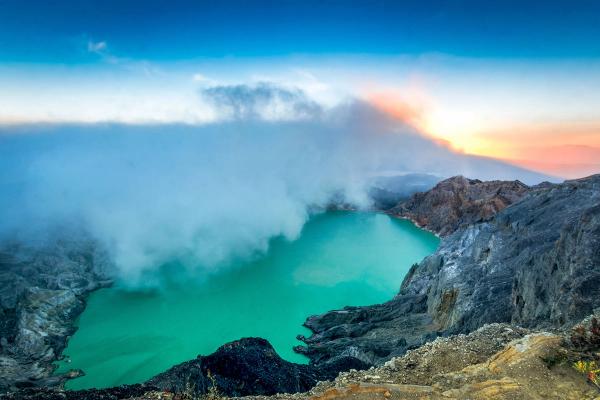
Morning. Leave around 00:30 for Paltuding, the trailhead, roughly an hour from town. The climb is about three kilometres up and then a steep descent into the crater to the blue flames, which are burning sulphuric gas and only visible in full darkness. You want to be down in the crater by 3am and back at the rim for sunrise over the turquoise lake.
Entrance for foreign visitors sits in the region of IDR 100,000 on weekdays and IDR 150,000 at weekends as a working estimate, and a guided tour normally rolls that into the price. The crater also closes for maintenance on certain dates, so confirm the current notice rather than assuming.
Booking a guided Ijen blue fire night hike from Banyuwangi is the simplest way to do this well. The price covers the pickup, the entrance fee, a guide who understands the timing and the gas mask you actually need, and after six days of early starts, handing the logistics to someone else is worth the money.
Afternoon. Back in town by 9am. Shower, eat, then either take the ferry to Bali or fly out of BWX. Travel note: this is a tight last day and it is a deliberate choice. If you would rather not fly on no sleep, add an eighth night and leave the following morning.
What to cut, adapt or upgrade
The week compresses cleanly, because each park is a self-contained unit rather than a link in a chain. What you cut depends entirely on whether the turtles are the reason you came.
| If you have | Keep | Cut | Why |
|---|---|---|---|
| 3 days | Ijen and Baluran | Alas Purwo and Sukamade | The two things within an hour of town. A classic long weekend from Bali |
| 4 days | Sukamade and Ijen | Both savanna parks | Sukamade eats two days on its own. Pairing it with the volcano is the highest-contrast short version |
| 5 days | Baluran, Sukamade, Ijen | Alas Purwo | Baluran and Alas Purwo show you similar animals. Baluran is closer and easier |
| 7 days | Everything, as written | Nothing | Enough room for the rest day, which is what stops the volcano night from being miserable |
| 9 days | Everything, plus two nights on the Bali side | Nothing | Menjangan and the West Bali coast are 90 minutes from Ketapang and make a natural decompression |
The one upgrade worth paying for is a private car with a driver for the whole week rather than booking day tours separately. It costs more per day and it buys you the 5am departures, which is the thing that actually determines whether you see animals.
What to book early, and what to keep flexible
Book the Sukamade overnight before you arrive. It is the only genuinely capacity-limited thing on this itinerary, the guest house inside the park is small, and operators run fixed departures rather than daily ones in quieter months.
Book your Banyuwangi beds for the whole week too, not because they sell out but because moving guesthouses mid-week with an overnight bag is a nuisance you have not budgeted time for.
Keep the two savanna days flexible, and keep the Ijen night flexible until you see a forecast. Cloud does not stop the blue flames, but heavy rain makes the crater descent genuinely unpleasant and the sulphur sits lower.
Mistakes travellers make on this route
Arriving at a feeding ground at eleven in the morning. This is the big one, and it is the difference between a trip people rave about and a trip people describe as overrated. Both Baluran and Alas Purwo are dawn destinations.
Driving a rental car to Bekol. The last 12 kilometres are unpaved and rocky, and low vehicles get stuck or damaged on it.
Booking Baluran on a Monday. Routine visits are closed and you will have driven an hour to find out.
Treating Ijen as the warm-up. An all-night hike on day two wrecks the two dawn starts that follow it. It belongs at the end.
Expecting guaranteed sightings. Nobody feeds these animals for your benefit, and any operator promising banteng is promising something they do not control.
Before you build this trip
Bring closed shoes with grip, long sleeves for dawn and dusk, and a red-filter torch if you own one, because white light is not allowed on the nesting beach. Binoculars change the Sadengan tower from a nice view into an actual wildlife morning.
Cash matters more here than in Bali. Park gates, village warungs and the Sukamade guest house are cash operations, and ATMs stop existing well before the parks start.
On fees: the foreign-visitor tariffs across these parks were reset under Government Regulation 36 of 2024, and the figures published by different sources have not converged since. Budget around IDR 200,000 per park per day, carry more, and confirm at the gate rather than arguing with a printout.
On visas, most visitors enter Indonesia on the visa on arrival, extendable once. Check the current rules on the official immigration portal before you fly, since the entry paperwork has changed more than once recently.
Final verdict
This is the best wildlife week in Java, and it is not close. Three national parks, a volcano crater that burns blue, and a standard of emptiness you will not find anywhere west of here. It is also a week of alarms, dust and driving, and anyone who tells you otherwise is selling a tour.
Do it if you have already seen the famous Java and want the version with animals in it. Do not do it as a first trip, do not do it in the wet season, and do not do it without accepting that the schedule belongs to the banteng and the turtles rather than to you.
Related itineraries
If you only want the volcano, our 2-day Kawah Ijen blue fire plan covers the same crater from the same base. To pair Ijen with Bromo instead, see the 4-day Bromo and Ijen volcano crossing. And for the cultural half of the island, our 7 days in Yogyakarta and East Java runs the temples and the volcanoes as one line.
Before you go
Sort the practical side
Entry rules and a realistic budget before you book this trip.
Good to know
Frequently asked questions
What wildlife can you actually see in East Java?
Banteng, the wild cattle that are Java's largest land animal, plus rusa deer, green peafowl and long-tailed macaques on the savannas at Baluran and Alas Purwo, and nesting green turtles at Sukamade. Leopards and dholes exist in these parks but are very rarely seen. Nothing here is fenced or fed, so sightings vary night to night.
Is Baluran National Park worth visiting?
Yes, if you go at first light. Bekol savanna at dawn is the reason people call it the Africa of Java, and the drive from Banyuwangi is only about an hour to the gate. Arriving at midday, which is what most visitors do, gives you empty grass and a long drive back.
What day is Baluran National Park closed?
Mondays. The park applies a routine closure to tourist visits every Monday, except when the Monday falls on a national holiday, and it also closes on scattered dates each year for ecosystem recovery. Published hours otherwise run roughly 07:30 to 16:00. Confirm the current notice before you set an alarm.
How much does it cost to enter these parks?
As a working estimate, budget around IDR 200,000 per person per day for Baluran, about IDR 150,000 for Alas Purwo and roughly IDR 100,000 to 150,000 for Ijen, with Sukamade's permits folded into its overnight package. The tariffs were reset under Government Regulation 36 of 2024 and published figures still disagree, so carry cash and confirm at the gate.
How do you get to Sukamade turtle beach?
By 4WD from Banyuwangi, about three hours, through river crossings and a rocky forest track. There is no public transport and self-driving is not realistic. Standard two-day, one-night packages run roughly IDR 1,350,000 to 2,500,000 per person and include the jeep, park permits, a guest house inside the park, meals and a ranger.
What is the best time of year for this trip?
The dry season, roughly April to October. Turtles come ashore at Sukamade most nights of the year and published peak months contradict each other, so the deciding factor is the forest track into Meru Betiri, which is far harder in the wet months. The savanna parks are also better in the dry, when animals concentrate around water.
Can you do this trip from Bali?
Yes, and most people do. Gilimanuk to Ketapang is a ferry crossing of under an hour running around the clock, and the port is in Banyuwangi town. A three-day version covering Ijen and Baluran works as a long weekend from Bali. The full seven days needs Banyuwangi as a base rather than day trips from across the strait.
Do you need a guide or a driver?
A driver, yes, for practical purposes. Alas Purwo's internal turnings are unmarked, the Bekol track is not for a low car, and Sukamade legally and practically requires a 4WD with a local operator. A private car with a driver for the week also buys you the 5am departures that decide whether you see anything.
Go deeper
Java guides
Keep exploring
Related itineraries
Short escape (3-5 days) · Java
2 Days at Kawah Ijen: Blue Fire, Sunrise and the Crater Lake
A focused 2-day, 1-night Kawah Ijen plan from Banyuwangi: the midnight blue fire trek, sunrise over the acid lake, costs, safety and how to add it to Bali.
One week (6-8 days) · Java
8 Days in Java for a Honeymoon: Borobudur, the Countryside and One Bromo Sunrise
A Java honeymoon with one pre-dawn start, not three: Yogyakarta, three slow nights below Borobudur, and a private Bromo sunrise. Real 2026 costs.
One week (6-8 days) · Java
6 Days in Karimunjawa: Java's Island Week, Built Around the Ferry
Six days in Karimunjawa, planned around the ferry that really runs it: which boat to take, where to base, and what the snorkelling is like.
Share this itinerary