
By Editorial Team · Last updated August 2026
Most people see Bali and assume they have seen Indonesia. This route is the corrective. Over three weeks you move from Java's temples and twin volcanoes to the Komodo dragons of Flores, then Lombok's empty beaches and the carless Gilis, finishing with orangutans and a crater lake in Sumatra. It is ambitious, flight-heavy and physical. It rewards travellers who want range over rest.
Who this trip is for
This route is built for repeat visitors and curious first-timers who want Indonesia's range rather than a single beach base. If you have already done Bali, or you want a trip organised around culture, volcanoes, wildlife and island landscapes, the logic here works hard for you. Solo travellers, friends and active couples tend to enjoy it most, because the pace stays high and the scenery keeps changing.
It is not ideal for travellers who want to unpack once and stay put. You change base roughly every three to four days and take several domestic flights. It is also a weak fit if you dislike very early starts, since the volcano and wildlife mornings begin before dawn. Families with small children, or anyone wanting a slow, low-logistics holiday, should look at a single-region trip instead.
Trip at a glance
Duration: 21 days. Start: Yogyakarta. End: Medan.
Best for: repeat travellers, explorers, nature lovers, solo travellers and friends. Not ideal for: travellers wanting one relaxed base, or those who dislike early mornings and multiple flights.
Travel style: active and remote-leaning, mixing cities, volcanoes, dive islands and rainforest. Budget: as a working guide the article puts mid-range travellers at roughly US$2,800 to US$4,500 per person and budget travellers at around US$1,800 to US$2,500, excluding international flights. Costs can change, so confirm current fares before locking anything.
Logistics level: medium to hard. The Java and island legs are manageable, but the Flores and Sumatra connections are flight-dependent and need buffer days. Best time: April to October. Booking difficulty: medium. The inter-region flights and Komodo boat day are the parts worth securing early.
Why this route makes sense
The order is built around geography and flight hubs, not a wishlist. You start in Yogyakarta because it gives you Indonesia's great temple landscape and an easy cultural landing before the trip gets physical. From there you move east overland to Bromo and Ijen, two volcanoes that sit naturally on the way to the Bali ferry crossing and the Labuan Bajo flight.
Flores and Komodo come next because Labuan Bajo is the gateway and a logical mid-trip anchor. Lombok and the Gilis then give you a softer island stretch to recover before the final push. Sumatra sits last for a reason. It is the most remote leg, wetter year-round, and works best as a strong finish you fly out of rather than a place you have to connect onward from.
The whole route is designed to avoid backtracking. As the article is honest about, this is a greatest-hits-beyond-Bali line rather than a comprehensive loop, and several domestic flights are unavoidable because overland travel between these regions is impractical.
Before you fly: data and entry
Sort your connectivity before you board. An Indonesia eSIM that you activate on the plane means you land with maps, messaging and ride-hailing already working, which matters on a route with this many transfers.
Travel note: parts of rural Flores and Sumatra carry malaria risk, unlike Bali and most of Java. The article suggests seeing a travel-health clinic four to six weeks ahead about antimalarials and vaccinations. That is general guidance, not medical advice, so check the latest official health advice for your own situation.
Day 1: Arrive and settle in Yogyakarta
Afternoon. Land in Yogyakarta and keep the first day deliberately light. Walk Malioboro, eat early and adjust. You have a busy three weeks ahead, so resist the urge to start sightseeing on arrival.
Base: Yogyakarta for four nights, ideally near Malioboro or in the quieter Prawirotaman area. A single base for the whole Java-culture leg keeps logistics simple.
Booking logic: four nights in one city means you can choose for comfort rather than location convenience, since you will day-trip out and back. Lock this stay before the temple-trip booking so your pickups have a fixed address.
Day 2: Borobudur and Prambanan
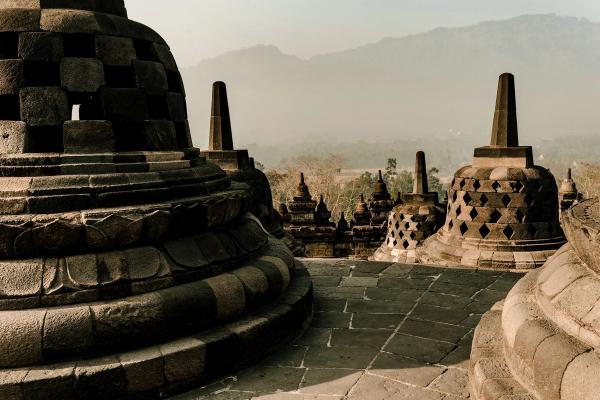
Morning. Start at Borobudur, then pair it with Prambanan later in the day. The contrast between the Buddhist and Hindu temple complexes makes this one of the strongest cultural days on the whole route.
Booking logic: a combined Borobudur and Prambanan trip from Yogyakarta handles timing and transport between two sites that are on opposite sides of the city. Doing both independently in one day is possible but tight, so a guided day removes the stress of connections.
Travel note: sunrise slots at Borobudur are popular and access rules change, so confirm current ticketing before you commit to an early start.
Day 3: Yogyakarta city culture
Morning. Visit the Sultan's Palace and the Taman Sari Water Castle, then add a batik workshop in the afternoon. This is the day that gives the city context rather than just monuments.
Booking logic: a private city tour is worth it here only if you want the history explained properly. The sites are close together and walkable, so independent travellers can skip the guide and still see everything without difficulty.
Day 4: Yogyakarta local life
Morning. Slow the pace with a village and local-life experience outside the centre. After two monument-heavy days, this is a useful change of register before the trip turns physical.
Travel note: treat this as a flexible buffer day. If you arrived jet-lagged or want a rest before the volcano leg, this is the day to trade for downtime without losing anything essential.
Day 5: Position for Mount Bromo
Morning to evening. Leave Yogyakarta and travel east towards Mount Bromo. This is a positioning day, not a sightseeing one, so plan for a long transfer and an early night.
Base: one night near Bromo, in the Cemoro Lawang area close to the crater rim.
Booking logic: an overland route handling the Yogyakarta to Bromo and Ijen logistics is the practical choice, because piecing together trains and local transport yourself for this stretch is slow and easy to get wrong. Travel note: sleep early. The Bromo start is brutal if you arrive late.
Day 6: Mount Bromo sunrise
Pre-dawn. Wake well before sunrise for the Bromo viewpoint and the caldera. A Mount Bromo sunrise tour is worth it mainly because it manages the very early timing and the jeep transfer across the sand sea, which is hard to arrange solo in the dark.
Afternoon. Continue towards Ijen after the visit. Travel note: this is a demanding day that starts in the cold and ends with onward travel, so keep the evening simple and allow buffer time for delays.
Day 7: Ijen crater, then the Bali ferry
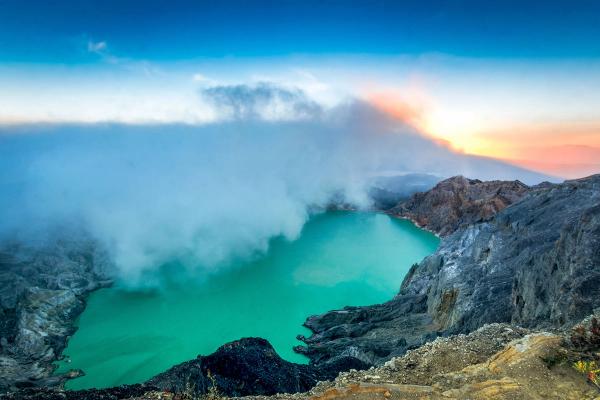
Pre-dawn. Start very early for Ijen. The crater lake, the sulphur-mining landscape and the blue fire are all best seen before around 5am, so this is another genuine early start.
Afternoon. After Ijen, take the Banyuwangi to Bali ferry and position for the flight onward to Labuan Bajo. The ferry crossing is short and frequent, but ferry timing can shift, so allow buffer before any onward flight.
Base: one night in Banyuwangi only if your timings make a same-day push impractical. Booking logic: check current flight routes from Bali to Labuan Bajo before you fix this day, since the connection drives where you sleep.
Day 8: Fly to Labuan Bajo
Morning. Fly into Labuan Bajo, the gateway to Komodo. Check in near the harbour and keep the afternoon free.
Afternoon to evening. Relax with a sunset dinner over the water. This is a deliberate soft day after the back-to-back volcano mornings.
Base: Labuan Bajo for four nights. Booking logic: confirm current flight routes before locking this hotel, because a schedule change here ripples through the whole middle of the trip.
Day 9: Komodo National Park
Full day. Spend a full day in Komodo National Park by speedboat, covering Padar Island, Pink Beach, Komodo Island itself, Manta Point and snorkelling stops. This is the centrepiece of the Flores leg.
Booking logic: a full-day speedboat tour is the efficient way to link sites that are spread across the park and only reachable by water. Travel note: park fees and access rules for Komodo have changed before and can change again, so confirm current pricing and any caps before you travel rather than assuming.
Day 10: Slow Labuan Bajo day
Morning. Keep this lighter. A Rangko Cave half-day trip is an easy option, or simply rest by the pool.
Travel note: this is your built-in recovery and weather buffer. If the Komodo boat day gets bumped by sea conditions, this is the day you reschedule into, which is exactly why it stays flexible.
Day 11: Fly to Lombok and reach Kuta
Morning. Fly to Lombok, then transfer south to Kuta Lombok. A private airport transfer to Kuta Lombok is the simplest way to cover the run from the airport, which is awkward to do by public transport with luggage.
Base: Kuta Lombok for three nights. Booking logic: book the transfer to match your flight arrival rather than risking on-the-spot taxis, since this leg lands you in a quieter part of the island.
Day 12: South Lombok beaches
Morning to afternoon. Explore the south coast, taking in Tanjung Aan and Selong Belanak. A South Lombok beach tour makes the day easier because the best beaches are spread out and not practical to link without your own transport.
Travel note: roads here are quiet but distances add up, so a tour or a hired driver saves a lot of backtracking.
Day 13: Lombok waterfalls or surf
Morning. This day splits two ways depending on what you want. Head north to Senaru for the Sendang Gile and Tiu Kelep waterfalls day trip, or stay south and take a beginner surf lesson at Selong Belanak.
Booking logic: the Senaru waterfalls are a long drive each way, so book it as a full day or skip it if you would rather not lose the hours in transit. Selong Belanak is one of the gentler places to learn to surf, which makes it the lower-effort choice if you want to stay near base.
Day 14: Cross to Gili Trawangan
Morning. Cross to the islands on a fast boat from Lombok to Gili Trawangan. Travel note: there are no cars on the island, so it is bicycles, walking and horse carts only once you arrive.
Base: Gili Trawangan for three nights. Booking logic: fast-boat schedules and sea conditions can shift, so book a morning crossing where you can and keep the afternoon loose in case of delays.
Days 15 to 16: Gili Islands
Day 15. Take a 3-island Gili snorkeling tour that links all three Gilis, with turtles, coral and the underwater statues near Gili Meno. It is the single best way to see the three islands in one outing.
Day 16. Keep this as a slow island day. After two weeks of movement, the value of the Gilis is that there is nothing you have to do here.
Travel note: Gili Trawangan is busier and Gili Meno quieter, so plan dinners and any nightlife around which island suits your mood.
Day 17: Fly to Sumatra via Bali
Morning. Take the return boat to Bali, then fly on to Medan. This is a long transit day, so build in margin between the boat and the flight.
Base: one night in Medan. Booking logic: confirm current flight routes from Bali to Medan before you fix this day. Travel note: treat this purely as a positioning day and do not plan anything else around it.
Day 18: Travel to Bukit Lawang
Morning. Drive from Medan to Bukit Lawang, around three hours as a working estimate. Arrive and walk the riverside village to settle in before the trekking days.
Base: Bukit Lawang for two nights, in simple guesthouses by the river. Booking logic: book a guesthouse that can also arrange your jungle trek, since the orangutan trekking here is primarily organised locally rather than through booking platforms.
Day 19: Orangutan trekking in Gunung Leuser
Full day. Spend the day trekking in Gunung Leuser National Park with a licensed local guide, with the chance to see orangutans in protected rainforest. This is the wildlife highlight of the Sumatra leg.
Booking logic: as the article notes, Bukit Lawang jungle activities are primarily arranged locally, and the preferred approach is to book directly through your guesthouse, with a working price guide of around US$30 to US$60 per person. Prices can change, so confirm on arrival. Travel note: always trek with licensed local guides, both for safety and for the orangutans.
Day 20: Return to Medan, or add Lake Toba
Morning. Return to Medan. From here the day forks. If your flight is soon, this becomes a direct departure day.
Afternoon. If you have time, connect on to Lake Toba for one more night on Samosir Island before flying home. Booking logic: keep this decision flexible and tied to your outbound flight, since the Lake Toba detour only makes sense if your schedule genuinely allows it.
Day 21: Departure from Medan
Morning. Take the final morning slowly. Medan airport has connections to Kuala Lumpur and Singapore for onward international departures.
Travel note: confirm current flight routes and connection times before booking your way home, and allow buffer at a hub airport rather than cutting the connection fine.
What to book early, and what to keep flexible
Book early: the inter-region domestic flights, especially the legs into Labuan Bajo, into Lombok and over to Medan. These control both cost and availability, and a sold-out flight can break the route. The Komodo speedboat day and your four-night bases in Yogyakarta and Labuan Bajo are also worth securing ahead.
Keep flexible: the Day 10 Labuan Bajo slow day, the Day 13 waterfalls-or-surf choice, the Day 16 Gili rest day and the Day 20 Lake Toba detour. These are your buffers for weather, fatigue and flight changes, which is exactly why they should stay loose.
Mistakes travellers make on this route
The most common error is underestimating the flights. People treat the inter-region hops as quick when they often route through hubs and eat a half-day. Book them early and assume each is a travel day, not a bonus.
The second is stacking the volcano mornings without recovery. Bromo and Ijen are back-to-back pre-dawn starts, and the Labuan Bajo soft days exist to absorb the fatigue, so do not fill them.
The third is treating Sumatra like a casual add-on. It is the most remote and weather-exposed leg, and the orangutan trekking is arranged locally, so leave margin and book your guesthouse-guided trek rather than expecting a platform booking to carry you.
What to cut, adapt or upgrade
Cut: if 21 days is too much, the cleanest trim is Sumatra. Ending after the Gilis gives you a strong two-week Java-and-islands trip without the most demanding logistics. Alternatively, drop the Day 4 Yogyakarta local-life day if you want to move faster.
Adapt: the Day 13 split lets you tune Lombok to your energy. Choose the waterfalls for scenery or the surf lesson for a lower-effort day near base. The Lake Toba night is a pure add-on you fit only if flights allow.
Upgrade: if budget allows, the private transfers and guided tours on the spread-out days, such as South Lombok and the Lombok airport run, buy back time and remove friction. On a route this dense, that convenience is often worth more than a nicer room.
Before you build this trip
Best time: April to October, the dry season, works across most of these regions and suits Java's volcanoes, Flores' roads and Lombok's beaches. Sumatra is wetter year-round, so expect some rain there regardless.
Visa and entry: check the latest official entry and visa guidance for your nationality before you travel, since rules can change.
Domestic transport: plan around flights between regions, with trains and drivers in Java, boats in Flores, Lombok and the Gilis, and overland transport in Sumatra. Ferries and remote logistics: the Bali ferry and the fast boats are short but weather-sensitive, so allow buffer time and never schedule a tight onward flight straight after a crossing.
Money and eSIM: carry cash for rural Flores and Sumatra where cards are unreliable, and set up your eSIM before you fly so you land connected. What to book early: inter-region flights, the Komodo boat and key bases. What to keep flexible: the buffer days and the Lake Toba detour. All cost figures here are working estimates and can change.
Final verdict
Do this trip if you want Indonesia's range and you are willing to earn it. It rewards repeat travellers, nature lovers and active solo travellers or friends who would rather see temples, volcanoes, dragons, reefs and orangutans than spend three weeks on one beach. The variety is the point, and few other routes pack this much contrast without backtracking.
Do not do this trip if you want to relax in one place, dislike early mornings or want to avoid flights. For you, a single-region trip to Bali and the Gilis, or Java alone, will be far more enjoyable than this much movement. This is a high-energy route, and it is honest about being a greatest-hits line rather than the whole of Indonesia.
Related itineraries
If this much movement feels like a lot, a focused island stretch is easier to manage. See our Lombok and Gili Islands itinerary for the softer half of this route on its own.
For the wildlife and boat highlight in more depth, see the Flores and Komodo itinerary. To plan around the start point, browse the Java destination hub.
Before you go
Sort the practical side
Entry rules and a realistic budget before you book this trip.
Good to know
Frequently asked questions
Is three weeks enough to see Indonesia beyond Bali?
Three weeks comfortably links Java, Flores, Lombok and a Sumatra highlight without backtracking, but Indonesia is vast, so this is a greatest-hits-beyond-Bali route rather than comprehensive. Expect several domestic flights, since overland travel between these regions is impractical.
How do I travel between Java, Flores, Lombok and Sumatra?
Domestic flights are essential, since most legs route through hubs like Jakarta, Surabaya, Bali or Labuan Bajo. Within regions you will use trains and drivers in Java, boats in Flores and Lombok, and overland transport in Sumatra. Book the inter-region flights early to control cost and availability, and confirm current routes before locking hotels.
Do I need vaccinations or antimalarials for this trip?
Possibly. Rural parts of Flores and Sumatra carry malaria risk, unlike Bali and most of Java. See a travel-health clinic four to six weeks ahead about antimalarials and recommended vaccinations, and pack insect repellent. This is general guidance, not medical advice, so check the latest official health advice.
When is the best time for a beyond-Bali trip?
April to October, the dry season, works across most of these regions and is best for Java's volcanoes, Flores' roads and Lombok's beaches. Sumatra is wetter year-round, so expect some rain there regardless. The mid-year dry months are the safest overall bet.
How much does 21 days beyond Bali cost?
As a working estimate, mid-range travellers spend roughly US$2,800 to US$4,500 per person over three weeks, driven largely by the multiple domestic flights plus accommodation and tours. Budget travellers using guesthouses, public transport and shared tours can do it for around US$1,800 to US$2,500, excluding international flights. Prices can change.
Can I shorten this 21-day route if I have less time?
Yes. The cleanest trim is to end after the Gili Islands, which gives a strong two-week Java-and-islands trip without the most demanding logistics in Sumatra. You can also drop the extra Yogyakarta local-life day and the optional Lake Toba night to move faster.
Go deeper
Java guides
Keep exploring
Related itineraries
Short escape (3-5 days) · Java
2 Days at Kawah Ijen: Blue Fire, Sunrise and the Crater Lake
A focused 2-day, 1-night Kawah Ijen plan from Banyuwangi: the midnight blue fire trek, sunrise over the acid lake, costs, safety and how to add it to Bali.
One week (6-8 days) · Java
7 Days of Wildlife in East Java: Baluran, Alas Purwo and Sukamade
Java's three wildest national parks in 7 days from Banyuwangi: banteng at dawn, a 4WD run to the Sukamade turtles, then Ijen. Fees and drive times.
One week (6-8 days) · Java
8 Days in Java for a Honeymoon: Borobudur, the Countryside and One Bromo Sunrise
A Java honeymoon with one pre-dawn start, not three: Yogyakarta, three slow nights below Borobudur, and a private Bromo sunrise. Real 2026 costs.
Share this itinerary