By Editorial Team · Last updated August 2026
The Derawan Islands hold green turtles you can count from a jetty and mantas that show up on a schedule, off the east coast of Borneo. They also hold a trap: most itineraries still sell a swim in the Kakaban jellyfish lake, and that swim has been banned since the lake reopened in February 2025. Here is the version that works in 2026.
The Derawan Islands sit off the east coast of Borneo, four hours of flying and a half day of road and boat away from anywhere most people have heard of, and they hold the two things that make a diving week worth the effort: green turtles you can count from a jetty, and manta rays that show up on a schedule. They also hold a trap. Most of the itineraries still circulating online are selling a swim in the Kakaban jellyfish lake, and that swim has been illegal since the lake reopened in February 2025.
So this plan starts from what the archipelago actually is in 2026, and builds a realistic eight days around it. Two bases, Derawan and Maratua, one long boat day in the middle that reaches Sangalaki and Kakaban, and enough slack for the sea to have an opinion. The distances here are short on a map and slow in practice, and the whole trip works or fails on how honestly you budget the transfers.
Nobody comes to Derawan for restaurants or nightlife. You come for water, and for the fact that you will often have it to yourself.
Who this trip is for, and who should skip it
This trip suits divers, snorkellers and small groups of friends who are comfortable with long transfer days, simple rooms and a village that goes quiet after dark. Eight days is the minimum that makes the journey pay for itself. If you dive, you will get more out of it than anyone.
Skip it if you want restaurants, spas or a beach club, if you need reliable data coverage every day, or if your trip cannot absorb a weather delay. Skip it too if the jellyfish lake swim was the reason you were going, because that experience no longer exists in that form. Families with small children can do it, though the four to five hours of transfer at each end are a real cost and our 9-day north Sumatra route is gentler on the same wildlife theme.
Trip at a glance
Eight days, two bases, two moves. Day 1 gets you to Berau, days 2 to 4 are Derawan, days 5 to 7 are Maratua, and day 8 flies you out. The one long boat day, Sangalaki and Kakaban, sits on day 4 so that a cancellation still leaves two chances to reschedule it.
Route. Balikpapan or Jakarta to Berau, then Tanjung Batu, Derawan, Sangalaki and Kakaban by boat, Maratua, and back to Berau. Pace. Slow, with two demanding transfer days at the ends. Water. Turtles daily, mantas on a good day at Sangalaki, walls and a cave system at Maratua. Budget shape. Cheap beds, expensive boats. The speedboats are the line item that decides your total, so read the boat sections before you book anything.
Why this route makes sense
The archipelago has four names worth knowing and only two of them have beds. Derawan and Maratua have villages and accommodation; Sangalaki and Kakaban are day trips with ranger posts and no overnight stay. Any itinerary that promises you a night on Sangalaki is describing something that does not exist.
That leaves one real decision, which base gets more of your nights, and one real risk, that you spend your money on repeated crossings between them. Splitting the week into a Derawan half and a Maratua half means you cross the archipelago once instead of four times. It also means you see both halves of the marine life story, the turtle shallows around Derawan and the wall and channel diving off Maratua, without doubling the boat bill.
How do you actually get to the Derawan Islands?
You fly to Berau, airport code BEJ, usually via Balikpapan, and then finish by road and boat. From Berau you either drive about two and a half to three hours to Tanjung Batu and take a thirty minute speedboat to Derawan, or board the public speedboat that leaves the Tanjung Redeb pier around ten in the morning and runs straight to Maratua in roughly two and a half hours.
Kalimarau is a small airport with a busy Balikpapan shuttle, and Balikpapan is the connection almost everyone uses. Jakarta, Surabaya and Makassar also appear on the board. Operator listings show around twenty Balikpapan to Berau flight options a day and fares from roughly IDR 1.6 million, so you can compare Balikpapan to Berau flights before you fix the rest of the trip. Fares and schedules move, so treat that as a working estimate.
A small Susi Air rotation has at times linked Tarakan, Maratua and Berau once a week. It is a genuine shortcut when it runs, and it disappears from the schedule often enough that you should never plan a trip around it. Check it as a bonus, book the boat as your plan.
| Way in | How long | Published fare | Best for |
|---|---|---|---|
| Road to Tanjung Batu, then speedboat to Derawan | Roughly 2.5 to 3 hours by car, then about 30 minutes on the water | Car charter is negotiated locally, the boat hop is short and cheap | Anyone starting on Derawan, and anyone landing in Berau late in the day |
| Public speedboat from the Tanjung Redeb pier to Maratua | About 2.5 hours in a calm sea, 3 to 4 hours in swell | Around IDR 510,000 for foreign visitors, less for Indonesian passengers | Travellers going straight to Maratua who can reach the pier before the morning departure |
Travel note. The morning departure is the whole schedule. Miss it and you sleep in Tanjung Redeb, which is why day 1 of this plan is deliberately a night in town rather than a heroic same day push to the islands. Book rooms in Tanjung Redeb rather than gambling on a connection you cannot control.
Should you base yourself on Derawan or Maratua?
Base on Derawan if you want turtles off the jetty, cheap rooms, a village you can walk in ten minutes and the shortest boat rides to Sangalaki and Kakaban. Base on Maratua if you are diving seriously, want walls, a channel and a cave, and can accept fewer rooms, higher prices and a longer ride back to the mainland. This trip does both, in that order.
| Derawan | Maratua | |
|---|---|---|
| Getting there | Road to Tanjung Batu, then about 30 minutes by boat | About 2.5 hours by public speedboat from Tanjung Redeb, or up to 90 minutes from Tanjung Batu |
| Off the jetty | Green turtles most days, shallow reef, easy snorkelling | Deeper water, wall dives, the Big Fish Country channel and the Haji Mangku cave |
| Rooms | Homestays from around IDR 100,000, water cottages from around IDR 300,000 | Homestays from around IDR 250,000, plus a handful of dive lodges and resorts |
| Day trips | Shortest runs to Sangalaki and Kakaban | Longer runs to Sangalaki and Kakaban |
| Best for | Snorkellers, first visits, tighter budgets | Divers, quieter nights, longer stays |
Both islands run on cash. There are very few machines out here that take a foreign card, and assuming otherwise is the single most common way travellers ruin a week. Draw what you need in Tanjung Redeb, add a margin for boat charters, and carry it.
Can you still swim in Kakaban's jellyfish lake?
No. The lake closed on 28 December 2023 after the stingless jellyfish population collapsed, and reopened on 16 February 2025 as a viewing site only. Visitors now walk a boardwalk and look from decks, with local guides required, no fins near the water and no sunscreen or lotion, which monitoring had identified as a driver of the decline.
Operator guidance describes a daily cap of roughly a hundred visitors and an entrance fee in the region of IDR 100,000 for Indonesian visitors and IDR 150,000 for foreign ones. Those figures are indicative rather than official, so treat them as a budget line and confirm them with your boat operator on the day. Monitoring reported in 2026 describes thousands of jellyfish back in the lake, and officials have suggested a controlled swim could return one day, with no date attached.
This changes the shape of a Kakaban day rather than cancelling it. You go for the boardwalk and then you dive or snorkel the outer reef, which is the better half of the island and was always the part serious divers came for. Plan it as a reef day with a lake stop, and you will not feel short changed.
Day 1: Fly to Berau and stop in Tanjung Redeb
Morning. Fly into Kalimarau, almost certainly through Balikpapan. Take the earliest connection you can, because the useful boats out to the islands leave in the morning and there is no evening equivalent.
Afternoon. Draw cash, buy any dive kit consumables you cannot live without, and confirm tomorrow's transport. If you are taking the public speedboat to Maratua, walk to the Tanjung Redeb pier and buy the ticket in person for the next morning.
Evening. An early night. Tanjung Redeb is a working river town rather than a destination, and treating it as a launchpad is the right expectation to arrive with.
Base: Tanjung Redeb. Booking logic: one night only, near the pier if you can, and refundable if your inbound flight is a tight connection. Travel note: an Indonesia eSIM from Airalo is worth activating here, because you will be confirming boats by message for the next week and island coverage is patchy.
Day 2: Cross to Derawan
Morning. Road to Tanjung Batu, roughly two and a half to three hours, then a speedboat of about thirty minutes to Derawan. Bags get wet on this leg more often than not, so dry bag anything electronic before you board rather than at the jetty.
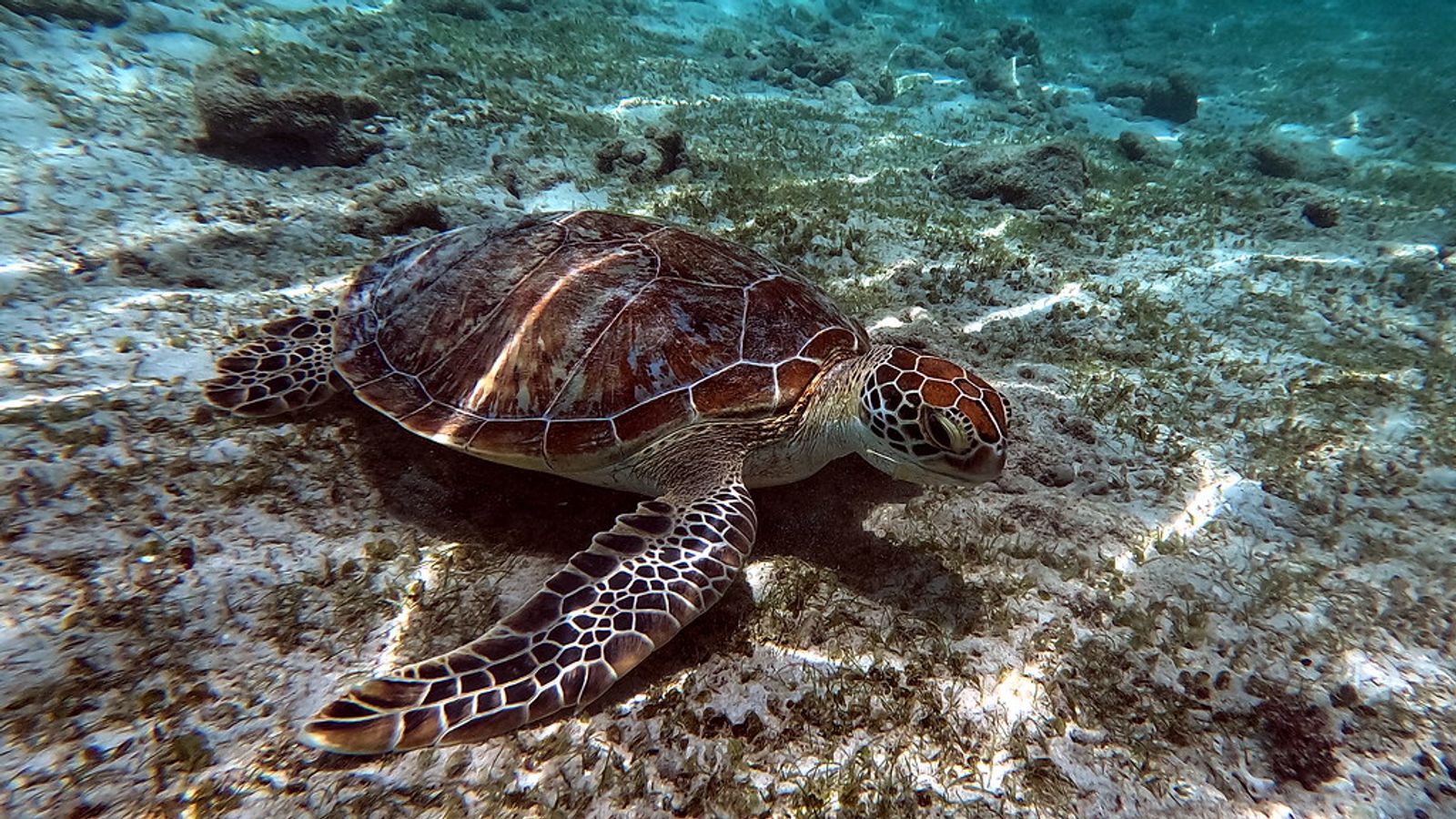
Afternoon. Check in, then get in the water off the jetty. Derawan's green turtles are the reason for the island's nickname and you do not need a boat to meet them. Snorkel the house reef, get your bearings, and leave the ambitious plans for tomorrow.
Evening. Sunset from the water cottages, dinner at one of the warungs, and a conversation with whoever runs boats about the Sangalaki and Kakaban day.
Base: Derawan, three nights. Booking logic: book stays on Derawan Island ahead in the March to September window, when the island fills, and expect simple rooms rather than resorts. Travel note: agree the price and the island list for your big boat day in writing before you hand over any money.
Day 3: A full day on and around Derawan
Morning. Two dives or a long snorkel session on the island's own reef. The shallows here reward slow swimming, and this is the day to sort out weights, gear and any rental problems while you are still near a shop.
Afternoon. Walk the village, watch the turtles come and go under the stilted walkways, and sit out the hottest hours. If a turtle release is happening while you are there, it is worth rearranging your day for.
Evening. Early dinner and an early night. Tomorrow starts before it is comfortable.
Base: Derawan. Booking logic: nothing new to book, which is the point of putting a flexible day here. Travel note: if tomorrow's forecast looks poor, this is the day to swap the two, and the reason the schedule has room to do it.
Day 4: Sangalaki, Kakaban and the long boat day
Morning. Out early to Sangalaki for the mantas. This is a cleaning station rather than a guaranteed show, and mornings with calm water and good visibility are when it works. Snorkellers get a great deal here, because the animals often feed near the surface.
Afternoon. On to Kakaban. Walk the boardwalk, look at the jellyfish from the decks, then get back in the water on the outer reef, which is the part of the island that has not changed. Some operators add a stop at Maratua's Haji Mangku cave on the way home if the sea allows.
Evening. Back to Derawan, tired and salt crusted. Eat early.
Base: Derawan. Booking logic: a shared snorkelling day across the three islands typically runs in the region of USD 25 to 40 per person, while a private boat is quoted closer to IDR 1.28 to 2.56 million for the day. Splitting a private boat between four changes the maths, which is why this route suits friends travelling together. Travel note: the Sangalaki and Kakaban run is the leg that gets cancelled when the sea is up. Ask the night before, not at breakfast.
Day 5: Move to Maratua
Morning. A slow start and a last snorkel, then the boat across to Maratua. From Tanjung Batu the crossing runs up to about ninety minutes; from Derawan it is shorter, and most guesthouses can put you on a transfer if you ask a day ahead.
Afternoon. Settle into the village or the lodge, and do a check dive or an easy snorkel to see what the water is doing. Maratua is a long thin atoll and the conditions vary sharply along it, so the first swim is reconnaissance.
Evening. Quiet. This is the quietest place on the trip, which is either the point or a problem, depending on who you are.
Base: Maratua, three nights. Booking logic: Maratua rooms and dive lodges are limited in number, so this is the booking to make first, before flights. Travel note: confirm your return crossing and your day 8 flight against each other now, while there is still time to change one of them.
Day 6: Diving Maratua
Morning. The Channel, which most operators still call Big Fish Country, on an incoming tide. This is drift diving with current, and it is the reason experienced divers come to this archipelago rather than the reason casual snorkellers do.
Afternoon. Turtle Traffic, or the Haji Mangku cave if you are trained and the operator is happy. Snorkellers should take the lagoon and the shallow reef flats instead, which are calm and genuinely good.
Evening. Log the dives, eat, sleep. There is no third act here.
Base: Maratua. Booking logic: dive packages are cheaper bought as a block than day by day, so decide your total number of dives on arrival. Travel note: currents in the channel are strong and are not the place to try a new configuration. Sort your kit on day 5.
Day 7: A second Maratua day, or start moving
Morning. Either a third dive day, a long snorkel around the atoll's inner lagoon, or the public speedboat back to Tanjung Redeb if the forecast for tomorrow looks bad.
Afternoon. If you are staying, this is the slow afternoon the trip has been building towards. If you are moving, the crossing puts you in town in time for dinner and removes the single biggest risk to your flight home.
Evening. Pack properly. Salt gets into everything out here and a rushed pack at dawn is how wet gear ends up in a suitcase for two days.
Base: Maratua or Tanjung Redeb, your call. Booking logic: hold a refundable room in town so that moving a day early costs you nothing. Travel note: this is the decision point of the whole trip. If your day 8 flight is the last one out or your onward connection is tight, come back today.
Day 8: Berau and out
Morning. If you are still on the island, take the morning boat. If you came back yesterday, you have a lazy breakfast and a short ride to Kalimarau.
Afternoon. Fly out through Balikpapan. Give yourself a real connection window, because a delayed regional flight out of a small airport is common and the onward legs from Balikpapan are not frequent enough to absorb it.
Base: none. Booking logic: book the international leg for the following day if you can afford the night, rather than the same evening. Travel note: if you want the whale shark morning described below, this is where it goes, as a bolt-on rather than a squeeze.
When is the best time to visit the Derawan Islands?
March to September is the workable window, with drier weather, calmer crossings and better visibility. Within it, March to June is when mantas are described as most predictable at Sangalaki, and June to October is when turtle hatchlings are most likely on its beaches. Conditions vary year to year, so treat any month as a probability rather than a promise.
| Window | Sea and visibility | What is likely | Worth knowing |
|---|---|---|---|
| March to June | Generally the calmest crossings and the best visibility | Mantas most predictable at Sangalaki, turtle nesting under way | The window most operators point at first, and the one that fills |
| July to September | Still workable, more wind on some days | Manta activity picks up again with plankton, hatchlings from June onwards | Whale sharks at Talisayan are in season, so the bolt-on makes sense here |
| October to February | Wetter, rougher, more cancelled boat days | Fewer visitors and lower prices | Build extra slack. A cancelled crossing costs a day, not an hour |
Is the Talisayan whale shark trip worth adding?
It is worth adding if you have two spare days and travel between April and November. Whale sharks gather at the bagan lift-net platforms off Talisayan, on the Berau coast, and the trip is a pre-dawn snorkel from a small boat. It is roughly three to four hours by road from Kalimarau airport, then twenty to forty five minutes out to the platforms.
The reason it does not slot into an eight day plan is the geography. Talisayan is on the mainland, in the opposite direction from Tanjung Batu, so a whale shark morning costs you a road day in each direction. Local operators quote around IDR 2,000,000 for a boat carrying four, which again favours a group. Sightings are described as most reliable in the days around a new moon, and as with everything here, nothing is guaranteed.
If you want it, add days at the front or the back of this itinerary rather than cutting an island day. Trading Sangalaki for Talisayan is the trade most travellers regret.
What to book early, and what to keep flexible
Book early: the Maratua room, then the Berau flights, in that order. Maratua has a small number of beds and they go before the flights do, which reverses the usual booking sequence. Also book the Tanjung Redeb night on day 1, because it protects everything after it.
Keep flexible: the boat days, the dive count, and which of days 3 and 4 is the long one. Nothing about the water here can be locked in from home, and any operator selling you a fixed Sangalaki date months in advance is selling confidence rather than a schedule.
Mistakes travellers make in the Derawan Islands
Planning the trip around the jellyfish swim. It has not been legal since the lake reopened in 2025, and a lot of the content telling you otherwise has simply not been updated.
Arriving without cash. Card machines that accept foreign cards are close to nonexistent on the islands, and a boat charter is a cash transaction.
Crossing back and forth. Every extra crossing between Derawan and Maratua is an hour or more of boat and a fresh charter fee. Two bases, one move, is the version that works.
Booking a same day return. A cancelled morning boat and an afternoon flight out of Kalimarau is the combination that turns a good trip into a missed connection.
Treating Sangalaki as an aquarium. It is a nesting island with a ranger post and no accommodation, and the mantas are wild animals on their own timetable.
What to cut, adapt or upgrade
To cut it to six days, drop day 3 and one Maratua night, and accept that a single weather cancellation now costs you Sangalaki entirely. Six days works only if you are lucky, which is a poor thing to plan for on a trip this far from home.
To stretch it to eleven or twelve days, add the Talisayan whale shark bolt-on at the front and two more Maratua nights at the back. That version is the one divers should be looking at, and it is close in spirit to our 10-day north Sulawesi diving route if you prefer a destination with more infrastructure.
To upgrade, move from village homestays to a dive lodge on Maratua and take a private boat for the Sangalaki day. That is where the money makes a visible difference here, rather than in the rooms.
To adapt for snorkellers, give Derawan four nights instead of three and Maratua two. The shallow water is better on the Derawan side, and the Maratua highlights are mostly a diver's list.
Before you build this trip
Indonesia's visa on arrival covers most nationalities for a short stay and can usually be extended once, and the fees and rules change often enough that you should check the current official guidance rather than a blog before you fly. Our Indonesia visa guide tracks the practical version, and the cost guide sets out what a day in Indonesia realistically runs to.
Budget shape for this route is unusual. Beds are among the cheapest in the country and boats are among the most expensive, so two people will pay far more per head than four. If you are a pair, ask your guesthouse to put you on someone else's charter rather than commissioning your own.
Bring more cash than you think, a dry bag, reef safe protection you can wear away from Kakaban, and a spare mask strap. The nearest replacement for anything is Berau.
Final verdict
The Derawan Islands are worth eight days if you are a diver, or a snorkeller who is happy to spend real money on boats. The turtles are as good as anywhere in Indonesia, Sangalaki's mantas are a genuine draw, and Maratua's channel is a serious dive. What you are paying for is distance and quiet, and both are delivered.
What you should not do is come for the jellyfish lake. The version of that experience most articles describe ended in 2023, and the boardwalk that replaced it is a fifteen minute stop rather than a reason to fly to Borneo. Plan the trip around the reefs and the mantas, treat Kakaban as a curiosity on the way, and the archipelago holds up.
Related itineraries
For more Sulawesi and Borneo wildlife, see our 10-day Sulawesi route through Toraja and Bunaken and the 5-day Borneo orangutan trip in Tanjung Puting. If it is the diving you are after, the 8-day Wakatobi itinerary covers a comparable reef with comparable logistics.
Before you go
Sort the practical side
Entry rules and a realistic budget before you book this trip.
Good to know
Frequently asked questions
How do you get to the Derawan Islands?
Fly to Berau, airport code BEJ, usually connecting through Balikpapan. From there you either drive about two and a half to three hours to Tanjung Batu and take a thirty minute speedboat to Derawan, or catch the public speedboat that leaves the Tanjung Redeb pier around ten in the morning and reaches Maratua in roughly two and a half hours in calm conditions.
Can you swim in the Kakaban jellyfish lake in 2026?
No. The lake was closed on 28 December 2023 and reopened on 16 February 2025 as a viewing site only, with a boardwalk, mandatory local guides, no fins near the water and no sunscreen. Officials have suggested a controlled swim could return, but no date has been set, so plan the day around the outer reef instead.
How many days do you need in the Derawan Islands?
Eight is the sensible minimum, because the two transfer days at each end eat into the trip. That leaves three nights on Derawan, three on Maratua and one full boat day out to Sangalaki and Kakaban, with enough slack to reschedule the boat day if the sea is up.
When is the best time to visit Derawan and Maratua?
March to September is the drier, calmer window with the best visibility. Operators describe mantas as most predictable at Sangalaki from March to June, with activity picking up again from July, and turtle hatchlings most likely from June to October. Conditions vary year to year.
Can you stay on Sangalaki or Kakaban?
No. Both are day trip islands with ranger posts and no accommodation. Only Derawan and Maratua have villages and places to sleep, which is why any workable itinerary bases you on one of those two and visits the other islands by boat.
How much does a Derawan trip cost?
Rooms are cheap and boats are not. Homestays on Derawan start around IDR 100,000 a night and water cottages around IDR 300,000, while a shared snorkelling day across three islands runs roughly USD 25 to 40 per person and a private boat is quoted closer to IDR 1.28 to 2.56 million for the day. Prices move, so confirm locally.
Are there ATMs on the Derawan Islands?
Effectively no, at least none you should count on for a foreign card. Draw all the cash you expect to need in Tanjung Redeb before you leave the mainland, and add a margin for boat charters, which are settled in cash.
Is it worth adding the Talisayan whale sharks?
It is, if you travel between April and November and have two spare days. The whale sharks gather at bagan fishing platforms off the Berau coast, reached by a three to four hour road transfer from Kalimarau airport and a short boat ride, usually before dawn. Add it to the ends of the trip rather than trading an island day for it.
Keep exploring
Related itineraries

One week (6-8 days) · Wild Indonesia
7 Days in West Sumbawa: Whale Sharks, Moyo Island and Kenawa
A 7-day West Sumbawa itinerary: whale sharks in Saleh Bay, Moyo Island's Mata Jitu waterfall and Kenawa, with flights, ferries, costs and seasons.

One week (6-8 days) · Wild Indonesia
6 Days in Belitung: Granite Beaches and Island Hopping from Jakarta
A relaxed 6-day Belitung itinerary from Jakarta: granite beaches, Lengkuas island hopping and a family pace, with flights, boat costs and when to go.

One week (6-8 days) · Wild Indonesia
8 Days in North Sulawesi with Kids: Bunaken, Tarsiers and the Highlands
An 8-day North Sulawesi family route: snorkel Bunaken from Siladen, see tarsiers at Tangkoko at dusk, then cool off in the Tomohon highlands.
Share this itinerary