By Editorial Team · Last updated September 2026
Almost everybody who flies into Sulawesi is on their way somewhere else, north to Bunaken or the Togean Islands, and Makassar is just where they change planes. Seven days spent entirely in the south instead buys two nights in Makassar, a morning in a limestone valley you enter by canoe, and three days in the Toraja highlands, where the dead are buried in cliffs and funerals are the largest event in a family's life.
Almost everybody who flies into Sulawesi is on their way somewhere else. The dive boats are at Bunaken, sixteen hours north by road or a second flight away, and the Togean Islands are further still. Makassar is where you change planes. South Sulawesi, the part of the island you actually land in, gets a night near the airport and a taxi at dawn.
That is a strange way to treat a region that holds the most distinctive living culture in Indonesia. Seven days is enough to see it properly: two nights in Makassar, a morning in a limestone valley you travel through by canoe, and three days in the Toraja highlands, where funerals are the biggest event in a family's life and the dead are buried in cliffs. It is not a relaxed week. One leg of it is an overnight bus, and there is no beach in the plan. What you get instead is the one trip in Indonesia where the culture, not the landscape, is the reason you came.
Who is this South Sulawesi trip for, and who should skip it?
This week suits a first visit to Sulawesi for travellers who want culture over coastline and can absorb one long overnight bus. It works for couples, friends and solo travellers on a moderate budget. Skip it if you have under a week, if you are set on diving, or if long road days spoil a holiday for you.
Sulawesi punishes short trips. The island is shaped like a starfish and the arms do not connect conveniently, so every extra destination costs a travel day. Seven days spent entirely in the south is a complete trip. Seven days spread from Toraja to Bunaken is two airports and a lot of regret.
It is also worth being honest about the physical side. The Makassar to Rantepao road climbs from sea level into the highlands over roughly 425 kilometres, and the bus takes eight and a half hours at its fastest. Nights in Toraja are cool, the walking is on uneven ground and steep village paths, and several of the burial sites involve stairs or short climbs. If that is more than you want, the private Toraja tours that run from Makassar cover the same sites at a gentler pace with a driver and a guide, at a much higher price.
Trip at a glance
Seven days, two bases, one overnight bus. Two nights in Makassar bookend three nights in Rantepao, the market town at the centre of Toraja. The route is Makassar, the Rammang-Rammang karst at Maros, then north to Toraja for the cliff graves, tongkonan houses and highland terraces, and back to Makassar to fly out.
| Where you sleep | What the day is | Travel that day | |
|---|---|---|---|
| Day 1 | Makassar | Arrival, Fort Rotterdam, the waterfront at Losari | Airport transfer, about 45 minutes |
| Day 2 | Night bus | Rammang-Rammang karst by canoe, then north | 1 hour to Maros, then 8 to 11 hours overnight |
| Day 3 | Rantepao | Dawn arrival, rest, then Londa and Lemo | Short hops, 20 to 40 minutes each |
| Day 4 | Rantepao | Kete Kesu, Bori Kalimbuang, the Sa'dan weavers | Under an hour between stops |
| Day 5 | Rantepao | Batutumonga, Lokomata, walking down through terraces | About 1 hour up, then on foot |
| Day 6 | Night bus or Makassar | Bolu market if the rotation allows, then south | 8 to 11 hours back to Makassar |
| Day 7 | Out | Paotere harbour, last meal, airport | 30 to 45 minutes to UPG |
Why this route makes sense
The route exists because of one hard constraint: the only reliable way between Makassar and Toraja is a road that takes most of a day. Putting that road at night, in both directions, buys you three clear days in the highlands out of seven. Any other arrangement spends two full daylight days on a bus.
That single decision shapes everything else. Rammang-Rammang sits at Maros, an hour north of Makassar and directly on the way to Toraja, so it becomes the morning of the day you leave rather than a separate excursion. Makassar itself gets the first evening and the last morning, which is roughly what it deserves: a working port city with a good fort, an excellent seafood scene and not much else asking for your time.
Toraja gets three full days because that is the minimum that separates the sites from the culture. One day shows you cliff graves. Three days gets you to a village market, a walk between hamlets, and, if the season is right, the edge of a ceremony. The difference matters more here than in most places in Indonesia.
How do you get from Makassar to Toraja?
Four ways, and only two are practical. The overnight bus runs twice a night, takes eight and a half hours at best and costs around IDR 190,000. A private car costs far more but stops where you like. A daytime bus burns a full day. Flights exist but are twice weekly and seasonal.
As a working figure, the night bus from Makassar leaves at 8:00 PM and 9:00 PM, covers 425 kilometres and is listed from about IDR 186,000, with Borlindo and Litha & Co running the route. Operators such as Bintang Prima also sell the run from the Daya terminal. Prices and departure times move, so check the current Makassar to Toraja departures a few days before you travel rather than assuming last year's schedule.
| Night bus | Private car | Day bus | Wings Air to Toraja | |
|---|---|---|---|---|
| Time | 8h30m at best, plan for 9 to 11 | 8 to 10 hours with stops | 9 to 11 hours of daylight | About 55 minutes |
| Cost, one way | From about IDR 186,000 | Roughly IDR 1,200,000 to 2,000,000 for the car | Similar to the night bus | Varies widely, book early |
| What it costs you | A night of proper sleep | Money | A whole day of the trip | Flexibility |
| Why you would | It is the default, and it works | Stopping at Pare-Pare and the viewpoints | You genuinely cannot sleep on buses | You are very short on time |
| The catch | You arrive at 5 to 7 AM with nowhere to check in | Three to four times the price | Costs a day you do not have in a week | Roughly two flights a week, and the route is seasonal |
The flight deserves a warning rather than a recommendation. Toraja Airport, the small field formerly called Buntu Kunik, is served by Wings Air with something like two flights a week to Makassar, and the service has run seasonally rather than year round. Building a seven day trip around two weekly departures is how people end up on the bus anyway, at the worst possible moment. Treat it as a bonus if the dates happen to line up, never as the plan.
Day 1: Makassar, the fort and the waterfront
Morning. Land at Sultan Hasanuddin (UPG) and get into the city. The airport sits about 25 kilometres north of the centre and the transfer runs 45 minutes to an hour in ordinary traffic, longer at the end of the working day.
Afternoon. Fort Rotterdam is the one sight in Makassar that repays a slow visit. It is a Dutch rebuild of a Gowa kingdom fort, well kept, free or close to it, and it holds the provincial museum. Prince Diponegoro was imprisoned here, which gives the place more weight than its size suggests.
Evening. Losari, the reclaimed seafront, is where the city walks in the evening. Eat grilled fish. Makassar does seafood better than almost anywhere in Indonesia, and the Bugis and Makassarese kitchens here are the reason a lot of Indonesian food writers rate the city above Jakarta.
Base: Makassar, near Losari or Panakkukang. Compare hotels in Makassar before you land, because the good mid-range places near the waterfront are a small set and they fill during conference weeks.
Travel note: Keep this day short. You are boarding a night bus tomorrow, and arriving tired into a 9 PM departure is the single most avoidable mistake on this route.
Day 2: Rammang-Rammang by canoe, then north
Morning. Drive an hour north to Maros for Rammang-Rammang, a karst valley where limestone towers rise straight out of the rice fields and the way in is by jukung, a narrow wooden canoe, up the Pute river. Go early. The light is better and the boats are free.
The published fees are small and worth knowing in advance: entrance in the region of IDR 10,000 to 15,000 a person, and the boat itself at a fixed rate of roughly IDR 200,000 for up to four people, which means a pair pays the same as a group. Side caves cost a few thousand rupiah more. As always, treat these as working estimates and confirm at the jetty.
Afternoon. Back to Makassar, a shower and an early dinner. If you would rather not organise the morning yourself, a guided Rammang-Rammang day from Makassar handles the driver, the boat and the caves, and runs five to nine hours door to door.
Evening. Board the night bus. Departures are at 8:00 PM and 9:00 PM. Take the later one if you can, because it arrives closer to a civilised hour.
Base: The bus. Bring a fleece, an eye mask and something to block the on-board film.
Travel note: This is the hard day of the week and there is no way to soften it inside seven days. If you would rather not do it, the honest fix is to add a day and take a private car in daylight, not to cut Toraja short.
Day 3: Into Toraja, Londa and Lemo
Morning. You arrive in Rantepao somewhere between 5 and 7 AM, which is before any check-in time anywhere. Message your guesthouse in advance and ask to drop bags and use a shower. Most will say yes. Then sleep, or at least sit still, until late morning.
Afternoon. Start at Londa, a cliff burial with coffins stacked in a cave mouth and tau tau, carved effigies of the dead, watching from a gallery in the rock. Then Lemo, where the graves are cut into a sheer face and the effigies stand in a row. Both are short visits. The impact is in the first thirty seconds.
Site fees in Toraja are charged individually rather than as a pass. Published figures have sat around IDR 30,000 a person at Londa and Kete Kesu and around IDR 20,000 at Lemo, though those numbers are several years old and the 2026 rate will be higher. Budget IDR 50,000 a site and you will not be caught out. A guide at Londa costs extra and is worth it, partly because the cave is dark and partly because the explanation is the point.
Evening. Rantepao is small, walkable and quiet after dark. Eat pa'piong, meat and vegetables cooked inside a bamboo tube, which usually needs ordering a few hours ahead.
Base: Rantepao, three nights. Compare guesthouses in Rantepao rather than booking on arrival, because the useful places are spread along the valley and the walkable ones go first in ceremony season.
Day 4: Kete Kesu, the menhirs and the weavers
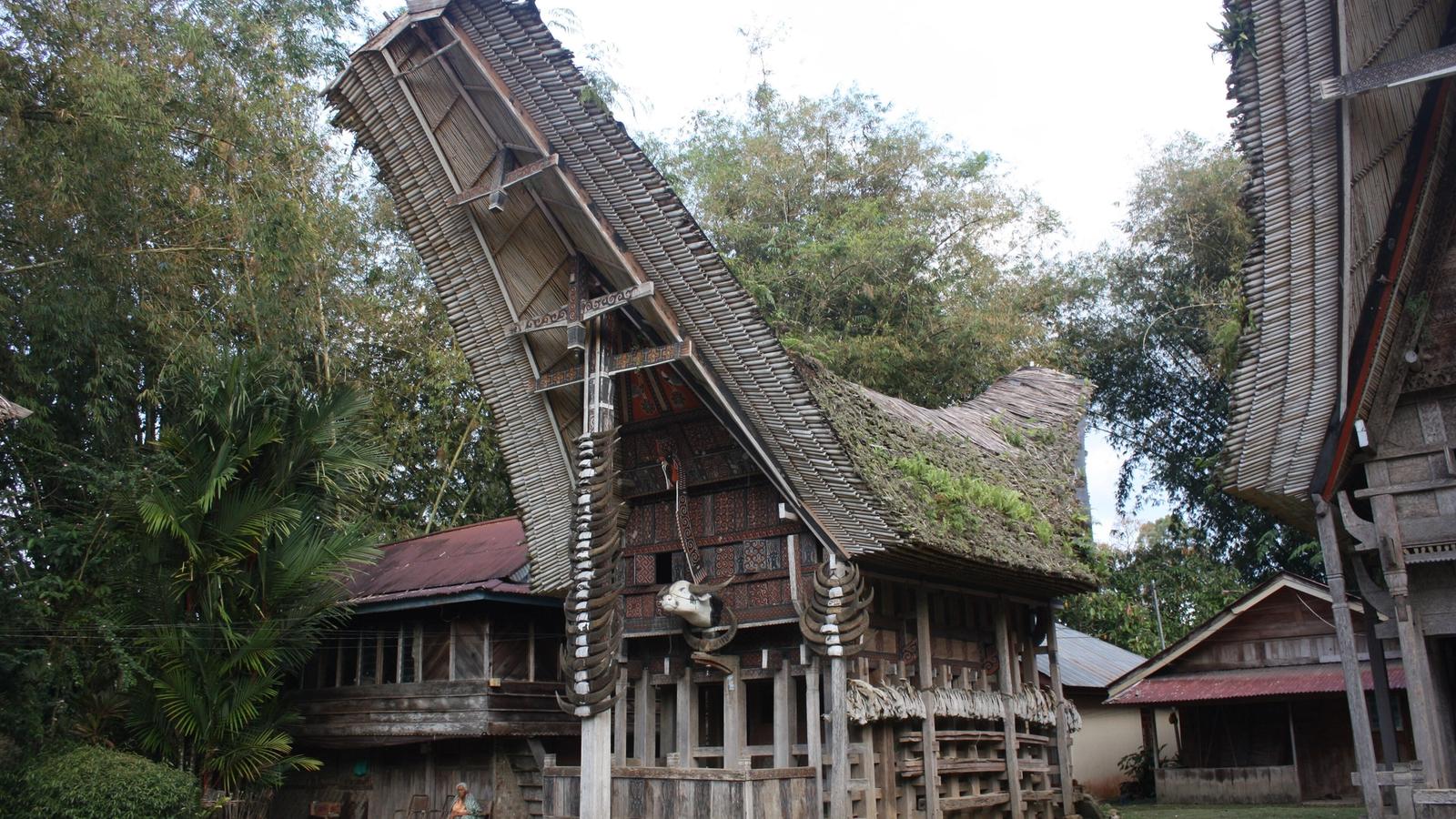
Morning. Kete Kesu is the postcard village: a row of tongkonan, the boat-roofed ancestral houses, facing a line of rice barns, with a burial site and hanging coffins behind. It is the most visited place in Toraja and it is still worth the first hour of your day, before the tour vans.
Afternoon. Bori Kalimbuang, a field of standing stones raised one at a time for high-status funerals, gives you the other half of the story: not where the dead are put, but what the community does to get them there. Then Sa'dan, north of town, where the weaving is a working trade rather than a demonstration.
Evening. Back in Rantepao. This is the night to ask your guesthouse whether any ceremony is happening in the next two days, and where.
Booking logic: Hire a driver or a motorbike for the day rather than arranging each leg. Toraja's sites are spread over a wide valley and public transport between them is not a realistic plan for a visitor on a schedule.
Day 5: Batutumonga and the high road
Morning. Climb north to Batutumonga, on the shoulder of Mount Sesean, roughly an hour above Rantepao. The terraces fall away below you in steps and the whole valley is laid out. This is the landscape day of the trip, and it is the one most people remember.
Afternoon. Lokomata, a little further on, has graves carved directly into enormous boulders beside the road. From there, the good move is to walk down: several routes drop from Batutumonga through hamlets and terraces back toward Rantepao over three to five hours. Arrange it with your guesthouse and have the driver meet you low down.
Evening. Coffee. Toraja grows some of the best arabica in Indonesia and almost all of it leaves the region, so drinking it where it is grown is one of the few genuinely local pleasures here.
Travel note: It is cold at altitude in the early morning and the cloud comes in by mid-afternoon. Go up early, bring a layer, and do not plan the view for the end of the day.
Day 6: Bolu market, then the road south
Morning. The livestock market at Bolu, a couple of kilometres north of Rantepao, is the commercial engine of the whole ceremonial system: buffalo, some of them worth more than a house, traded for funerals. It does not run every day. The market works on a rotation of roughly six days rather than a fixed weekday, and published calendars exist, so check the date before you fix your Rantepao nights.
Afternoon. If the market does not fall right, use the morning for a village walk instead, or for the sites you skipped. Then head south. You can take a daytime departure and lose the afternoon, or take the night bus again and gain a night in Makassar you do not really need.
Evening. On the bus, or eating late in Makassar. Either works. The daytime run is the better choice on the way back, because the mountain section is scenic and you have nothing to be rested for tomorrow.
Base: The bus, or Makassar.
Day 7: Makassar, and out
Morning. Paotere is the old Bugis harbour in the north of the city, where wooden pinisi schooners still load cargo. It is working, not curated, and it takes under an hour. Go early, before the heat.
Afternoon. One last seafood lunch, then the airport. Allow an hour and a half door to door for a domestic flight and more for an international connection through Jakarta or Bali.
Travel note: Do not book a departure before mid-morning if you came back overnight. The bus is regularly two hours later than its schedule, and Makassar traffic does the rest.
What to book early, and what to keep flexible
Book the flights into and out of Makassar and the first night's hotel. Book Rantepao accommodation if you travel between June and September, when ceremony season fills the valley. Leave the bus, the drivers, the guides and the day-by-day order open. All of them are arranged locally in a morning and cost less that way.
The one exception is a full guided package. If you want the whole Toraja section handled, a four day Toraja cultural tour from Makassar with a private guide and transport is a real option and needs booking ahead. It costs several times the independent version, and what you are buying is the guide, not the sites.
Data is the other thing to sort before you fly. Coverage in the Toraja highlands is patchy and you will be messaging guesthouses and drivers constantly. An Indonesian eSIM activated before departure saves the queue at the airport counter.
Can you see a Toraja funeral ceremony, and should you?
Often yes, and it is normally welcomed rather than tolerated. Rambu Solo' funerals cluster in the dry months, with July and August the peak after the harvest, and they run across June to September, though a death can bring one at any time of year. Go with a local guide and an actual invitation, never alone.
The etiquette is straightforward and it matters. Guests bring a gift for the family, traditionally cigarettes or sugar, and the gift is a contribution to a very expensive obligation rather than an entrance fee. Wear dark clothes. Accept food and eat at least some of it. Ask before photographing people, and do not photograph the family in mourning.
It is also worth deciding in advance how you feel about the buffalo. A large Rambu Solo' involves the slaughter of animals in front of the crowd, sometimes many of them, and it is not hidden or softened for visitors. That is the ceremony, not a spectacle staged around it. People who are unprepared for it tend to have a bad day.
Mistakes travellers make on a first Sulawesi trip
The big one is adding Bunaken. Manado is a second flight and most of a day from Makassar, and a week split between Toraja and the north leaves you with a day and a half in each. The other common errors are underbudgeting time on the road, and treating the sites as the trip.
Two more worth naming. Arriving in Rantepao at 6 AM with no arrangement about bags is a miserable start, and a single message the day before prevents it. And skipping a guide at the burial sites saves very little money while removing almost everything that makes them intelligible: without the explanation, Londa is a cave with bones in it.
The last one is timing the return badly. People book an afternoon flight out of Makassar on the day they come off the night bus, then discover the bus arrives at nine rather than six. Give yourself the morning.
What to cut, adapt or upgrade
If you have six days, cut Rammang-Rammang and take an evening bus on Day 1. If you have nine, add Pare-Pare or the Bugis boatyards at Bira on the south coast. To upgrade, replace both bus legs with a private car in daylight, which costs roughly ten times more and returns a day of sightseeing.
If you have ten days or more, the better use of the extra time is north rather than south. Flying Makassar to Manado opens Bunaken and Lembeh, and at that length the split stops being self-defeating. Our longer Sulawesi routes are built around exactly that decision.
The one thing not to cut is the third night in Toraja. Two nights in the highlands means one usable day, because the first is spent recovering from the bus. Cut Makassar instead, or cut the karst, or accept a longer trip.
What does a week in South Sulawesi cost?
Budget roughly US$45 to US$70 a day per person independently, or US$90 to US$140 in comfortable mid-range. That covers a guesthouse, meals, the two bus legs, a shared driver for two days in Toraja and site fees. Flights to Makassar and a full guided package sit outside it, and the package multiplies the total.
The costs that surprise people are small and frequent rather than large. Site fees add up across six or seven stops. A driver for a day in Toraja is the single biggest local line item and the one most worth paying. The karst boat is a flat rate, so travelling as a pair costs the same as travelling as four. And guides are charged per site, not per day, unless you negotiate otherwise up front.
Before you build this trip
Three things decide whether this week works: your dates against the Bolu market rotation and the ceremony season, your tolerance for one overnight bus, and whether you are willing to hire a guide in Toraja. Settle those first. Everything else on this route can be arranged the morning you need it.
On paperwork, most visitors enter Indonesia on visa on arrival or its electronic version, and the arrival card is now an online form. Rates and rules change, so check the current official guidance before you travel rather than trusting any itinerary, ours included.
On season, the highlands are wetter and cooler than the coast year round, and the June to September window is both the driest and the busiest. If you are going for the ceremonies, that is the trade you make. If you are going for the terraces and the walking, the shoulder months either side are quieter and the rice is often greener.
Final verdict
Worth it, with one condition: you have to want the culture. South Sulawesi in a week is a strong trip for anyone who will spend three days learning how one society thinks about death and status, and a weak one for anyone hoping for beaches, diving or an easy pace. The overnight bus is the price of entry.
Judged against the rest of Indonesia, Toraja is the place that is least like anywhere else. Bali has better beaches, Flores has better boats, Sumatra has better wildlife. None of them has this. If that is the trip you want, seven days is genuinely enough, and the route above is the version that wastes the fewest of them.
Related itineraries
If this week works and you want the north as well, our 10 day Sulawesi route through Toraja and Bunaken adds the diving without the rush, and the 14 day Toraja, Togean and Bunaken itinerary is the full traverse for travellers with time. For the diving on its own, the 10 day north Sulawesi plan for Bunaken and Lembeh skips the highlands entirely.
Before you go
Sort the practical side
Entry rules and a realistic budget before you book this trip.
Good to know
Frequently asked questions
How many days do you need in South Sulawesi?
Seven days is the practical minimum for Makassar and Toraja together, because the road between them takes most of a day in each direction. Five days works only if you fly, which means depending on a twice-weekly seasonal service. Ten days lets you add the north, and under five days is not worth the flights.
Is Tana Toraja worth visiting?
Yes, and it is the reason to come to South Sulawesi at all. Toraja has cliff graves with carved effigies, boat-roofed tongkonan houses, standing-stone funeral fields and a living ceremonial culture that has not been rebuilt for visitors. Three days in the valley is enough to understand it rather than photograph it.
How do you get from Makassar to Tana Toraja?
By overnight bus, usually. Departures leave Makassar around 8:00 PM and 9:00 PM, cover about 425 kilometres and take eight and a half hours at best, with fares from roughly IDR 186,000 as a working estimate. A private car takes a similar time in daylight for several times the price, and the small airport at Toraja has only a couple of flights a week.
What is the best time of year to visit Toraja?
June to September is driest and is when most Rambu Solo' funerals are held, with July and August the peak after the harvest. That window is also the busiest and the most expensive for accommodation in Rantepao. The shoulder months either side are quieter, wetter and better for walking through the terraces.
Can tourists attend a Toraja funeral ceremony?
Usually yes, with a local guide and an invitation. Bring a gift for the family, traditionally cigarettes or sugar, wear dark clothes, accept the food you are offered and ask before photographing anyone. Be aware that buffalo are slaughtered in the open during larger ceremonies, and decide in advance whether you want to see that.
Is Sulawesi expensive compared with Bali?
Cheaper day to day, more expensive to move around. Guesthouses, food and site fees in Makassar and Toraja run below Bali equivalents, and a good local meal is a couple of dollars. What costs more is transport: long road legs, drivers hired by the day, and domestic flights between the island's arms if you travel beyond the south.
Do you need a guide in Tana Toraja?
For the burial sites, effectively yes. Fees are charged per site and a guide adds a modest amount, but without the explanation the caves and cliffs are hard to read. A driver for the day is the other local cost worth paying, because the sites are spread across a wide valley with no practical public transport between them.
Keep exploring
Related itineraries
One week (6-8 days) · Wild Indonesia
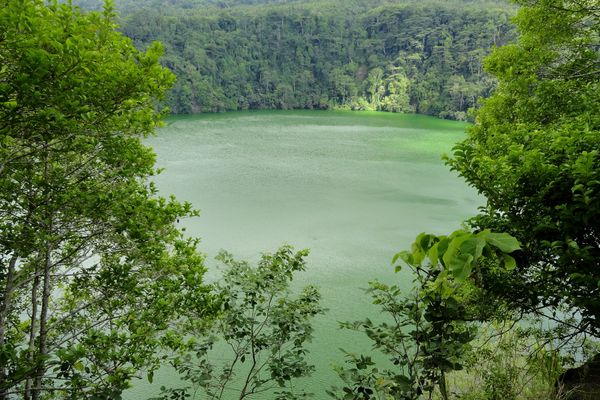
7 Days in Ternate and Tidore: North Maluku's Volcano Sultanates
Seven days across Ternate and Tidore: why Gamalama is closed, how to climb Kie Matubu instead, the Rp 20,000 crossing, and which island to sleep on.
10 days (9-11 days) · Wild Indonesia
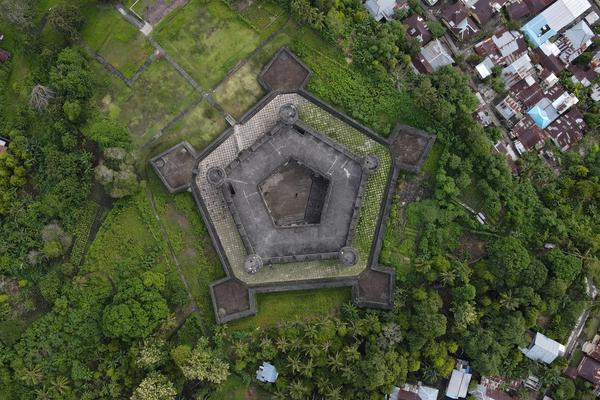
9 Days in the Banda Islands: Neira, Gunung Api, Hatta and Ai
How to plan 9 days in the Banda Islands: the three ways from Ambon, why two buffer days are not optional, and what Neira, Hatta and Ai are each for.
One week (6-8 days) · Wild Indonesia
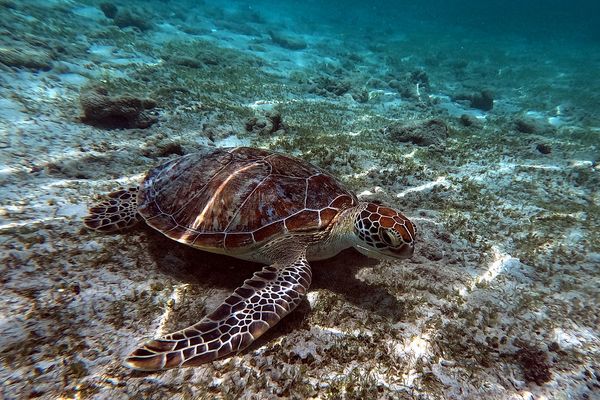
8 Days in the Derawan Islands: Derawan, Sangalaki, Kakaban and Maratua
How to plan 8 days across Derawan, Sangalaki, Kakaban and Maratua: getting there from Berau, where to base, and the jellyfish lake rule that changed.
Share this itinerary