The short answer
Both islands sit in the same cluster off Bali's southeast coast, reached by fast boat from Sanur in roughly 30 to 45 minutes. Nusa Penida is the largest and most dramatic, all towering cliffs and viewpoints, but its roads are rough and the highlights are spread out. Nusa Lembongan is much smaller, more developed, and easy to get around, with a relaxed beach-town feel. If you want jaw-dropping scenery and do not mind effort, pick Penida. If you want easy and laid-back, pick Lembongan. With enough time, do both.
If the real question is which island near Bali to visit at all, not just which Nusa, we rank all nine by who should go.
Nusa Penida: bigger, wilder, more dramatic
Penida is the island of postcard cliffs: Kelingking Beach (the T-Rex cliff), Angel's Billabong, Broken Beach, Crystal Bay, and the east-coast pair of Diamond Beach and Atuh Beach. The scenery is genuinely unmatched in the cluster, and it is the reason the island has exploded in popularity. The trade-off is logistics. Penida is large, the highlights are spread across two distant coasts, and the roads connecting them are steep and potholed, so you need a driver or a confident scooter rider to get around, and many viewpoints involve long stair climbs in the heat. It also has fewer easy swimming beaches than its size suggests, since much of the coast is sheer cliff. In short, it rewards energy and a sense of adventure rather than those who want to switch off.
- Best for: Dramatic scenery, big viewpoints, photographers, active travellers happy to drive rough roads.
- Trade-off: Rough roads, spread-out sights, steep climbs, fewer easy swimming beaches.
Nusa Lembongan: smaller, easier, more relaxed
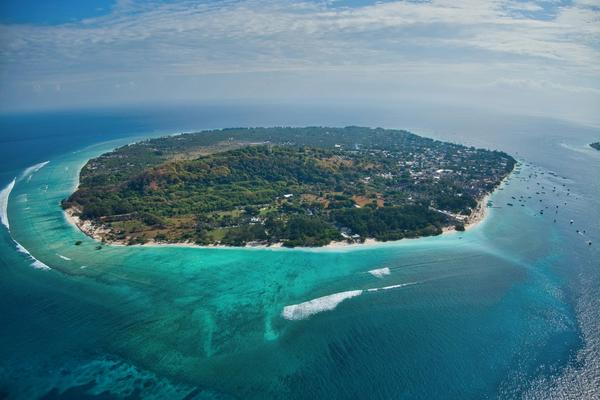
Lembongan is a fraction of Penida's size and far more developed, with a settled, mature traveller scene of beachfront cafes, warungs, surf breaks, and dive shops. Highlights include the sheltered sands of Mushroom Bay, the dramatic blowhole and crashing surf at Devil's Tear, and the bright yellow suspension bridge that crosses to tiny Nusa Ceningan, home to a vivid blue lagoon and a popular cliff jump. You can get around easily by scooter, bicycle, or even on foot in places, and the whole island has a calmer, more beginner-friendly rhythm than Penida. It is the kind of place where you can happily do very little, drifting between beach, reef, and a sunset drink, which is exactly its appeal for many visitors.
- Best for: Relaxing, easy logistics, first-timers, beginner snorkellers, a gentle island pace.
- Trade-off: Less dramatic scenery and fewer headline viewpoints than Penida.
Getting around: the deciding factor
This is often what tips the decision, so it is worth weighing honestly. On Penida, the roads are the single biggest challenge, with steep gradients, potholes, and stretches that are still rough or under repair. An inexperienced scooter rider can have a genuinely miserable or even dangerous time, so most visitors hire a driver for the day, which removes the stress entirely. On Lembongan, by contrast, everything is closer, the roads are calmer and largely flat, and getting around by scooter or bicycle is part of the fun rather than a hurdle. If easy logistics, relaxed days, and short journeys matter to you, Lembongan wins clearly. If you are happy to plan transport and trade comfort for scenery, Penida pays you back in views.
Cost and crowds
Both islands are reached on the same fast boats from Sanur and are broadly similar on price for accommodation and food, with Penida tending to feel a touch cheaper and rougher around the edges. Crowds are the bigger difference. Penida's headline sights, especially Kelingking, draw heavy day-tripper traffic in the middle of the day, so early starts matter. Lembongan absorbs visitors more gently across its beaches and reefs and rarely feels as pinched, which adds to its calmer reputation.
Snorkelling and diving
Both islands share the same superb waters, so neither is a clear loser underwater. The famous manta sites and the clear coral of Crystal Bay sit off Penida, while Lembongan has its own bright coral gardens and the gentle Mangrove Point reef. Crucially, most boat snorkelling and dive trips run freely between the two islands regardless of where you sleep, so you do not have to choose one island purely for the marine life. Both also sit within reach of the seasonal mola mola dive sites for certified divers. See our Nusa Penida snorkelling guide for the full breakdown of sites and conditions.
Can you do both?
Yes, and many people do. The islands are a short boat hop apart, so a common plan is two days on Penida for the big sights followed by a relaxed day or two on Lembongan and Ceningan. Our Nusa Penida itinerary builds in exactly this kind of add-on, and you can fit the whole cluster into a longer route like the 10-day Bali and Gili Islands trip.